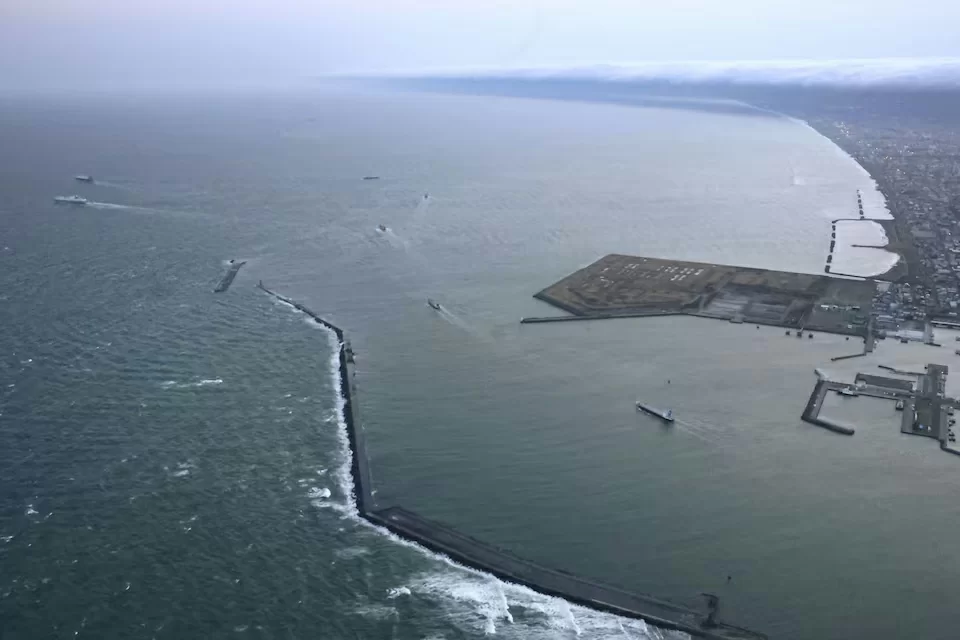
On April 20, 2026, a powerful 7.7-magnitude earthquake jolted the northeast coast of Japan, prompting immediate emergency measures across the affected region. The seismic event struck at 16:53 local time, with its epicenter located 20 kilometers beneath the surface of the Pacific Ocean, registering an intensity of “above 5” on Japan’s domestic seismic scale — strong enough to complicate walking and cause unreinforced concrete walls to collapse.
Immediately after the quake, Japanese meteorological authorities issued a full tsunami warning, projecting that waves as high as 3 meters could crash into low-lying coastal communities. Two hours after the initial tremor, however, the largest tsunami wave recorded reached just 80 centimeters, leading officials to downgrade the alert to an advisory level. Government spokesperson Minoru Kihara confirmed in an early press briefing that as of the initial assessment, no reports of casualties or major infrastructure damage had been received.
Evacuation orders were swiftly issued to thousands of residents in multiple port cities, including Otsuchi and Kamaishi — two communities that were devastated by the catastrophic 2011 Tohoku earthquake and tsunami. In the wake of the main quake, temporary disruptions to transportation rolled out across the region: all bullet train services were suspended, and several major highways were closed to prevent accidents from aftershocks. No operating nuclear power plants are located in the affected area, and operators Hokkaido Electric Power and Tohoku Electric Power reported no anomalies at their idled facilities in the region, easing fears of a repeat of the 2011 Fukushima nuclear disaster.
Despite the initial lack of severe harm, Japanese officials have warned the public to remain on high alert in the coming week. The Japan Meteorological Agency notes that the probability of a follow-up major earthquake measuring magnitude 8 or higher has risen from the typical 0.1% to approximately 1% in the seven days after the 7.7-magnitude event. A senior government official emphasized the critical need for ongoing preparation, urging residents: “Protect your own life and take preventive measures.”
Japan sits along the Pacific Ring of Fire, a geologically active region marked by frequent volcanic and seismic activity, making it one of the most earthquake-prone countries on Earth. On average, the country experiences a seismic event every five minutes, and it accounts for roughly 20% of all magnitude 6.0 or higher earthquakes recorded globally. This long history of seismic risk has shaped the country’s strict emergency preparedness protocols, which were activated within minutes of Monday’s tremor.