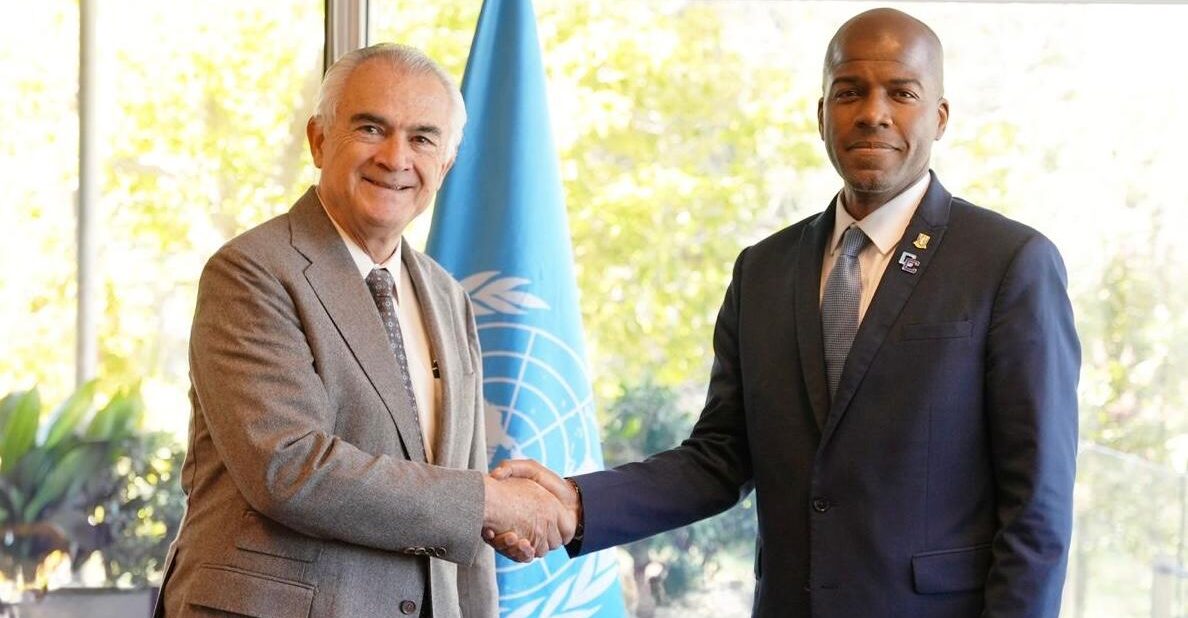
Against the backdrop of the recently concluded 9th Meeting of the Forum of the Countries of Latin America and the Caribbean on Sustainable Development in Santiago, Chile, senior representatives from the United Nations Economic Commission for Latin America and the Caribbean (ECLAC) and the British Virgin Islands (BVI) held a critical bilateral discussion focused on accelerating sustainable development across the region. The meeting brought together Benito Wheatley, BVI Special Envoy and Vice Chair of ECLAC’s 40th Session, and ECLAC Executive Secretary José Manuel Salazar-Xirinachs, as part of ECLAC’s ongoing cross-regional engagement work.
According to an official press statement released by the BVI government, both leaders converged on a shared urgent message: global progress toward the UN Sustainable Development Goals (SDGs) in the region is severely off track, with just 19% of targets currently implemented. With only four years remaining until the 2030 deadline for full SDG adoption, the pair emphasized that immediate, coordinated action is required to close the existing gap.
Wheatley opened the discussion by commending ECLAC and Salazar-Xirinachs for the body’s consistent, targeted focus on addressing persistent regional development gaps and rolling out inclusive productive development strategies. He noted that when these frameworks are adopted and adapted by national governments across Latin America and the Caribbean, they can unlock transformative, tangible economic and social progress that benefits marginalized and vulnerable communities across the region.
The BVI envoy also went on to stress the growing importance of expanding technical cooperation across the Latin America and Caribbean region, particularly in three high-priority areas: climate and disaster resilience, cross-border investment, and accessible technology transfer. He highlighted that most regional economies are operating with extremely constrained fiscal space, driven primarily by heavy national debt loads and repeated emergency spending required to respond to unforeseen external shocks. In this context, targeted investment has become one of the most critical tools for sustaining long-term, inclusive growth across the subregion, he added.
Responding to Wheatley’s remarks, Salazar-Xirinachs reaffirmed ECLAC’s longstanding commitment to supporting sustainable development efforts in the BVI and all Caribbean Small Island Developing States (SIDS). He pushed back against the narrative that middle-income classification – a category that includes most Caribbean nations – eliminates the need for continued international support. For SIDS, which face outsized vulnerability to climate disasters and global economic volatility, sustained international assistance remains non-negotiable for advancing the SDGs, he noted.
Salazar-Xirinachs also recognized the BVI’s active leadership role during the recent Forum meeting. In his capacity as Vice Chair of the Caribbean Development and Cooperation Committee, Wheatley led a dedicated Caribbean-focused panel exploring the implementation of the Antigua and Barbuda Agenda for SIDS through expanded South-South cooperation.
Closing the discussion, Wheatley reaffirmed the BVI’s unwavering commitment to both regional collaboration and the global sustainable development agenda. “Through our various leadership roles within UN ECLAC, the British Virgin Islands will continue to advocate for the Caribbean to ensure the subregion’s priorities, including climate resilience, are taken into account in the inter-governmental deliberations of the wider region on the 2030 Agenda, and that there is closer collaboration between the Caribbean and Latin America on the implementation of the SDGs in the remaining period,” he stated.
The 9th Forum of the Countries of Latin America and the Caribbean on Sustainable Development was hosted in the Chilean capital from April 13 to 16, 2026, bringing together hundreds of government officials, UN representatives, and civil society stakeholders to align on sustainable development action.