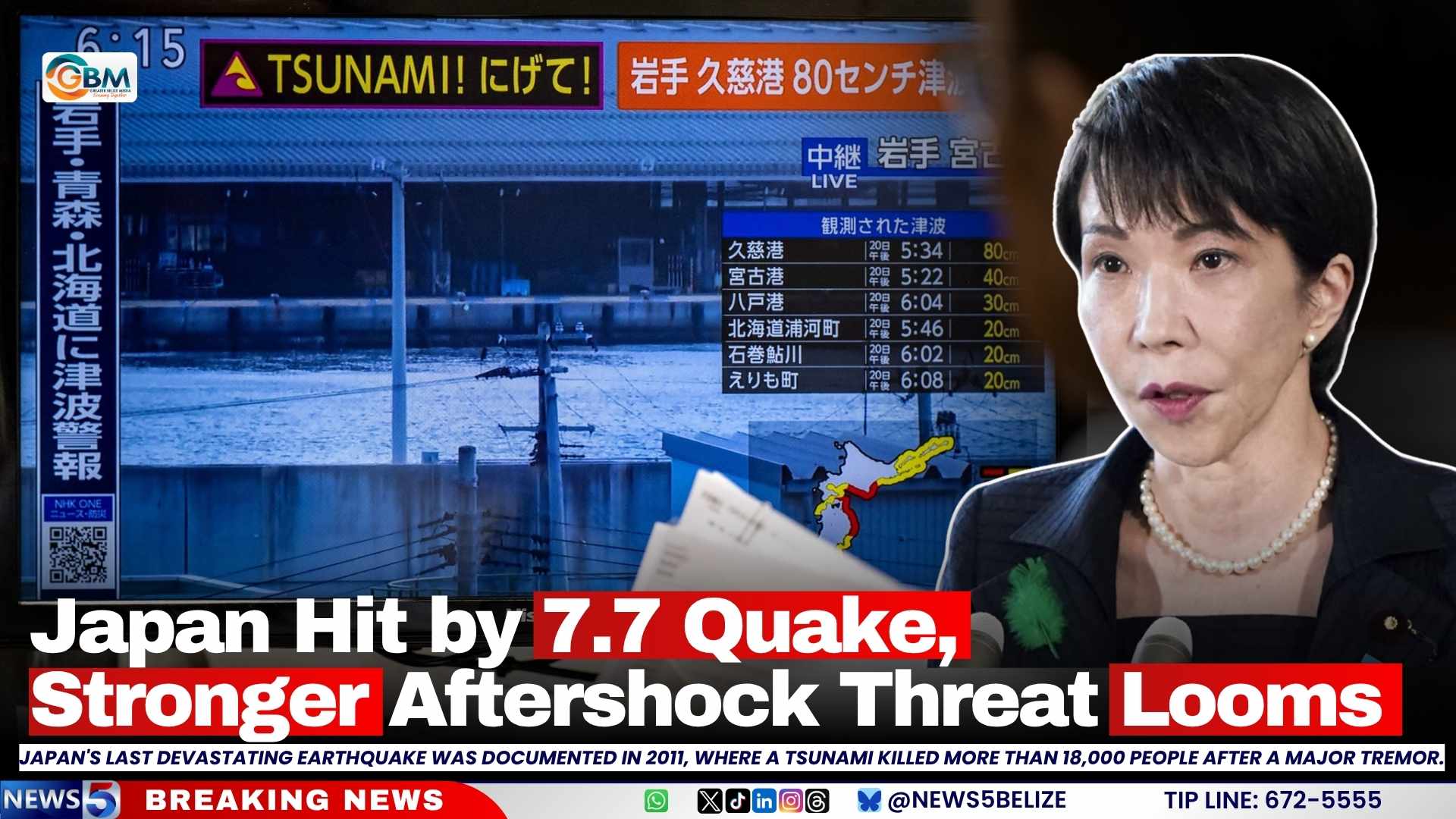
On a Monday afternoon local time, at 4:53 p.m. on April 20, 2026, a powerful 7.7-magnitude earthquake jolted the offshore region of Japan’s northeastern coast, sending shockwaves that rippled across hundreds of kilometers and rattled structures all the way to the capital, Tokyo, according to local Japanese media reports.
Immediately after the tectonic event, Japanese authorities issued a full tsunami warning, forecasting that surges could reach as high as 3 meters and prompting urgent mass evacuation orders for communities along the country’s Pacific coastline. Roughly two hours after the initial quake, monitoring stations recorded maximum tsunami waves of just 80 centimeters, a far smaller impact than initial projections, leading officials to downgrade and ultimately lift the formal tsunami warning.
Despite the easing of tsunami-related fears, Japan’s Meteorological Agency has stressed that significant danger remains, issuing a stark alert that the region faces a high probability of a major aftershock measuring magnitude 8.0 or higher within the seven-day period following the initial quake. Such a powerful aftershock could trigger renewed structural damage, landslides, and even renewed tsunami activity in vulnerable coastal areas.
Japanese Prime Minister Sanae Takaichi confirmed that the national government’s crisis management team was activated within minutes of the first tremor, with survey teams currently deployed across affected regions to tally the full scale of damage and confirm any casualties. In an official press briefing shortly after the quake, Takaichi urged ongoing caution for residents in at-risk zones, saying, “For those of you who live in areas for which the warnings have been issued, please evacuate to higher, safer places.”
Disruptions from the quake have already been documented: high-speed bullet train services across northeastern routes were suspended following the seismic event, and roughly 100 residential properties lost power in affected areas. While low-level tsunami advisories remain in effect for parts of the Japanese archipelago, the most immediate concern for authorities now is preparing for potential large aftershocks.
This seismic event comes against the backdrop of Japan’s long history of devastating earthquakes. The country’s deadliest recent quake struck in 2011, when a massive offshore tremor triggered a catastrophic tsunami that claimed the lives of more than 18,000 people and caused the meltdown of the Fukushima Daiichi nuclear power plant. Japanese authorities have built one of the world’s most advanced early warning and disaster preparedness systems in the years since that disaster, though the threat of large seismic events remains an ever-present risk for the island nation.