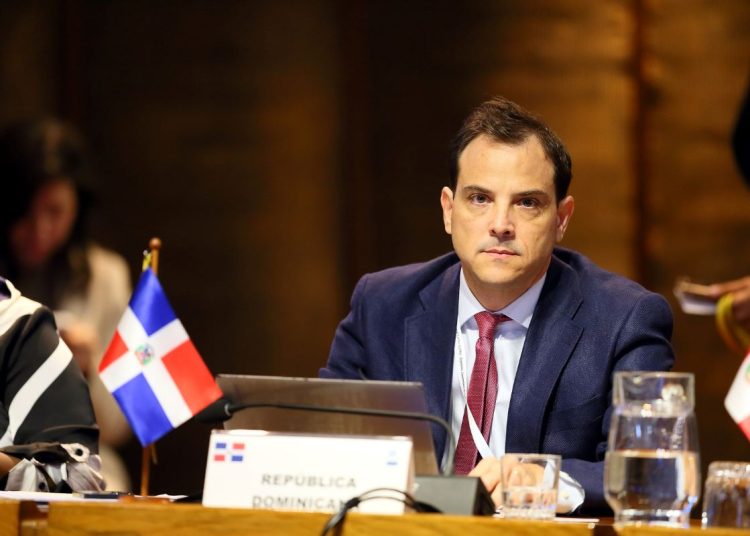
Against the backdrop of a regional sustainable development gathering hosted at the headquarters of the Economic Commission for Latin America and the Caribbean (ECLAC) in Chile, the Dominican Republic has announced a landmark milestone in aligning national policy with global sustainability targets: 96% of its entire national budget is now tied directly to the United Nations’ Sustainable Development Goals (SDGs). This figure was shared by Deputy Minister Martín Francos, who addressed delegates on the topics of cross-sector partnerships and modern public sector management during the four-day event, held between April 13 and 16.
In his remarks, Francos laid out the foundation of the Caribbean nation’s recent progress, pointing to robust economic fundamentals that have created space for strategic sustainable investment. He confirmed that foreign direct investment (FDI) flowing into the country hit $5.03 billion in the most recent reporting period, while remittances— a critical pillar of the Dominican economy—now contribute more than 9% of the nation’s total annual gross domestic product. These steady revenue streams have allowed policymakers to embed sustainability into core budget planning rather than treating it as a separate, underfunded priority.
A core part of the nation’s progress has come from sweeping institutional reforms designed to modernize governance and cut red tape, Francos explained. Key policy overhauls include the rollout of Customs Law 168-21, the ambitious government-wide “Zero Bureaucracy” initiative, and Digital Agenda 2030, a long-term framework to digitize public sector operations. All of these changes share three core objectives: updating outdated regulatory frameworks, boosting government transparency for citizens, and speeding up access to public services across the country.
To strengthen trust in public institutions, the Dominican Republic has also put in place new accountability measures, including updated public procurement rules, expanded open data policies that make government information accessible to the public, and new territorial planning strategies. These planning policies are specifically targeted at closing persistent economic gaps between different regions of the country and integrating innovative technological practices into routine government work.
Looking forward, the nation is building out advanced digital tools to keep its sustainable development efforts on track, including an artificial intelligence-powered system that monitors budget spending to ensure it stays aligned with SDG targets. It has also developed a catalog of 23 alternative financing mechanisms to fund high-priority development projects, creating additional flexibility beyond traditional tax and budget revenue.
Francos stressed that even with domestic progress, cross-regional collaboration remains indispensable to tackling long-standing structural challenges holding back Latin America and the Caribbean, including persistent income inequality and stagnant productivity growth. He highlighted the nation’s planning reforms, long-term foresight strategies, and overarching National Development Strategy as the key pillars that will guide the country’s progress toward the 2030 Agenda for Sustainable Development.
The ECLAC-hosted forum brought together heads of government agencies, civil society stakeholders, and private sector leaders from across the region to review progress on SDG implementation, share successful policy models, and build new cooperative partnerships to advance the global 2030 Agenda, bringing together shared experience to tackle shared sustainability challenges.