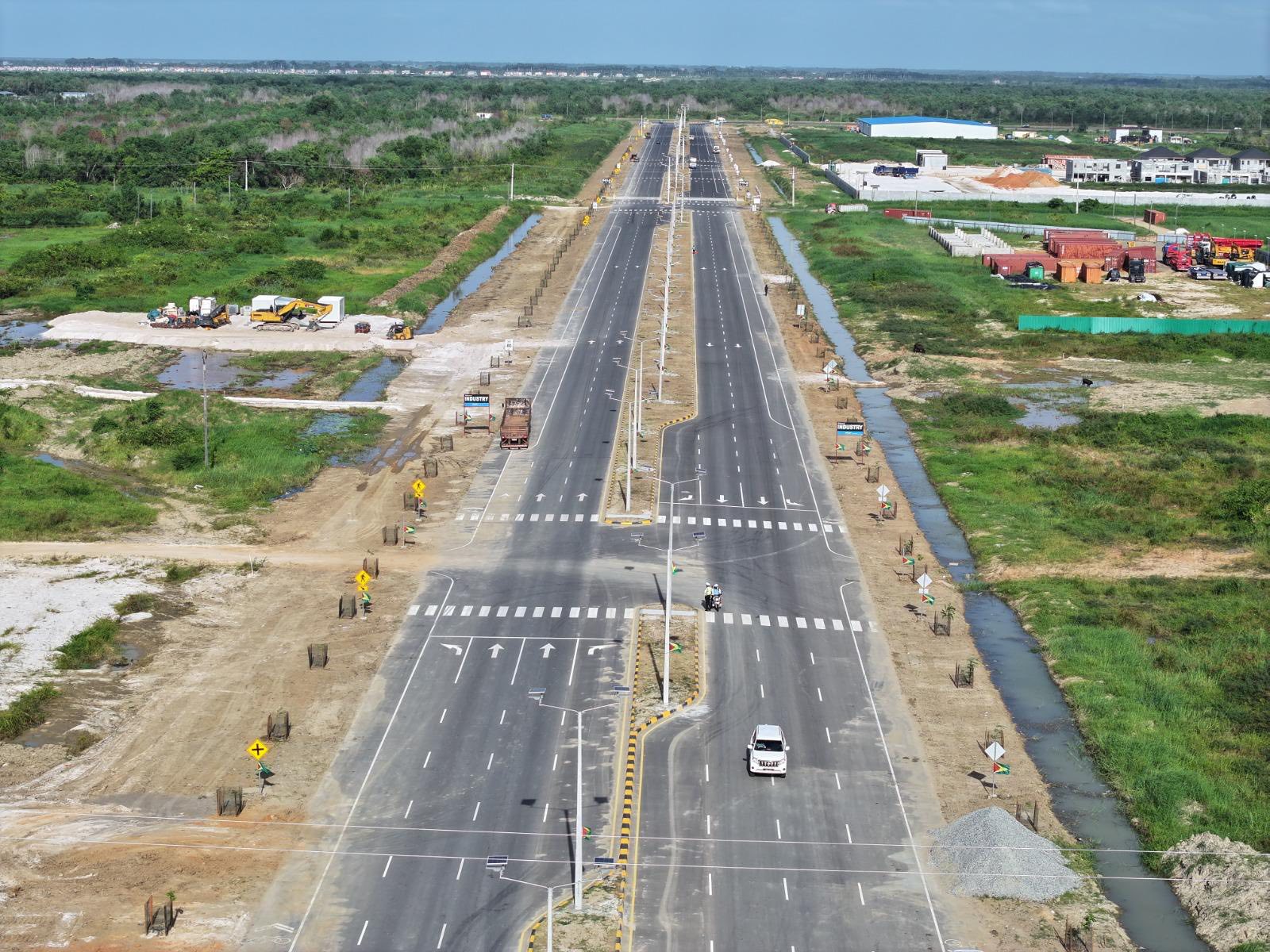
On Monday, April 20, 2026, Guyanese President Irfaan Ali publicly pushed back against fierce opposition criticism of his administration’s controversial move to seize control of more than 50 major roads in Georgetown from the city’s elected Mayor and City Council, dismissing accusations that the power grab amounts to authoritarian overreach. Speaking at the official opening of the upgraded Aubrey Barker Road — a key corridor now extended from Mandela Avenue to the Ogle/Eccles bypass — Ali did not shy away from laying out his ruling party’s clear political ambitions ahead of upcoming Local Government Elections, expected to be held later this year.
The President openly confirmed that the People’s Progressive Party Civic (PPP/C) is aiming to win a majority of the 30 available City Council seats, stating that his party’s intentions have never been ambiguous. “Yes, I’m interested in seeing a People’s Progressive Party Civic-led city council. I’m interested in seeing strong government, strong leadership at the City Hall so don’t guess what I’m saying. My intentions are clear and the intentions of the PPP Civic are clear as ever. We want a chance to run this city because the city deserves better than what it has today,” Ali told attendees at the commissioning event.
The opposition bloc A Partnership for National Unity (APNU) has repeatedly argued that the road takeover is a politically motivated power play, pointing out that Georgetown has long been an opposition stronghold that does not favor the PPP/C. Ali pushed back forcefully against these claims, setting out what he framed as a purely development-focused rationale for the policy shift. “Let me set the record straight. We’re not taking roads for politics. We are designating roads as public roads in the cause of progress. We have no political interest in dispossessing any entity,” he told the assembled crowd.
Under the new designation, the rehabilitated Aubrey Barker Road will now fall under the management and maintenance purview of Guyana’s Ministry of Public Works, rather than remaining under city council control. Ali emphasized that this change was necessary to prevent the roadway from falling into the same state of disrepair that plagues dozens of other city streets under current municipal management. Rejecting claims that the move is politically motivated, the President framed the central government’s intervention as a responsible approach to governance that puts public needs above partisan gain. “We’re not playing politics with potholes. We’re not campaigning with congestion. We’re not grandstanding with gridlock. We’re governing and governing requires responsibility,” he said.
Ali laid out a long-term vision to transform Georgetown into the most dynamic and well-developed city in the Caribbean, noting that this goal depends on modern, reliable infrastructure that can keep pace with rapid growth. He explained that the surge in vehicle ownership across the capital has created urgent demand for upgraded road networks that boost traffic safety and support higher economic productivity, a need the current municipal administration has failed to meet. “It’s not merely to transfer responsibility but is to accelerate modernisation under our national development agenda,” he added, confirming that the designation of more than 50 Georgetown roads as public roads follows this same development-focused logic.
The President also announced plans to expand central government intervention beyond road management, in the wake of a recent poorly executed national clean-up campaign that left much of Georgetown’s drainage network clogged with silt, overgrown vegetation and discarded solid waste. Ali said the central government would take over drainage and flood control responsibility from the City Council, dismissing the ongoing partisan blame game and promising sustained action with public support. “I am not interested in this blame game. If they don’t want to open the koker and if they don’t want to maintain the drain, we will show the people of this city we’re ready to do it and with their support, we will do it continuously,” he said.
For context, Georgetown’s City Council has argued for decades that its ability to deliver basic services has been systematically undermined by central government policy. Dating all the way back to 1994, municipal leaders have complained that the central government has repeatedly blocked the council from accessing critical new revenue streams — including revenue from a municipal lottery, littering fines, waste-to-energy projects, and adjusted property rates and taxes — that would allow it to properly fund infrastructure maintenance and public service operations.