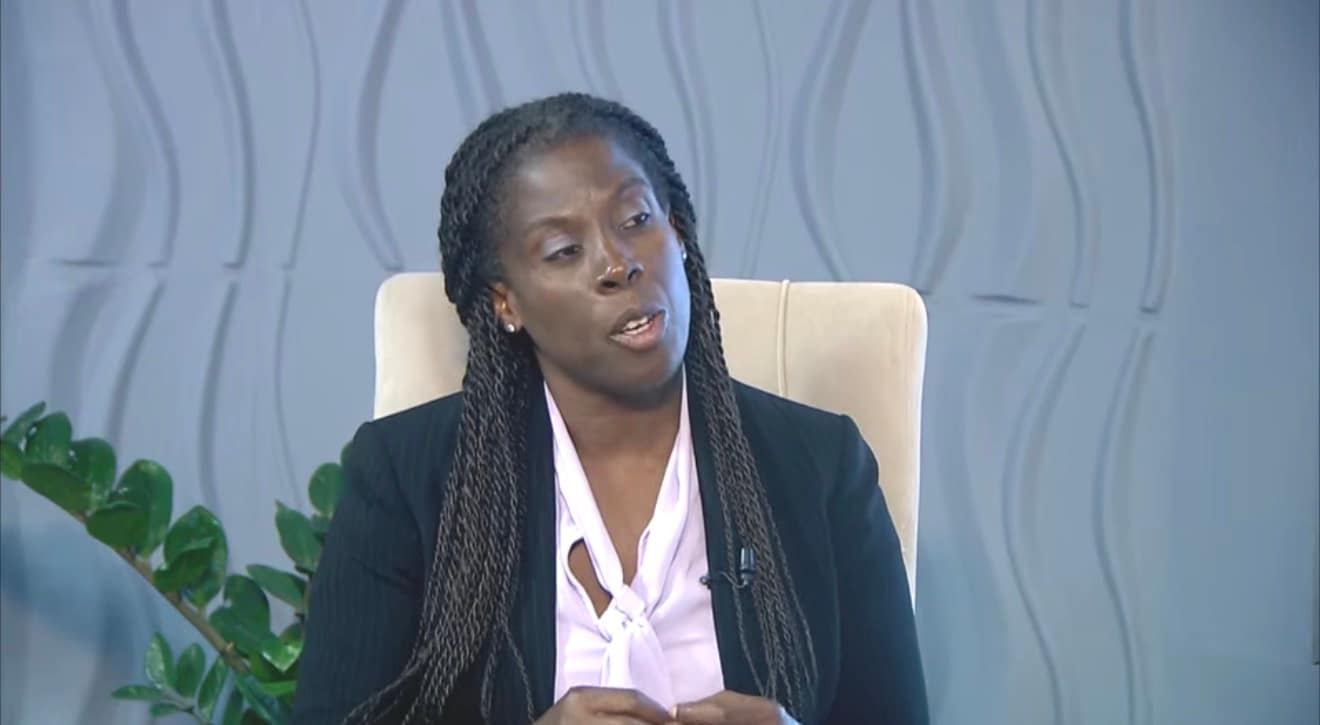
As the April 30 general election in Antigua and Barbuda draws near, independent St. George constituency candidate Gail Pero-Weston, an attorney by profession, is shaking up the political landscape with a bold proposal to restructure how national governance operates. In a recent “Know Your Candidates” interview, Pero-Weston called for a fundamental end to what she frames as a deeply ingrained broken political norm: the practice of shifting full responsibility for basic public services and infrastructure development onto individual Members of Parliament.
Against the status quo that has dominated national politics for decades, Pero-Weston makes a clear distinction: the delivery of critical public goods from road upgrades to healthcare access to functional drainage systems is not a constituency-level duty. It rests entirely on the executive branch of central government, she argues. Decades of weak accountability and misaligned role expectations, she contends, have created persistent systemic problems that have gone unaddressed across every corner of the island, with empty election-cycle promises replacing tangible, long-term solutions.
Under her proposed structural reform, the executive would take full ownership of cross-national development planning and project execution across all 17 of Antigua and Barbuda’s constituencies. Members of Parliament would shift their core mandate away from direct project delivery to focused advocacy for their constituents’ needs. This shift, she explains, would not only streamline governance but also resolve the deep-seated inequality baked into the current system, where constituencies aligned with the ruling party or led by high-influence politicians receive a disproportionate share of national resources, while others are sidelined.
“We do not live in isolation, one constituency from the next. The benefits need to be just the same way, widespread,” she emphasized, noting that infrastructure gaps and healthcare shortfalls are national issues, not isolated local problems. No single parliamentarian, she argues, has the institutional capacity or budget authority to properly address these large-scale national challenges.
Pero-Weston anchors her proposal in a broader campaign centered on government accountability and integrity in public office. Without clear lines of responsibility assigning development duties to the executive, she warns, governance failures will persist indefinitely, forcing voters to have the same unfulfilled conversations about broken infrastructure and unmet needs every election cycle. While she confirms that MPs would still retain a critical role amplifying their constituents’ priorities to national leaders, the actual implementation of development projects must be led and coordinated by central government to ensure equity and effectiveness.
This platform sets Pero-Weston sharply apart from her opponents in the St. George race – candidates from the country’s two dominant political parties, the Antigua and Barbuda Labour Party and the United Progressive Party, who both center their campaigns on delivering targeted constituency-level projects to win voter support. For Pero-Weston, her candidacy is not just a bid for a single parliamentary seat, but part of a growing movement to redefine public expectations of governance and push for long-overdue institutional reform in Antigua and Barbuda.