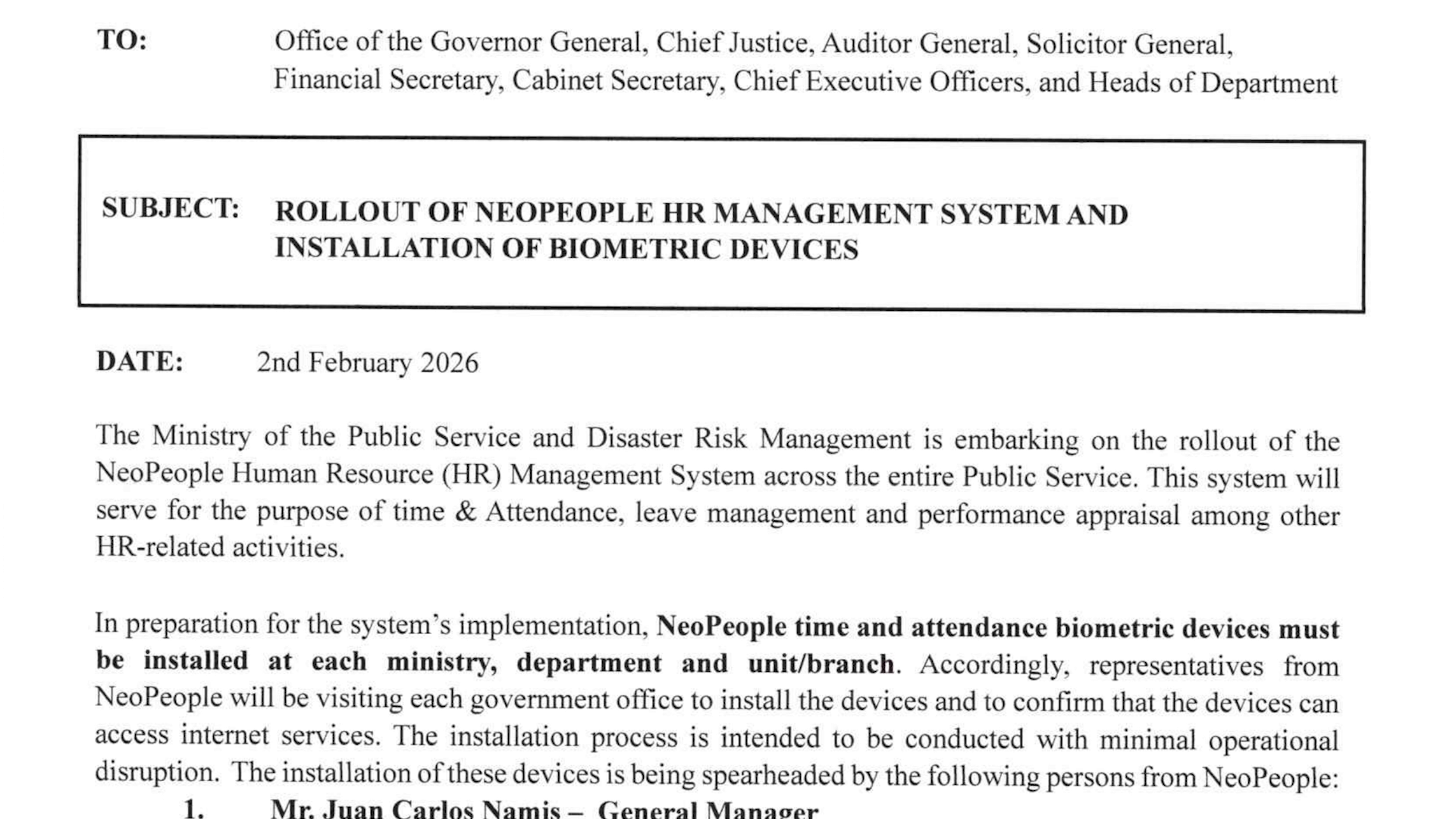
In a newly announced government policy change for Belize’s public sector, the Public Service Union (PSU) has offered conditional support for a directive that freezes public officer transfers and extends current tour of duty terms. While the union frames the move as a welcome first step to address long-standing systemic flaws, it warns the order only delivers short-term relief and leaves deeper, costly problems unaddressed.
Dean Flowers, president of the PSU, laid out the union’s position in a recent interview, confirming full backing for the 2026 transfer freeze while calling for urgent additional reform. Flowers noted that while narrow exceptions for emergency transfers may be necessary, all such exceptions must require formal public justification to prevent abuse.
Flowers explained that the union has been advocating for an overhaul of the transfer system since 2021, in the aftermath of the global COVID-19 pandemic. He told reporters that in recent years, particularly following national election cycles, transfers have repeatedly been weaponized as a punitive tool rather than allocated based on operational efficiency or the well-being of public workers. Many transfers have forcibly separated public officers from their families, causing widespread unnecessary disruption to workers’ personal lives, according to Flowers.
The union documented widespread claims of vindictive misuse of transfer policies as early as 2022, when it collected hundreds of worker complaints that demonstrated consistent abuse of the system. Beyond the human cost, Flowers also highlighted the massive financial burden that unregulated transfers place on Belize’s public coffers.
According to the PSU’s analysis, the government of Belize spends more than $10 million annually on housing allowances alone for transferred public officers. That figure does not include the one-time transfer grants of $1,200 per officer, which add an estimated $200,000 in additional annual public spending. When extra hardship allowances for postings to high-cost, remote locations such as San Pedro, Caye Caulker, Placencia and Punta Gorda – which amount to $350 per officer – are factored in, total annual transfer-related spending reaches between $15 million and $20 million, a sum Flowers calls an unnecessary drain on public resources.
The union has laid out two key additional demands alongside its support for the freeze. First, it requires that all eligible public officers retain full access to their applicable allowances without interruption during the extended tour of duty period. Second, it is calling on Belize’s Ministry of Public Service to implement strict, ongoing monitoring of the directive’s implementation to ensure compliance and prevent loopholes that would allow misuse of the transfer system to continue.
This report is a transcript of an evening television broadcast, with all Kriol language speech transcribed using a standardized spelling system for publication.