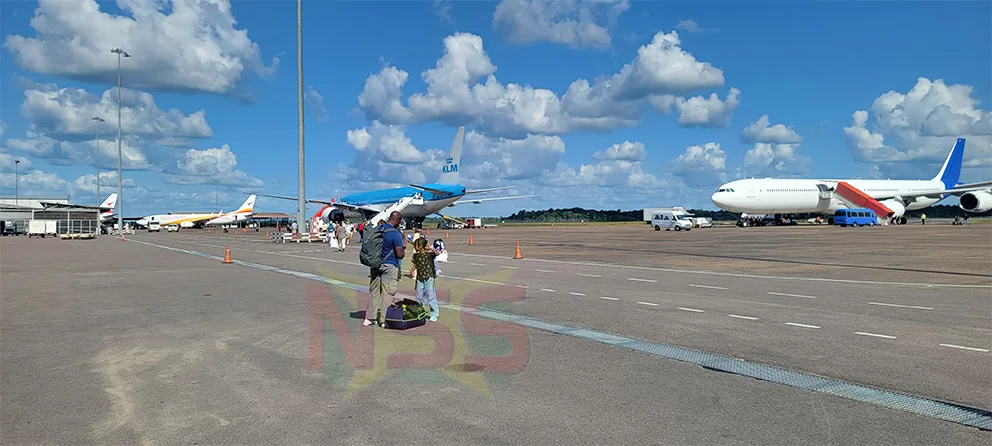
A years-long staffing crisis in Suriname’s air traffic control sector has boiled over into major travel disruptions this month, with widespread cancellations and delays hitting operations at Johan Adolf Pengel International Airport, the country’s primary air gateway. The disruptions are not the result of a formal strike, but rather air traffic controllers refusing to continue taking on unplanned extra shifts to cover persistent understaffing, industry representatives have confirmed.
International aviation standards require a control tower team of between 4 and 5 air traffic controllers to maintain safe operations. Currently, Suriname’s air navigation system only has two controllers on duty at any given time. With staffing already stretched to breaking point, even a single unexpected absence during a shift is enough to grind flight operations to a halt.
The Suriname Air Traffic Controllers Association (Satca), which represents the country’s air traffic control workforce, first warned of growing systemic pressure on staff last week. The scale of the shortage is staggering: the sector requires 80 fully trained controllers to meet operational demand, but only 25 are currently active in service. This leaves each existing worker covering the workload of three full-time positions, a burden that has been building for decades without meaningful intervention.
The ongoing disruptions are already carrying tangible economic costs. On Friday alone, tons of cargo—including high-value fresh fish exports—were unable to depart the country, threatening producer revenues and Suriname’s trade reputation. Compounding the uncertainty, a number of current controllers have recently taken accrued leave to use up accumulated vacation days, leaving even fewer staff to cover daily operations with no clear timeline for restoring full staffing capacity.
Satca leaders emphasized that controllers have upheld their end of a January agreement reached with Suriname’s president, maintaining constructive engagement and fulfilling all core responsibilities over recent months. To date, however, none of the promised critical improvements to working conditions and systemic gaps have been delivered. Key unaddressed issues include an unfair pay structure that sees less responsible roles in the sector often earn higher compensation than air traffic controllers and operational managers, with a promised pay adjustment still not implemented. Backlogged overtime pay has only been partially disbursed, with the entire processing stalled since March 2023. Trainee candidate controllers still receive just 5,000 Surinamese dollars a month, with no salary improvements after five months of training. Existing job allowances no longer reflect the extreme weight and complexity of air traffic control work. Recent recruitment rounds have failed to attract enough qualified candidates, further worsening staffing pressures. Mandatory medical certifications required for license renewals have not been carried out since 2023, leaving many controllers’ active status in limbo. And critical operational equipment is long overdue for replacement and modernization.
Satca has warned that controller willingness to continue covering staffing gaps with extra shift work is rapidly eroding under current conditions. The association stresses that voluntary extra shifts cannot act as a permanent, unlimited solution to systemic understaffing. For more than 15 years, active controllers have compensated for staffing shortfalls by taking on extra shifts and working unpaid or backlogged overtime, but successive Surinamese governments have failed to implement long-term, sustainable fixes to the crisis.
Satca attributes the ongoing failure to address the crisis to mismanagement of leadership appointments in the sector: senior roles are currently filled based on non-technical criteria rather than being awarded to candidates with hands-on operational expertise. The association notes that effective leadership of the sector requires direct operational knowledge, ideally from a current or former active air traffic controller.
The association calls the current situation, where unqualified leadership, organizational failures and crippling work pressure are tolerated, unacceptable, particularly given past aviation accidents where gaps in communication and organization contributed to deadly disasters. For Satca, the safety of air traffic control is a non-negotiable priority that cannot be compromised for any reason.