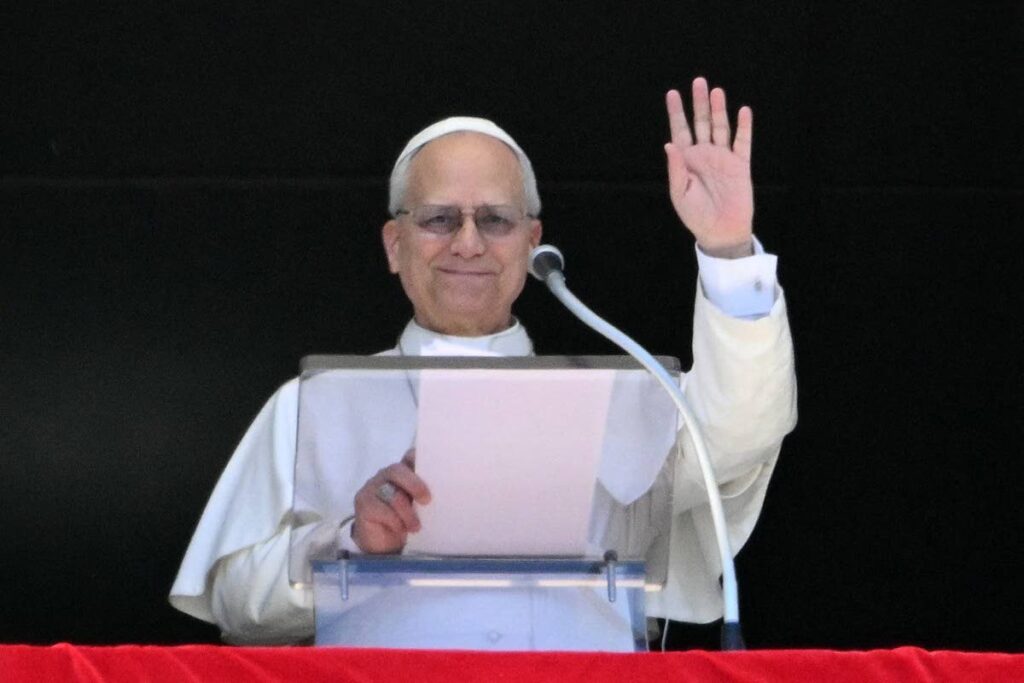
A heated public exchange of criticism between former president and 2024 election winner Donald Trump and Pope Leo has stirred significant anger among segments of U.S. Catholics, a critical voting demographic that backed Trump in last year’s presidential race, with many arguing the American leader has crossed a line in his personal attacks on the pontiff.
The conflict between the two leaders has spilled across multiple high-stakes policy areas, from immigration policy to tensions surrounding Iran and the ongoing Middle East war. Most recently, Trump delivered an unprecedented rebuke by labeling the Chicago-born pontiff “weak” — marking the first time a sitting U.S. president has launched such a direct personal attack on a sitting pope. Pope Leo has publicly stated he has a moral obligation to speak out against armed conflict, a stance that has put him directly at odds with Trump’s hawkish foreign policy positions.
Among the most controversial incidents that sparked public outrage was a since-deleted AI-generated image posted by Trump that depicted the former reality TV star and real estate developer in a frame that framed him as a Jesus-like figure. Outside a New York City church Friday, 88-year-old retired classics professor Jim Supp told AFP that Trump’s attempt to question the theological perspective of an ordained priest was “totally ridiculous.” “There are certain things in life not to joke about,” Supp said, echoing broader frustration among Catholic voters who see the post as a disrespectful provocation. For 68-year-old retired advertising executive John O’Brian, the circulation of the image amounted to outright blasphemy for followers of Christianity.
Pope Leo later addressed the risks of unregulated artificial intelligence misuse in the wake of the post, though he stopped short of directly naming Trump in his comments.
For decades, sitting U.S. presidents have intentionally avoided openly criticizing popes out of respect for the large and politically influential U.S. Catholic electorate. Even as he won the 2024 presidential election with majority support from Catholic voters, Trump has abandoned this longstanding norm, launching blunt public attacks that have created new political vulnerabilities for the Republican Party ahead of November’s upcoming midterm elections — even among the party’s more conservative Catholic base.
Anthony Clark, a 26-year-old policy fellow at an anti-abortion organization who describes Trump as a “very good president” with strong policy intentions, acknowledged that the commander-in-chief often acts imprudently when discussing sensitive, divisive topics. “But I think that intentions aren’t everything, and I think he can be imprudent at times in what he says or in the way that he approaches especially controversial topics,” Clark told AFP outside a Catholic basilica in Washington D.C.
While popes have traditionally steered clear of overt involvement in U.S. domestic partisan politics, Pope Leo’s willingness to stand his ground against Trump has earned him admiration from some Catholic voters. “I’m really glad that Pope Leo stood his ground when he said he’s not afraid of the administration,” 22-year-old Carolina Herrera said in Washington. “You should not mess with the pope, no matter what, don’t mess with him.”
Though Trump was raised Presbyterian, has been married three times, and rarely attends formal religious services, he has closely aligned himself with the Christian conservative movement since entering politics. Christian right leaders have openly praised Trump for delivering their top policy priority: rolling back the nationwide constitutional right to abortion, a change made possible by the three Supreme Court justices he appointed during his first term in office.
Even in deep-red Texas, a Republican stronghold where Christian conservatism dominates state politics, reactions to the public feud remain divided. At a midday mass in Houston, some attendees criticized both leaders for their public confrontation. “I don’t think either of them are acting the way they should be acting,” said Ann, a 72-year-old white woman who declined to share her last name. She added that the pope has been “very harsh on America,” arguing that Jesus’s teachings did not bar national leaders from protecting their citizens and sovereign borders.
For 67-year-old Latino Houston resident Manuel, the top priority remains ending the ongoing conflict in the Middle East, and he called for both leaders to set aside their differences. “Because right now, this is mainly about peace. We need peace in the Middle East,” he said.