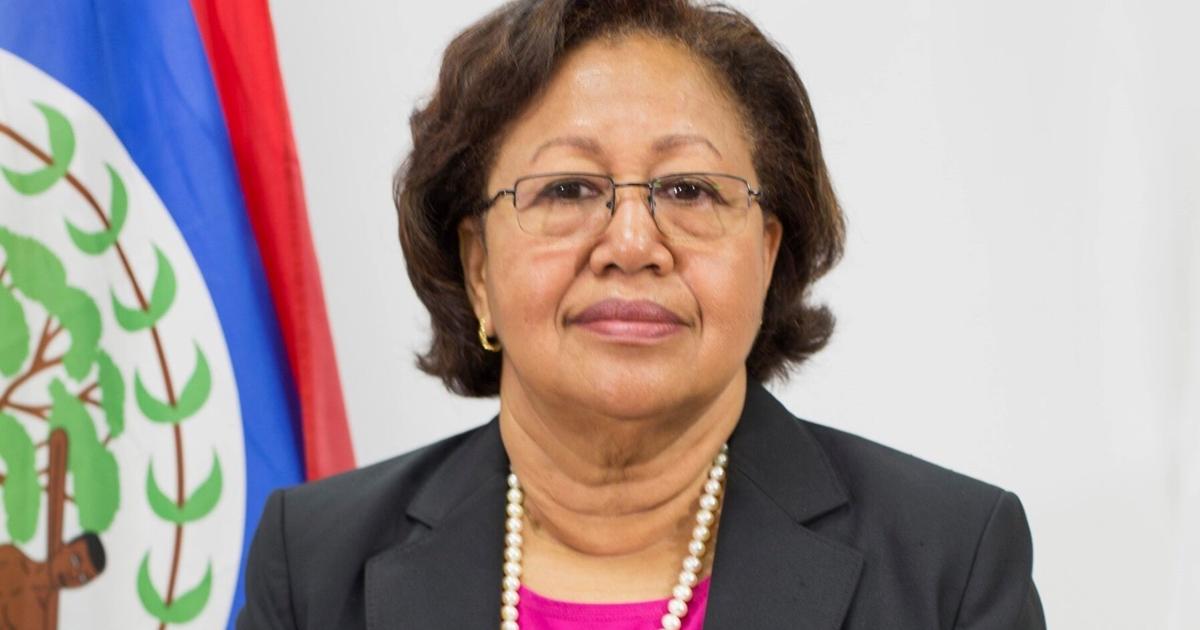
A deepening transparency crisis has rocked the Caribbean Community (Caricom), as Trinidad and Tobago Prime Minister Kamla Persad-Bissessar has leveled explosive allegations of corrupt backroom dealing against the regional bloc’s leadership, centered on the controversial reappointment of Secretary-General Dr. Carla Barnett.
At the heart of the controversy is a bombshell revelation from Persad-Bissessar: the official April 11 statement defending Barnett’s reappointment, published publicly under the name of Caricom Chairman and St. Kitts and Nevis Prime Minister Dr. Terrance Drew, was actually written by Barnett herself. Document metadata shared by the prime minister confirms Barnett as the statement’s original author, a revelation Persad-Bissessar argues exposes the fundamental conflict of interest plaguing the bloc’s decision-making process.
The dispute stretches back to the February 2026 Caricom Heads of Government Conference held in St. Kitts and Nevis. Persad-Bissessar attended the opening sessions and departed on February 25, leaving Foreign Minister Sean Sobers to lead the Trinidad and Tobago delegation. On the morning of the scheduled closed-door Nevis retreat on February 26, a WhatsApp message sent by Barnett to the Caricom Council for Foreign and Community Relations (COFCOR) chat group – which all regional foreign ministers, including Sobers, are members of – clearly stated that Chairman Drew had ordered the retreat to be restricted to heads of government only, barring all ministers from attending. This directly contradicts Drew’s later claim that Sobers was invited to the retreat and declined to attend due to seasickness, a claim Sobers formally refuted in an April 9 letter.
Persad-Bissessar has lambasted the entire Caricom foreign minister corps for what she calls their “deliberate and disgraceful silence” in the wake of this exposed contradiction. All COFCOR members have access to the unaltered February 26 WhatsApp message confirming the disinvitation, yet none have stepped forward to confirm Sobers’ account. This collective silence, the prime minister says, amounts to active complicity in smearing the foreign minister’s reputation to cover up procedural misconduct.
Trinidad and Tobago’s core objections stretch beyond the conflicting narratives about the disinvitation. The reappointment was never listed on the official public agenda for the conference, and no reference to the decision appeared in the March 1 joint communiqué or the March 2 official summary of Caricom decisions published after the meeting. It was not until March 25 that Drew formally announced Barnett’s second five-year term, set to begin when her current term expires in August 2026, following a vote by a majority of heads of government held during the closed-door retreat.
Persad-Bissessar has drawn sweeping conclusions about the state of Caricom’s leadership, describing the bloc’s secretariat as “dysfunctional, dishonest and incompetent.” She argues that the opaque process is the inevitable outcome of a system where political allies, party loyalists, and relatives of regional politicians are appointed to top management roles to preserve a decades-old “old boys club” status quo that benefits regional business and political elites, rather than appointing independent, competent technocrats. What Caricom frames as core ideals of regional integration, integrity, and inclusion, she says, is just a “smoke screen” for behind-the-scenes deals that prioritize keeping aligned political parties in power across the region and exclude unaligned groups from the entrenched political establishment.
In a statement to local media, Foreign Minister Sobers backed the prime minister’s campaign, calling the situation “intolerable” and a “profoundly sad moment for the Caribbean people.” He emphasized that no amount of public relations spin can distract from the core facts: Trinidad and Tobago was deliberately excluded from the retreat, the reappointment was never added to the official agenda, and the entire process violated the procedural requirements laid out in the Revised Treaty of Chaguaramas, Caricom’s founding legal document.
Despite the scathing criticism, Persad-Bissessar has repeatedly emphasized that Trinidad and Tobago has no plans to leave the regional bloc, which it helped found 52 years ago and has heavily invested in over decades. “We helped build this organisation and will be a part of fixing it to benefit all the people of Caricom,” she said, adding that the country’s economic, security, and development future is deeply tied to the bloc’s success.
The prime minister has vowed to continue escalating the matter publicly and aggressively until two demands are met: full accountability for all actors involved in the opaque reappointment process, and sweeping institutional reforms to guarantee future fairness, transparency, accountability, and non-interference in the domestic politics of member states. She has noted that even small local bodies like village councils and sports clubs keep formal, timestamped meeting minutes and performance records, and Caricom, as a 52-year-old regional institution, has no excuse for failing to produce the documentation she has requested about the reappointment process, which includes communications, meeting minutes, and performance appraisals for Barnett.
A full timeline of the unfolding controversy tracks a steady escalation of tensions over two months: the initial exclusion at the February retreat, the first public announcement of the reappointment in late March, repeated formal requests for documentation from Trinidad and Tobago that went unanswered, an emergency Caricom virtual meeting that Trinidad and Tobago boycotted over the lack of transparency, and the most recent bombshell revelation that Barnett authored her own defense statement released under the chairman’s name.