For decades, public audiences have held celebrities to an unwritten, unspoken rule: that entertainers exist as larger-than-life figures untouched by the fragility that defines ordinary human life. Fans often lock their favorite performers into a permanent snapshot of their brightest moments, remembering them only for roaring crowds, dazzling stage lights, and the joy they bring to crowds around the world. But the reality of stardom is far more nuanced: even the most beloved, upbeat icons carry private battles no audience sees.
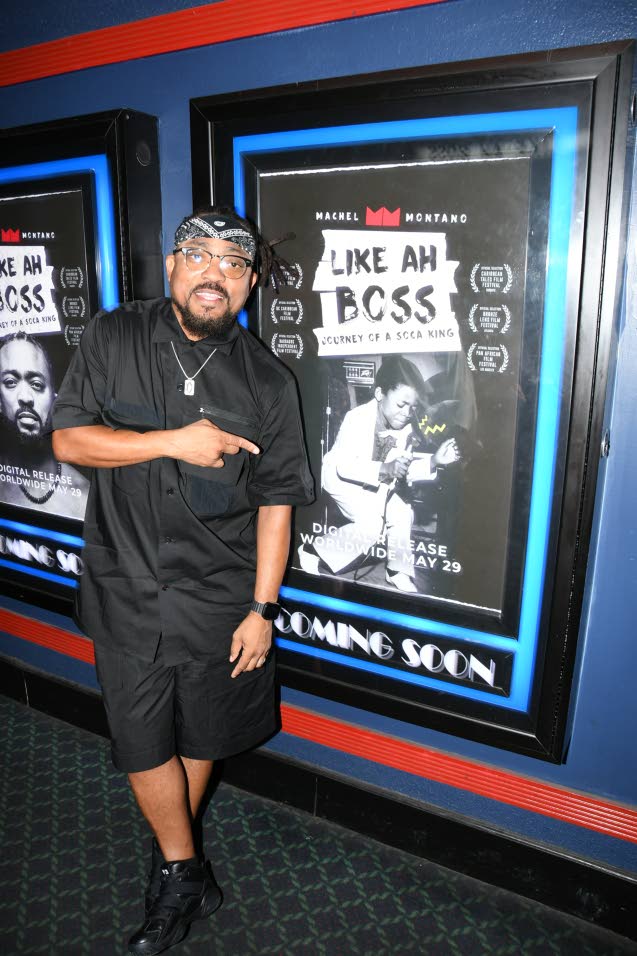
Just days after headlining multiple stages at Jamaica Carnival 2024, soca music’s undisputed king Machel Montano stepped into a new kind of spotlight—one that asked him to set aside his stage persona and embrace radical vulnerability. On Tuesday afternoon, hundreds of diehard soca fans packed into Kingston’s Carib 5 Cinema for the world premiere of *Like Ah Boss: Journey of a Soca King*, a documentary that does far more than celebrate Montano’s decades-long career: it peels back the curtain to show the man behind the music.
Unlike typical music documentaries that rely on curated highlight reels and career best moments, *Like Ah Boss* reads more like a raw, unfiltered confession. Audiences expecting the high-energy, effervescent performer who fills carnival grounds with joy got a far more intimate portrait: a man who, even after decades in the spotlight, has fought quiet, devastating battles with mental health that stayed hidden for years.
Charting Montano’s trajectory from a child prodigy performing to crowds as a preteen, to a teen heartthrob, to the most decorated soca legend in history, the film pulls back the veil on the relentless pressure of building a global brand. It details the multiple times Montano had to rebuild his career from the ground up after burnout and collapse, and delves into struggles that almost never make entertainment headlines: open admissions of chronic depression, moments where he contemplated suicide, and a devastating financial collapse that left him reeling. These are not the struggles audiences expect from an artist whose name has been synonymous with celebration, whose tracks have served as the soundtrack for carnival and joy across six continents.
That contrast is the core message of the film. It cuts seamlessly between footage of Montano commanding massive carnival stages, and quiet, intimate close-ups where he opens up about the irony of his career: while he spent decades teaching the world how to celebrate, he was fighting just to survive his own private darkness.
“There were moments when I thought of doing harm to myself and I had to really dig deep,” Montano shares in one raw scene. “There have been moments in my apartment, by myself, in the dark, in the corner, crying to the point of no tears. There was a breaking point for me in 1996 where I felt like I just had to stop. I went away from music, stayed inside my room and it was a lot of dark times.”
What makes the documentary resonate long after the closing credits is its unflinching honesty. It never minimizes the depth of Montano’s pain, nor does it frame his struggles as a simple, feel-good redemption arc. Instead, it lets him speak not as a global icon, but as a human being who had to confront his own darkness over and over, and choose every single day to keep moving forward.
That drive to push through loneliness and depression ultimately led to one of the biggest career comebacks in soca history. “There was something about that loneliness and really wanting to come out of it and succeed that kind of pushed me…out of that depression,” Montano explains. “I had one of my biggest years in 1997. In 1997 I decided I was gonna win Road March.”
And win he did. To date, Montano has claimed the coveted Road March title 12 times, with his most recent win coming just this year for his hit single *Encore*. With this latest victory, he officially surpassed the late soca legend Lord Kitchener to become the all-time record holder for the most Road March wins in history.
By the end of the documentary, the title *Like Ah Boss* takes on a whole new meaning. It is no longer just a reference to Montano’s signature stage swagger and command of the crowd. Instead, it becomes a testament to quiet endurance: the kind of strength that does not brag or perform, but reveals itself only in survival.
In an interview with the Jamaica Observer following the premiere, Montano said he would not change a single chapter of his life, even the darkest ones. “Right now my life is full of gratitude,” he shared. “It’s two things I have right now; gratitude and patience, meaning I’m very excited for the next big thing to happen, but I know I have to wait and look back at everything and give thanks.”
*Like Ah Boss: Journey of a Soca King* will officially roll out in cinemas across the globe starting May 29. Organizers encourage all soca fans and anyone who has fought private battles to see the film: it invites audiences to look beyond the performance, understand the hidden cost of greatness, and recognize that even the most celebrated, joyful lives are woven through with unseen struggles. The premiere included a post-screening panel discussion hosted by Yendi Phillipps, featuring Montano, his manager and co-producer Che Kothari, and co-producer Bart Phillips.