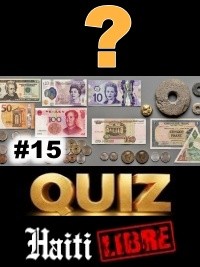
In the 15th installment of HaitiLibre’s popular “Did You Know?” general knowledge quiz series, published April 15, 2026, readers are invited to explore a little-known linguistic and economic fact that underpins the entire global financial system: the origins of modern currency terminology.
The quiz’s featured fun fact breaks down the linguistic roots of two key financial terms. First, the word “fiduciary” traces its lineage back to the Latin noun fiducia, which directly translates to “trust” — a core concept that still anchors modern monetary systems today. This stands in stark contrast to the gold standard that dominated global finance until the 20th century. Under that historic system, every paper banknote issued carried a tangible guarantee: holders could theoretically exchange their note for a fixed, specific weight of gold or another precious metal, tying the currency’s value directly to a physical commodity.
Today, the global economy relies on what is known as fiat money, a term that also draws from Latin, originating from the phrase “fiat,” meaning “let it be done.” Unlike gold-backed currency, the value of fiat money does not come from the material it is made of (paper or digital code, for that matter) — instead, its worth is derived from two sources: an official state decree that designates it as legal tender, and the ongoing trust that the public holds in its ability to be exchanged for goods and services. When that public confidence collapses, the result is hyperinflation, a catastrophic economic event where currency loses value so rapidly that banknotes become more useful as fuel for heating than as a medium of exchange, a stark example of what happens when trust evaporates.
Despite this risk, proponents of the system note that fiat money carries significant benefits for modern economic management: it grants central banks the flexibility to adjust monetary policy in response to shifting economic conditions, altering the total money supply in circulation to counter recessions, curb inflation, or support growth. This system, built on an implicit but critical social contract between governments, central banks, and the public, forms the very foundation of modern global finance and international trade.
This educational fun fact is pulled directly from the answer explanation sheets for HaitiLibre’s QuizHaitiLibre platform, an interactive general knowledge hub that launched to the public earlier this year. The platform invites users to test their own knowledge or challenge friends, covering a wide range of topics spanning Haitian current affairs, culture, history, and global issues. For users seeking a more rigorous challenge, the platform’s expert-level menu offers a curated selection of advanced themed quizzes across dozens of subjects.
As of its most recent monthly update on April 8, 2026, the platform has added 28 brand new quiz games to its library, with new content rolling out every month. All of the platform’s exclusive games are free to access, require no user registration, and are designed to accommodate all age groups and knowledge levels. Every quiz offers three distinct difficulty tiers — normal, intermediate, and advanced — and is fully available in both French and English to serve a broad audience.
Readers and knowledge enthusiasts can access the full platform, explore the 15th “Did You Know?” quiz, and browse past installments of the series at the official QuizHaitiLibre website.