A months-long controversy over missing procurement documentation at Jamaica’s University Hospital of the West Indies (UHWI) took a sharp new turn this Tuesday, when top hospital officials formally dismissed the earlier claim that repeated flooding caused the disappearance of critical records. The development has intensified scrutiny of the public health institution’s governance and accountability frameworks before Parliament’s Public Accounts Committee (PAC).
The saga first came to light during the PAC’s March 31 sitting, when Ainsworth Buckeridge, UHWI’s senior director of public procurement, suggested multiple flooding events that hit the hospital’s file storage areas could explain the gaps in documentation flagged in a recent audit by the auditor general. At that meeting, Buckeridge told lawmakers the storage zone had been inundated “at least twice or three times”, leaving open the conclusion that water damage had destroyed the missing records.
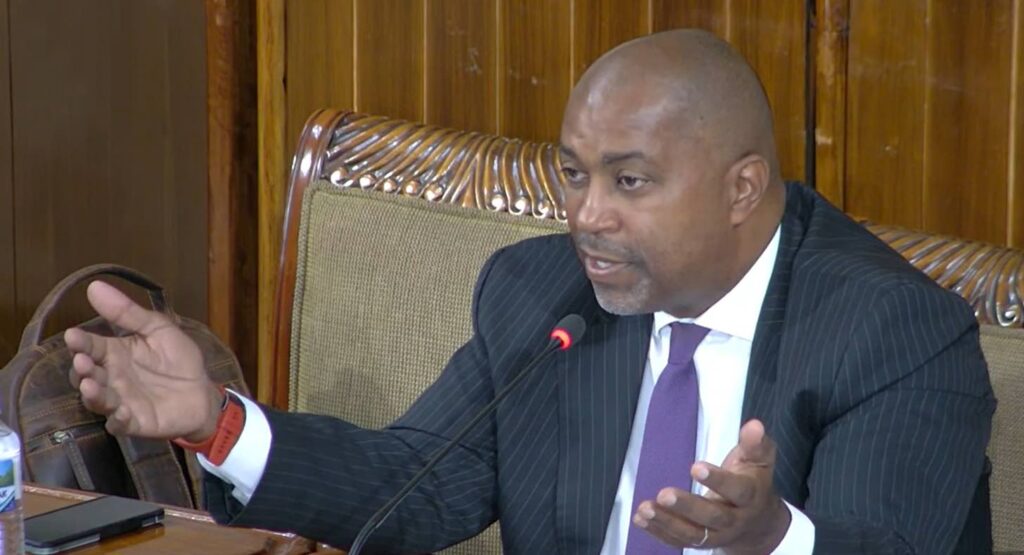
That narrative fell apart entirely during Tuesday’s follow-up hearing, when Eric Hosin, UHWI’s acting Chief Executive Officer, confirmed to PAC chair Julian Robinson that while minor water damage had occurred during past floods, none of the incidents resulted in the destruction of any procurement files. “Mr Chair, based on our investigation, there was some damage. However, there was no destruction of any files,” Hosin told the committee.
Robinson pressed for clarity, asking whether flooding could even partially account for the absence of the key documents. “In essence then, while there would have been damage, damage would not have prevented you from having access to the file, even if the file got wet. So the flooding could not explain the absence of the files, then,” Robinson said. Hosin confirmed this assessment, invalidating the core of the original explanation and opening the door to deeper investigations into UHWI’s administrative failures.
Previously, the PAC had been informed that three flooding events – dated October 2020, March 2022, and October 2023 – had impacted the procurement document storage area. Tuesday’s testimony clarified that while these events caused minor disruption, they never destroyed files or blocked staff access to stored documentation.
With the flooding explanation ruled out, attention has now shifted to the root causes of the missing records, which UHWI management itself has conceded stem from long-standing systemic problems rather than an unforeseen disaster. In a formal submission to the PAC responding to the auditor general’s findings, hospital leaders acknowledged that documentation gaps originated from “fragmented record-keeping systems across departments” and the “inconsistent application of procurement procedures” – confirming broader weaknesses in institutional governance.
To date, UHWI officials report that 28 of the previously missing files have been recovered, but search efforts for the remaining unaccounted-for documents are still ongoing. Hosin told the committee that the hospital is currently working to reconstruct the missing records by cross-referencing data from the institution’s finance department and other internal units, with a target completion date for the reconstruction process set for the end of this month.
Alongside efforts to resolve the missing records issue, hospital officials have also outlined corrective actions to address the flooding problem that was previously mis-cited as the cause of the disappearance. These interventions include targeted drainage improvements and roof repairs to the storage building, which Hosin said have eliminated further flood risks. “We have actually put in a drain to ensure water does not reach the building… as well as we have repaired the roof of the building. And we have not seen any further problems with any flooding or water damage on that building,” he explained.
Even with these corrective steps in place, PAC members have stressed that serious concerns remain about how critical procurement records could go missing in a major public institution that manages large amounts of taxpayer funds. Robinson confirmed that the committee will continue its investigation into the incident, with a particular focus on evaluating UHWI’s existing systems for document storage, internal accountability, and external oversight to prevent similar gaps from occurring in the future.