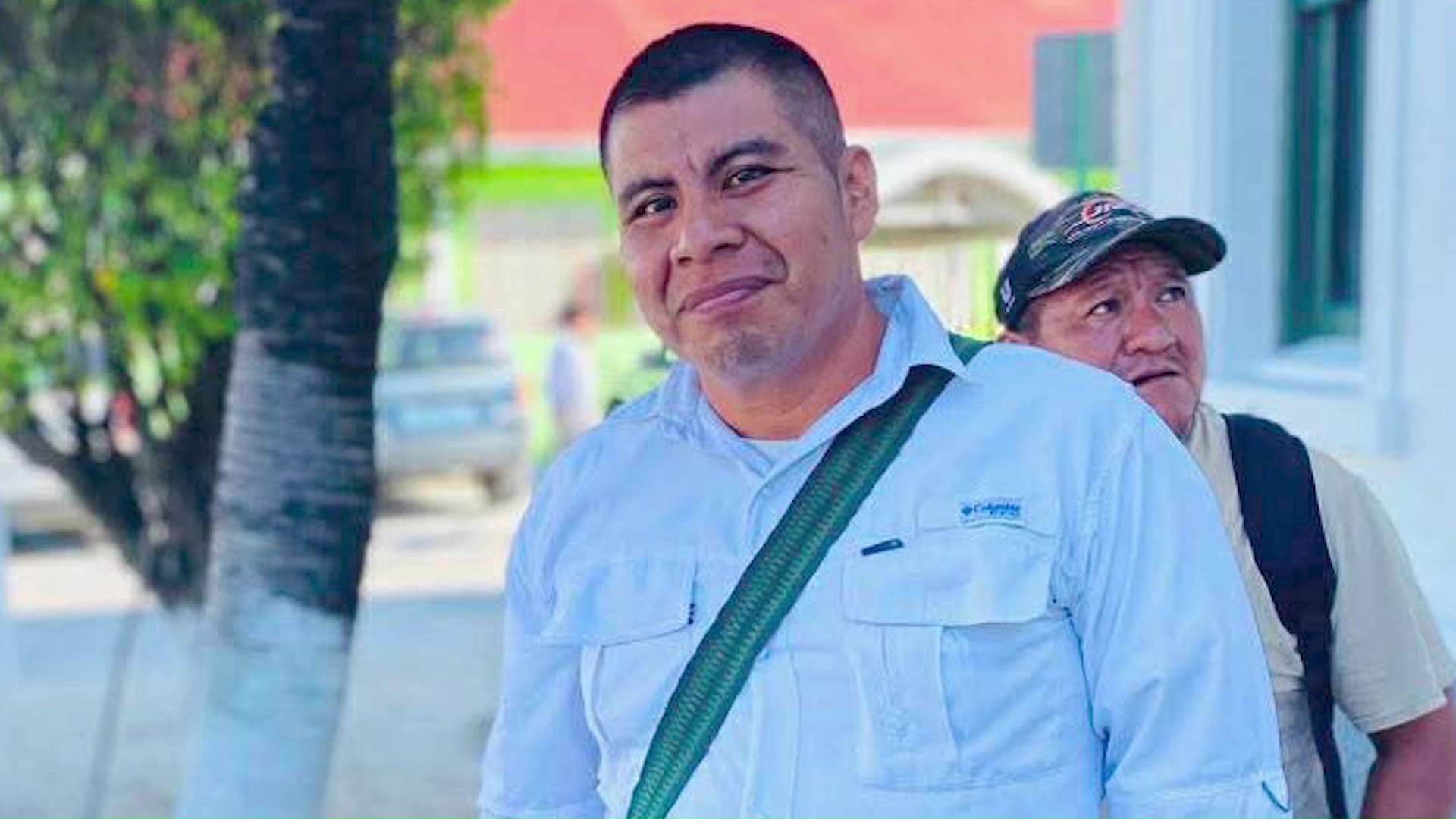
On the cusp of a years-long internal crisis, the small Maya community of Indian Creek has been thrown into further chaos by the unexplained disappearance of its top traditional leader, First Alcalde Marcus Canti. Last seen on his farm this Monday, Canti’s sudden absence has escalated long-simmering tensions between two rival governance factions in the village, leaving residents on edge and authorities scrambling to de-escalate growing violence.
Canti’s disappearance has laid bare a bitter rift that has split the once close-knit community for generations: a power struggle between backers of the centuries-old traditional alcalde system, which Canti led, and supporters of the state-recognized elected village council, headed by Chairman Domingo Choc. Choc has been taken into police custody for questioning in connection with Canti’s disappearance, though no formal charges have been filed.
Local residents report that only two items were found at the site where Canti was last seen: his bicycle and a traditional Maya bag. One anonymous resident, who spoke to local outlet News Five on condition of anonymity, stated that many supporters of Choc maintain his innocence, saying there is no evidence linking the village council chairman to Canti’s disappearance. News Five has also obtained an audio recording, recorded before Canti went missing, that captures the alcalde pleading for assistance in his native Mayan language, though full details of the recording have not been released publicly.
The conflict that preceded Canti’s disappearance centers on unauthorized land distribution. Canti began issuing what he called communal land certificates to village residents, claiming consent orders gave him the authority to redistribute unassigned land. Among the parcels included in the redistribution were roughly 300 acres of privately held conservation land managed by the Ya’axché Conservation Trust, a regional environmental organization.
Dr. Louis Zabaneh, Belize’s Minister of Indigenous Peoples’ Affairs, told reporters that the Ministry of Natural Resources is the only governing body with legal authority to issue formal land titles. Prior to Canti’s disappearance, the ministry sent a formal cease-and-desist letter ordering the alcalde to stop issuing the unapproved documents. Zabaneh noted that Canti’s land grab already infuriated private landowners, community members who recognize the ministry’s formal authority, and conservation groups, deepening the village’s divisions long before he went missing.
Christina Garcia, executive director of Ya’axché Conservation Trust, confirmed that initial reports claimed Canti issued 200 land certificates, but updated information from the community puts the number closer to 280. While Garcia emphasized that the organization recognizes the pressing need for affordable residential land among Indian Creek residents, she stressed that all land transactions must follow formal legal processes to avoid conflicts like the one currently roiling the village.
Since Canti’s disappearance, the situation has grown increasingly volatile. According to village residents, supporters of the missing alcalde have issued violent threats against Choc and his family, vowing to kidnap one of Choc’s children if Canti is not found quickly. Zabaneh also confirmed that supporters of Canti have targeted property linked to Choc, and that the Ya’axché Conservation Trust’s local field station was damaged during a recent community unrest.
To date, Belizean police have not confirmed that foul play was involved in Canti’s disappearance, and no suspects have been named publicly beyond Choc’s detainment for questioning. As law enforcement continues the search for the missing traditional leader, Minister Zabaneh has issued an urgent call for calm, urging all factions in the community to stand down and allow authorities to complete their investigation. The village now remains at a tense tipping point, with the land dispute that divided the community for years now transformed into an urgent search for a missing leader and a fight to prevent further violent conflict.