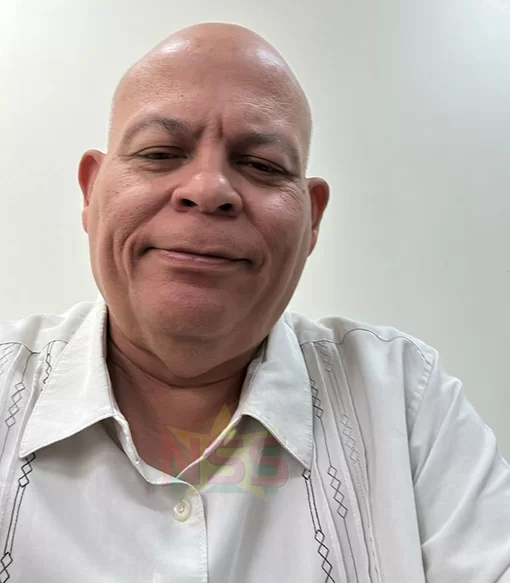
On April 13, former Surinamese Minister of Education, Science and Culture Robert Peneux outlined deep-rooted systemic failures plaguing the country’s public sector in an exclusive interview with local outlet Starnieuws, tracing most of the current dysfunction to the elimination of the decades-old Functie Informatie Systeem Overheid (FISO) civil service framework.
Implemented during the administration of former president Ronald Venetiaan, FISO was designed to bring structure and transparency to the sprawling government bureaucracy. Under the system, every public sector role came with clearly defined qualification requirements, creating a clear career progression path that incentivized civil servants to pursue continuous professional development to qualify for senior positions.
According to Peneux, years of political decision-making and pressure from labor unions gradually eroded the FISO framework until it lost its core function. The dismantling of the system has fully decoupled job roles and civil service ranks from required professional qualifications, creating skewed, unfair dynamics across all levels of government. Unqualified candidates with political connections now hold many senior leadership roles, a reality that has bred deep resentment among career civil servants with the right credentials and directly undermined the quality of national policy development, Peneux explained.
Beyond the qualification mismatch, Peneux added, the government suffers from a fundamental lack of clear policy domain boundaries between individual ministries. No department has formally documented the exact scope of policy areas it manages, leading to overlapping roles, redundant teams of policy advisors and widespread systemic inefficiency that slows public service delivery.
Peneux also called out the broken pay structure across both government agencies and state-owned parastatal companies, noting that chief executives at state-owned firms earn drastically higher salaries than the cabinet ministers who oversee their work. At the same time, stagnant low base salaries for rank-and-file civil servants have triggered a mass exodus of skilled, qualified workers from the public sector.
This brain drain is particularly visible in the education sector, Peneux said. Teacher training instructors at the Instituut voor de Opleiding van Leraren (IOL) are leaving in droves for higher-paying positions at Anton de Kom University of Suriname or for roles abroad, creating a shortage of full-time teaching faculty that is damaging the country’s pipeline of new educators. Peneux emphasized that the scale of the pay gap has made retaining qualified full-time instructors nearly impossible for IOL.
The former minister stressed that the public sector’s troubles extend far beyond uneven compensation. Ministries now face a chronic shortage of implementation capacity, in large part because political loyalty is routinely prioritized over professional expertise when hiring and promoting public servants.
“Effective policy can only succeed when the civil service has the right people with the right qualifications in place,” Peneux said. He called for a full, comprehensive audit of the entire public administration apparatus, including a full review of the national pay scale and job evaluation system. Without urgent, large-scale intervention, Peneux warned, the public sector will face further systemic erosion that will undermine its ability to serve Surinamese citizens.
In closing, Peneux criticized the national policy debate for lacking meaningful depth, noting that while political actors engage in extensive discussion, concrete action plans and long-term structural solutions remain out of reach. “We talk a great deal, but real, tangible results still fail to materialize,” he said.