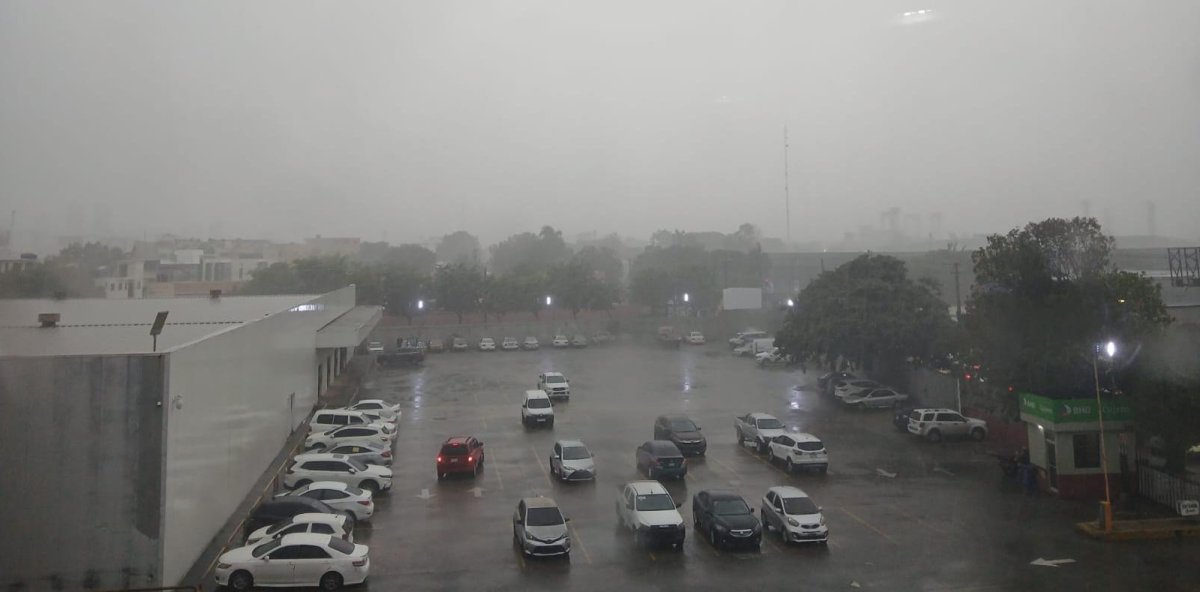
For many people living in or familiar with the Dominican Republic, a widespread misconception has persisted: that the country’s wettest weather aligns with November, or that unusually heavy early-spring downpours in recent years have shifted the peak rainfall to April. But 30 years of systematic climate measurements tell a far different story, according to a leading Dominican meteorologist.
Cristopher Florian, a climatology specialist at the Dominican Institute of Meteorology (Indomet), shared the findings in an exclusive interview with local newspaper HOY, debunking the common misconception about the country’s rainfall patterns. Long-term climatological data collected consistently across decades confirms that May actually holds the title of the Dominican Republic’s rainiest month, with June ranking as the second wettest, Florian explained.
“That conclusion is firmly established by climatological science, drawn from three decades of continuous rainfall measurements across monitoring sites across the country,” Florian told reporters. The meteorologist added that while extreme heavy precipitation events have occurred in April and November in recent years, that short-term trend is not enough to upend long-held climate patterns.
To formally declare a shift in a region’s long-term climatology, scientists require a continuous 30-year dataset to filter out short-term random weather fluctuations and identify sustained trends, Florian noted. “We still need many more years of consistent measurements to confirm that April or November have overtaken May and June as the country’s rainiest months,” he clarified.
Beyond correcting the long-held misconception, Florian also issued a practical forecast for the coming days, warning residents that widespread rainfall will persist through the weekend. He projected that precipitation levels will climb notably on Sunday, and the wet weather will continue into Monday with increased intensity. This forecast raises the risk of several hazardous conditions, including swelling of rivers, streams and mountain ravines, as well as flash urban flooding in low-lying developed areas, the meteorologist cautioned.