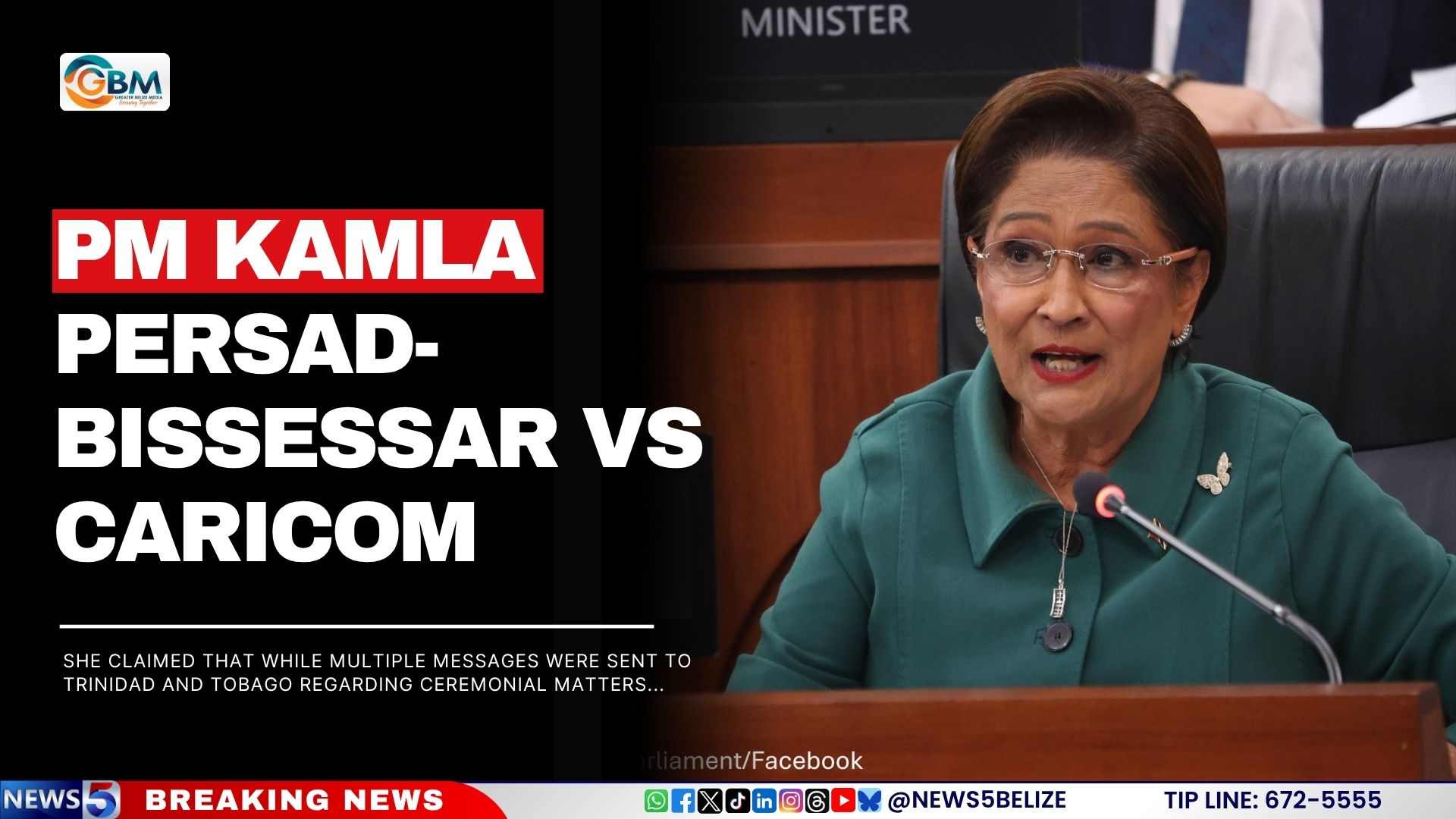
A public dispute has emerged between Trinidad and Tobago Prime Minister Kamla Persad-Bissessar and the Caribbean Community (CARICOM) over the recent reappointment of the bloc’s top administrative leader, throwing into question regional governance procedures and transparency amid a high-stakes diplomatic standoff.
The conflict follows the Twenty-Fifth Special Emergency Meeting of CARICOM Heads of Government, held Friday to address governance concerns raised by Trinidad and Tobago — a meeting that neither Persad-Bissessar nor any of her government representatives attended. In an official statement released after the session, CARICOM Chairman Dr. Terrance Drew, who also serves as Prime Minister of St. Kitts and Nevis, laid out the regional bloc’s account of the events that led to Secretary-General Dr. Carla Barnett’s reappointment at the 50th Regular Meeting of the CARICOM Conference of Heads of Government, hosted in St. Kitts and Nevis between February 24 and 27, 2026.
According to Drew’s statement, all CARICOM member states received formal advance notification of the February meeting’s official schedule, draft agenda, and working breakdown, including clear details of which topics would be discussed in plenary sessions, caucus meetings, and the closed Heads-only retreat. All heads of government offices received official correspondence confirming the retreat’s date and island venue, and every member state acknowledged receipt of the materials, CARICOM claims.
The narrative continues that Persad-Bissessar departed St. Kitts on the evening of February 25, one day before the scheduled Heads-only retreat on February 26. That same night, Trinidad and Tobago’s Foreign Minister Sean Sobers contacted Secretary-General Barnett via WhatsApp to ask whether he could attend the retreat in the prime minister’s absence. He was reportedly told that foreign ministers could stand in for heads of government if needed, but Sobers replied that he suffered from seasickness and would likely be unable to complete the boat ride required to reach the remote retreat venue.
In response, Barnett informed Sobers that the Chairman would excuse his absence if the trip posed significant discomfort. Sobers never followed up to confirm his attendance, per CARICOM’s account. When heads of government gathered for the closed retreat to discuss community financing and governance, members approved Barnett’s reappointment in line with Article 24 of the Revised Treaty of Chaguaramas, with Barnett recusing herself from the discussion.
As a courtesy to absent leadership, heads agreed to delay the public announcement of the reappointment to allow time to notify Persad-Bissessar. CARICOM says multiple attempts were made to contact the prime minister via phone and email, but none were successful, and the Chairman ultimately reached out directly to Sobers to share the outcome. Alongside the reappointment, CARICOM leaders agreed to form a subcommittee with representatives from Barbados, Dominica, Guyana, and Jamaica to conduct a full review of the bloc’s institutional governance and financing frameworks. Leaders also approved a formal statement on their recent meeting with U.S. Secretary of State Marco Rubio focused on evolving global geopolitical developments.
In his closing remarks, Drew emphasized that CARICOM has long relied on its internal diplomatic mechanisms to resolve internal challenges, warning that “unfortunate and erroneous statements” from member states risk eroding years of progress toward deeper regional integration.
But Persad-Bissessar has pushed back aggressively against CARICOM’s account, releasing a counter-statement on her official Facebook page that disputes key details and calls into question the entire reappointment process’s transparency.
The Trinidad and Tobago prime minister claims that while her government received multiple communications about ceremonial meeting details — including required attire for official events — no notification was ever sent indicating that Barnett’s reappointment would be on the retreat’s agenda. She further alleges that a WhatsApp message sent from the Chairman’s office on the morning of February 26 explicitly stated the retreat would remain strictly limited to sitting heads of government, directly contradicting CARICOM’s claim that Sobers was welcome to attend in her place. That message, Persad-Bissessar says, instructed foreign ministers to remain at the separate Community Council meeting instead of attending the retreat.
Persad-Bissessar is also demanding access to key internal documents that have not been made public, including the official minutes of the closed retreat, a formal performance appraisal of Barnett’s first term as Secretary-General, and full records from Barnett’s original 2021 appointment to the post. She has labeled the entire process fundamentally lacking in transparency, and has called on the CARICOM Secretariat to fulfill a formal request for documentation submitted in an April 9 letter from Foreign Minister Sobers.