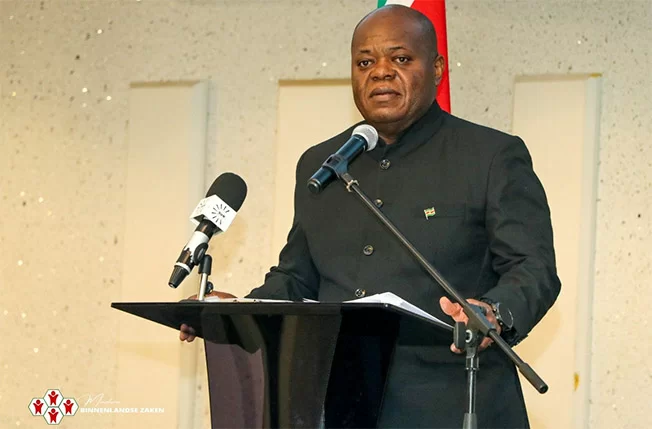
In a major push to overhaul Suriname’s public sector bureaucracy, Interior Minister Marinus Bee has outlined a comprehensive reform agenda for the country’s civil service, centered on strict performance accountability, updated work model trials, and targeted restructuring to eliminate underperforming roles. The minister made the announcement during an official oath-taking ceremony held at Ballroom Prince on April 11, where more than 750 newly appointed civil servants affirmed their commitment to public service in front of top government officials.
Bee emphasized that the transformation of the civil service corps remains the government’s top priority, with core goals centered on boosting operational efficiency, embedding innovation across public agencies, and raising overall service delivery standards. While the administration is still exploring the adoption of new flexible work arrangements—including adjusted working hours and rotational shift systems—immediate action is already underway to clean up outdated civil service rosters by removing non-functioning employees.
“Civil service transformation will proceed without delay,” Bee stated firmly during the event. “Every person on the public payroll must contribute to their role. Those who fail to perform will be removed from service.” The minister explained that this streamlining step is critical to free up budget space that can be redirected to higher compensation for civil servants who consistently deliver strong results, rewarding performance and motivating the broader workforce.
Among the flexible work proposals currently under consideration are adjustments to the standard 7 a.m. to 3 p.m. work schedule, shifting it to an 8 a.m. to 4 p.m. timetable, as well as a rotational shift system that would spread work across teams from Monday through Saturday. Bee clarified that these plans are still in the early conceptual phase, but they signal the clear direction the Surinamese government is moving to modernize the public sector work environment.
During the ceremony, the minister also stressed that the civil servant oath of office is far more than a symbolic procedural formality. He framed it as a binding legal commitment that must carry tangible meaning in daily public service work. “You only truly become a civil servant once you have made this promise,” Bee said. “Starting today, all work will be held accountable to that promise.”
Top government leadership used the gathering to reaffirm the administration’s unwavering commitment to seeing the entire reform process through to completion. The clear message from the Ministry of Interior is that the government expects active engagement, full transparency, and measurable results from all public servants, as the civil service overhauls continue moving forward on schedule.