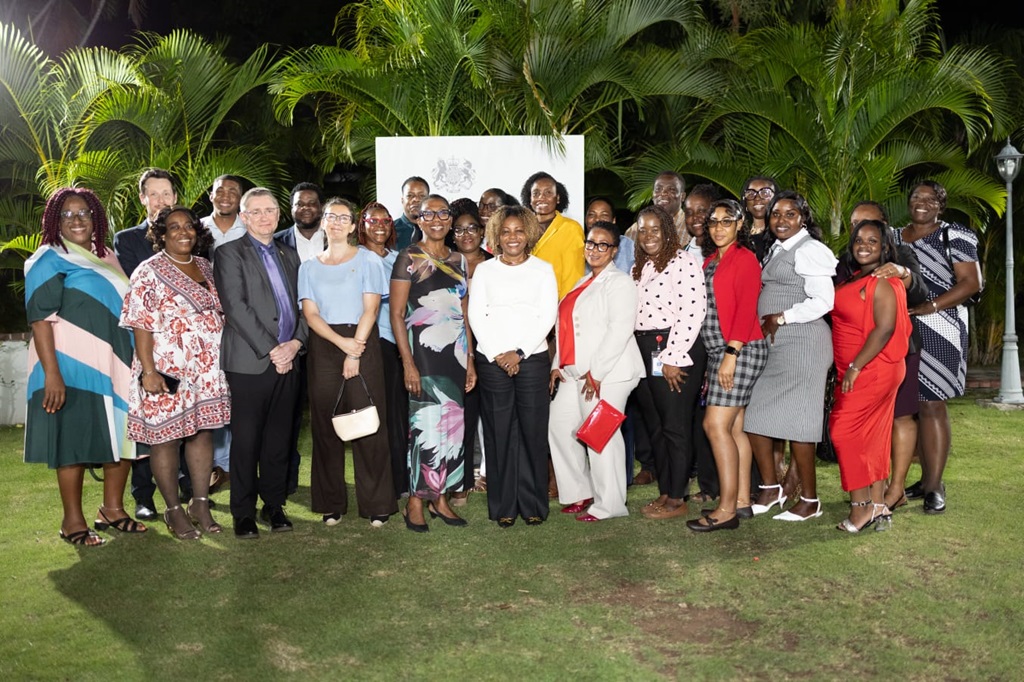
In Kingston, Jamaica, a landmark two-day professional development initiative focused on modern records and digital preservation has concluded successfully, brought to life through a cross-border partnership between the UK Government, Jamaica’s Archives and Records Department (JARD) – a division of the country’s Ministry of Education, Skills, Youth and Information – and the United Kingdom’s National Archives (TNA).
The gathering drew a diverse cohort of archival and public sector stakeholders from across Jamaica, alongside a group of archival professionals from multiple neighboring Caribbean island nations. Over the two-day program, experts from TNA led interactive training sessions covering critical modern archival topics: cutting-edge best practices for digital asset preservation, robust cybersecurity protocols for archival collections, specialized strategies for conserving audiovisual heritage, and robust frameworks for protecting national records amid the growing complexity of a globally connected digital landscape.
This collaborative project represents a meaningful milestone in advancing Jamaica’s ongoing work to build a more secure, transparent, and resilient national information management system. By upgrading archival infrastructure and expertise, the initiative ensures that Jamaica’s invaluable institutional memory – the collective documentation of the nation’s governance, history, and identity – will be safeguarded for both current communities and future generations.
A core objective of the workshop was to strengthen public sector governance by upgrading standards for records and information management. Program leaders emphasized that protecting national archival collections is a shared responsibility across government institutions, one that must balance rigorous protection of document integrity with equitable public access to historical and official information. Through structured knowledge sharing between UK and Jamaican archival experts, participants worked through hands-on exercises to test practical tools and develop targeted strategies to address the rapidly evolving challenges that digital transformation has created for the archival sector.
The training program was delivered during a working visit to Jamaica by a team of TNA specialists including Juliette Desplat, Alexander Forbes, and Stephen Daly, who joined Alicia Herbert, the British High Commissioner to Jamaica, for the official opening of the seminar.
In her opening remarks, High Commissioner Herbert stressed the foundational value of this bilateral partnership and the critical importance of responsible information stewardship in the 21st century. “This partnership reflects the very spirit of what we are here to discuss: connection, cooperation, and the responsible stewardship of information in an increasingly digital age,” Herbert explained. “The way we manage, protect, and use records speaks directly to the integrity of our institutions, the trust of our citizens, and the resilience of our societies. Records management is no longer a back-office function – it is central to governance, security, and accountability.”
Meanwhile, Dr. Dana Morris Dixon, Jamaica’s Minister of Education, Skills, Youth and Information, framed the work of archival preservation as a matter of urgent national importance, particularly in light of the increasing frequency of climate-fueled natural disasters that threaten physical and digital documentary collections across the Caribbean. “The preservation of our records is, in a very real sense, about preserving our history. Without our history, we cannot tell our story. This work is not administrative busy work – it is important national work. Strengthening how we preserve our records ensures that Jamaica’s story, identity, and institutional memory are protected for generations to come,” Dr. Dixon noted.
Juliette Desplat, a senior expert from TNA, drew attention to a little-discussed but growing threat facing archival institutions worldwide: the accelerating erosion of digital heritage. “We are faced with a silent crisis – the fragility of our digital heritage,” Desplat explained. “Without deliberate preservation, vital information risks being lost to time. Greater collaboration allows us to respond to these challenges and ensure that archives remain essential resources for democracy and future generations.”
By the close of the seminar, participants and organizers reaffirmed that the program has reinforced the long-standing value of UK-Jamaica bilateral cooperation. The partnership advances shared goals of stronger governance, greater climate and digital resilience for national institutions, and the permanent preservation of both shared Caribbean-British and individual national histories for future generations.