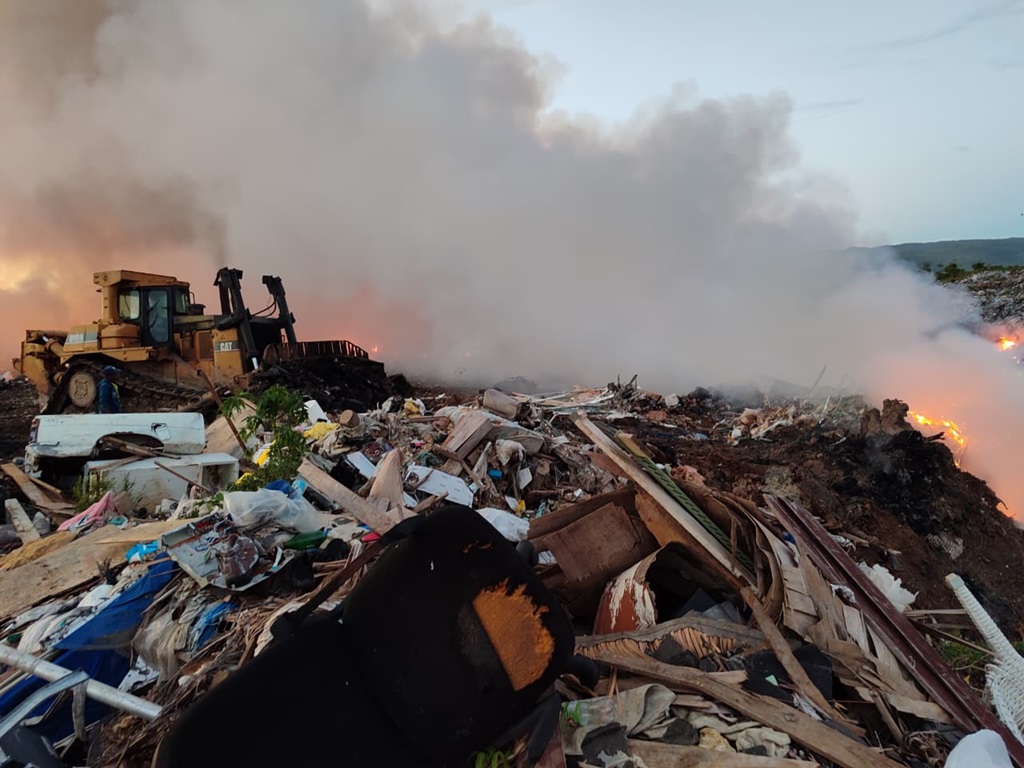
ST JAMES, Jamaica — Western Parks and Markets (WPM), the regional operating division of Jamaica’s National Solid Waste Management Authority (NSWMA), has announced that it expects to fully eliminate persistent smoke plaguing the Retirement Disposal Site by late Friday. The incident began a week prior, when reports of an underground fire broke out at the landfill last Saturday, triggering thick smoke that drifted across multiple residential communities in the Montego Bay area. While the open flames of the fire were brought under control within days, the smoldering debris has continued to emit problematic smoke that has disrupted daily life for local residents for nearly a week.
Speaking to local outlet Jamaica Observer Friday morning, WPM Regional Manager Dramaine Jones shared that overnight and Thursday rainfall had already dampened the last remaining active flames and reduced the volume of smoke emanating from the site. Still, he confirmed that the agency’s top priority is full elimination of the smoke nuisance by the end of Friday afternoon. Jones first laid out this timeline during a regular monthly council meeting of the St James Municipal Corporation Thursday, where he noted that containment would depend on favorable weather conditions. He told attendees Thursday that a lack of additional heavy rain would allow combined teams from WPM and the local fire department to access the affected areas fully, clearing all smoke by the close of the day.
Jones clarified that the affected areas are two zones designated for storing construction and landscape debris collected through the NSWMA’s Debris Management Programme, plus oversized bulky waste collected from across the region. He also outlined the key challenges that have extended the cleanup and containment operation far longer than initially expected. Two consecutive afternoons of heavy rain created a dual-edged problem for response teams: while the precipitation helped extinguish open flames and dampen smoldering debris, it also left the entire work area waterlogged and extremely soft. This soggy terrain left heavy response vehicles frequently stuck when attempting to reach the center of the affected zone, slowing progress dramatically.
To adapt to these conditions, Jones explained, WPM has adjusted its operational workflow to start work each day much earlier than usual. By starting at first light, crews can take full advantage of dry, warm daylight hours to move equipment and treat the affected areas before afternoon rains typically arrive. This shift has already yielded visible progress, Jones said, reducing the impact of smoke on nearby communities. As of Friday, crews have worked through roughly 35 to 45 percent of the one-acre affected area, and overall smoke output has dropped to an estimated 25 percent of the levels seen at the peak of the incident.
Looking ahead, Jones confirmed that the long-term solution for the site will follow the agency’s original pre-fire plan: the entire affected area has already been graded and flattened during preparation for capping, and once the smoldering is fully extinguished, crews will simply apply a protective covering material to seal the site and prevent any future smoke or fire issues.