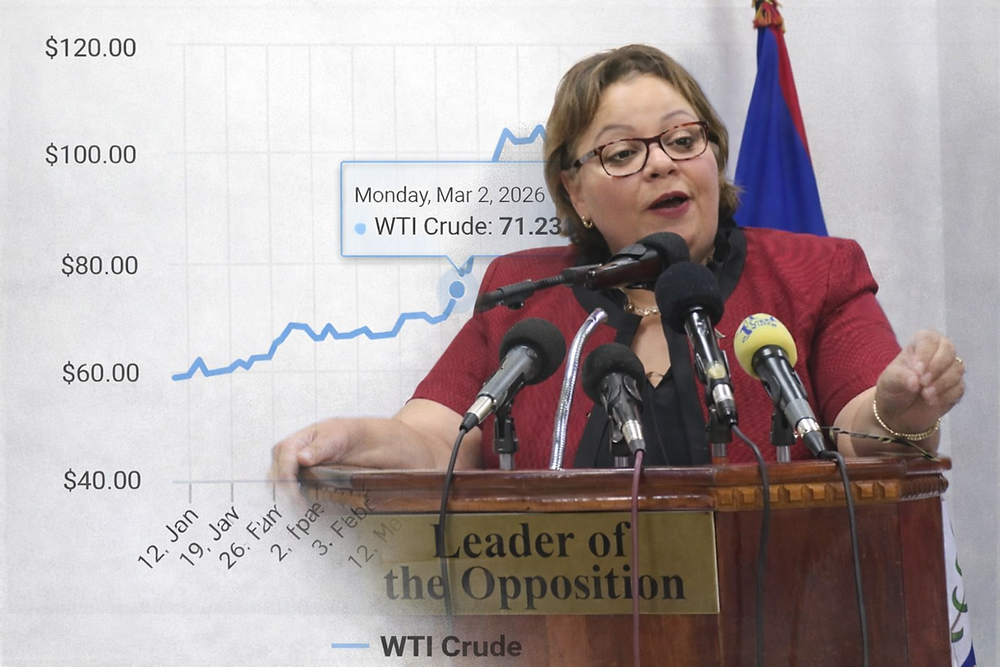
As skyrocketing global oil costs send domestic fuel prices soaring in Belize, the country’s political opposition is pressing the sitting administration to roll out immediate relief measures for struggling households and businesses — a call that has so far gone unanswered by policymakers.
Opposition leader Tracy Panton has issued two formal statements this week hammering the government for its inaction as price hikes hit just ahead of the Easter holiday, one of the busiest travel periods of the year for the Caribbean nation. The latest price adjustments pushed premium gasoline up by 86 cents per gallon and regular gasoline by 80 cents per gallon, bringing benchmark prices in the capital of Belize City to $14.62 and $13.82 per gallon respectively.
Panton has contextualized the current crisis as the product of mounting global energy market instability, pointing to two major geopolitical flashpoints that have disrupted supply chains: escalating tensions in the critical Strait of Hormuz shipping lane and the escalating conflict involving the United States, Israel and Iran. These global shocks have sent international crude prices skyrocketing in recent weeks: official market data shows West Texas Intermediate (WTI) crude climbed to $98.57 per barrel on April 9, marking a nearly 40% jump from the $71.23 per barrel recorded at the start of March, a surge that unfolded over just five weeks.
The opposition leader warns that the ripple effects of these fuel price increases are already spreading across every corner of Belize’s domestic economy. Higher fuel costs have directly pushed up transportation fares, grocery prices and operational overheads for small businesses and key productive industries. Panton emphasizes that the government’s failure to implement any temporary tax cuts, fuel subsidies, or targeted financial support has placed an unfair, overwhelming burden on the country’s lowest-income households and most vulnerable populations.
To back up its call for action, the opposition points to the government’s own previous response to economic crisis during the COVID-19 pandemic. At that time, the administration rolled out broad fiscal interventions and targeted social support programs to protect household incomes and prevent widespread economic collapse. Panton argues that the current fuel crisis demands a similarly bold, targeted policy response to shield the public from market volatility.
As the primary opposition United Democratic Party’s parliamentary caucus pushes for concrete steps including a full review of domestic fuel taxation and the launch of targeted relief mechanisms to soften the blow for affected groups, the Belizean government has yet to release any public announcement of planned interventions to address the rising cost of fuel.