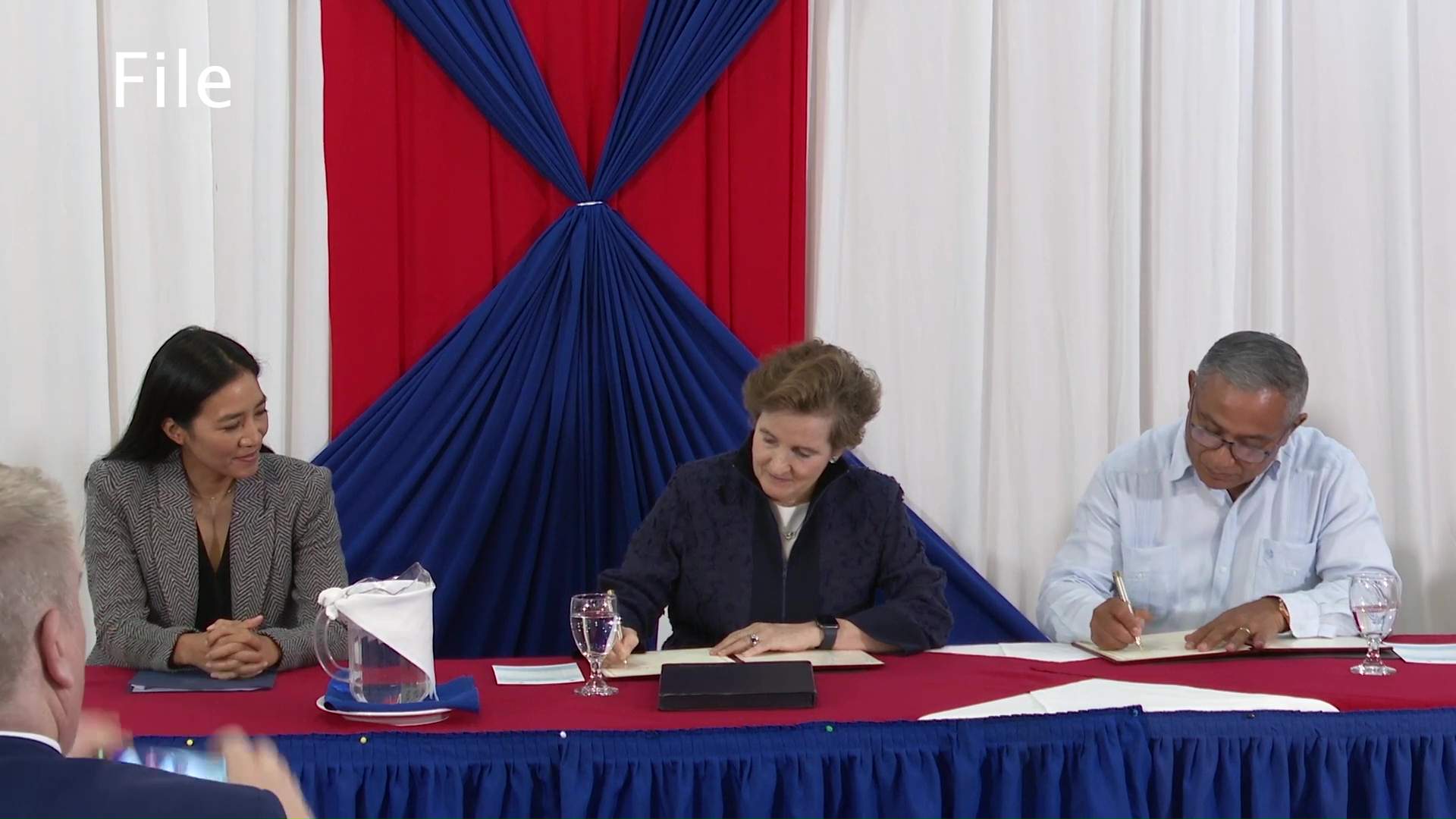
After months of uncertain stagnation, Belize’s long-debated Millennium Challenge Compact (MCC) with the United States has received the green light to move forward — but not without significant changes to its funding allocation. The $125 million development deal survived intensive negotiations with the new U.S. administration, but the compromise has reshaped its core priorities: education programs will see a sharp funding cut, while investment in the energy sector will see a near-doubling.
Originally, the compact allocated $74 million of the total budget to education initiatives, with just $21 million earmarked for energy projects. Under the revised terms, education funding will drop to $54 million, while energy investment will rise to $42 million, shifting the split from an 80-20 education-energy breakdown to a 60-40 split.
Belize’s Foreign Affairs Minister Francis Fonseca confirmed in an official statement that the reallocation was a non-negotiable compromise required to save the entire agreement. After the new U.S. administration took office, it launched a full review of all existing MCC compacts, leaving Belize’s deal in limbo for months with no clarity on whether the program would move forward at all.
“As someone who also worked closely with the original education-focused framework, I was very supportive of the original structure that directed the vast majority of funds to education,” Fonseca explained. “But after the U.S. leadership transition, a full review was inevitable, and we faced a choice: accept targeted adjustments to keep the compact alive, or lose the entire $125 million development package entirely. We are pleased that we reached a mutually agreeable outcome through diplomatic dialogue that allows the program to proceed.”
Fonseca emphasized that despite the funding shift, Belize will still derive substantial net benefits from the compact. With the deal now back on solid footing, attention has turned to the next critical phase: implementing the revised framework and delivering tangible, on-the-ground results for Belizean communities. The revised compact’s larger energy focus is expected to expand access to reliable power across the country, while the reduced education allocation will still support ongoing workforce and learning improvements, albeit at a smaller scale than initially planned.