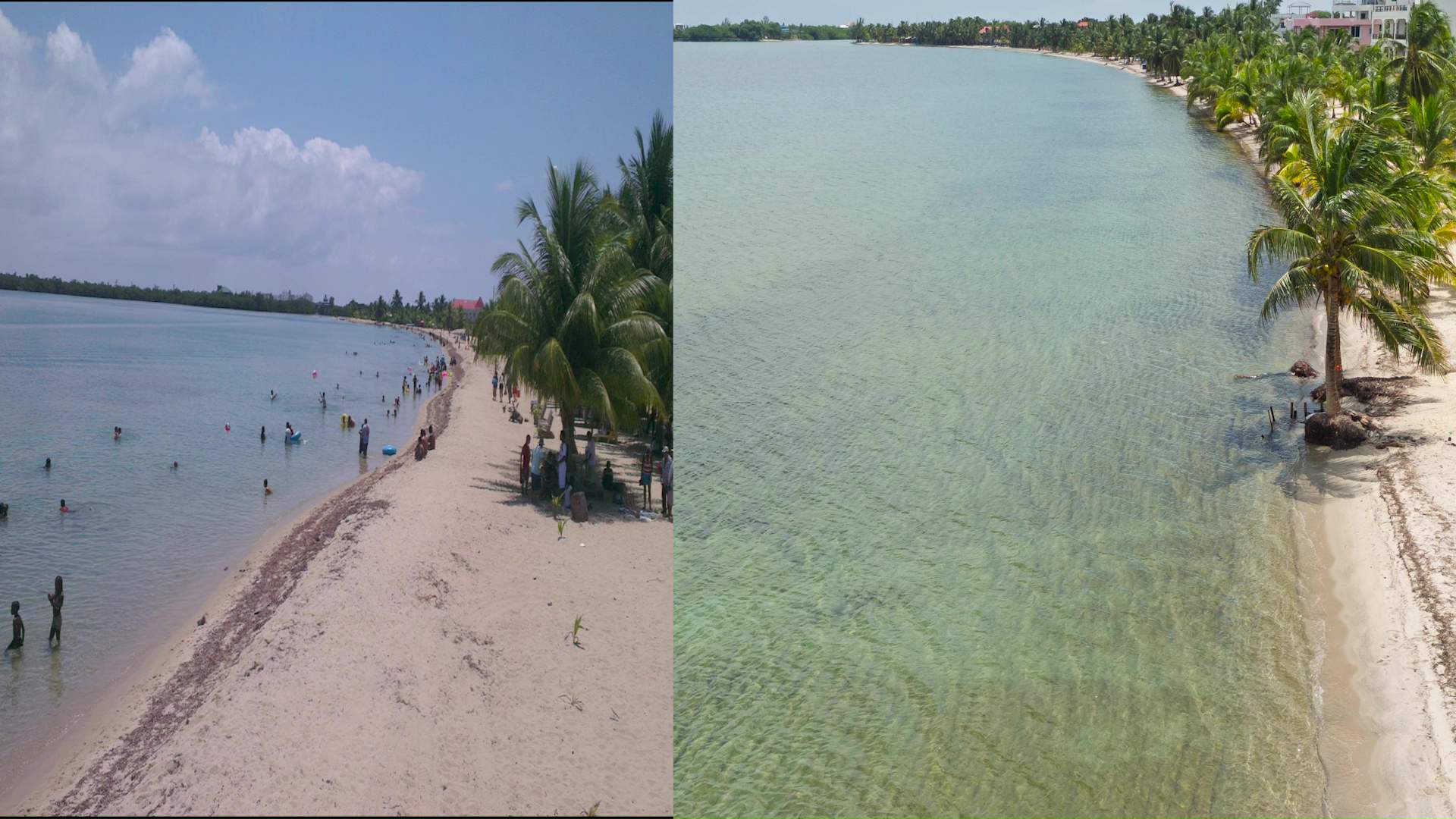
The idyllic shoreline of Belize’s Placencia Peninsula is vanishing at an alarming rate, pushing a decades-long gradual environmental threat into a full-blown emergency that threatens homes, local livelihoods, and the long-term existence of the coastal community. Longtime residents who have watched the shoreline shift over generations are now sounding the alarm, warning that inaction will lead to irreversible damage that could erase the peninsula the same way it erased the historic nearby town of Monkey River.
Charles Leslie, a Placencia Village resident who has lived in the area for decades, explained that the coastal ecosystem once maintained a natural balance: shorelines would erode slightly during storm seasons and naturally rebuild over time. But that pattern has shifted dramatically over the last 20 years. Erosion has stopped reversing, and the rate of land loss has accelerated sharply over the last decade. Leslie, who compared current shoreline conditions to photographs taken just 10 years ago, estimates that his stretch of beach alone has lost between 50 and 60 feet of sand to the ocean. The crisis is not isolated to Placencia Village, he stressed; the entire 24-kilometer peninsula, from the northern community of Riversdale down to southern Seine Bight, is experiencing severe degradation. For waterfront property owners and local families who depend on coastal tourism and fishing, the uncertainty has turned into a constant source of anxiety. The situation has already reached a critical tipping point, Leslie said, requiring immediate intervention to avoid total collapse.
When asked about the worst possible outcome for the peninsula, Leslie pointed to Monkey River, a once-thriving larger town that was completely lost to coastal erosion decades ago. As a child, Leslie recalled spending Easter holidays in the active community, which now exists only in local memory. This history, he argued, proves that total loss is a very real possibility if officials continue to delay meaningful action.
In response to growing public pressure from residents, Belize’s Department of the Environment has announced it is moving forward with collaborative steps to address the crisis. Environmental officials confirm the issue has been a priority for months, and over the past year and a half, the department has partnered with the Placencia and Seine Bight community groups and the University of South Florida to conduct in-depth scientific studies of the erosion patterns and potential mitigation solutions.
On the evening of April 9, 2026, the department is hosting a public consultation open to all residents across the peninsula to share the study’s findings and collect community input on proposed protection measures. According to Environmental Officer Kenrick Gordon, the goal of the gathering is to secure community buy-in for the next steps, ensuring that any intervention reflects the needs and priorities of the people most directly affected by the erosion. For months, residents have repeatedly raised concerns about the accelerating shoreline loss, and the consultation marks the first formal step toward turning local concerns into actionable policy.
As waves continue to wear away at the peninsula’s remaining beaches, the public meeting represents a defining turning point for one of Belize’s most ecologically and economically vulnerable coastlines, where the future of the entire community now hangs in the balance.