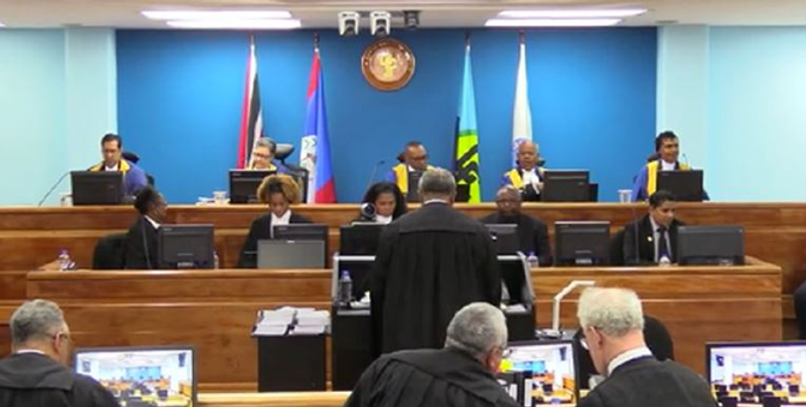
After decades of sitting as a dormant framework within the Caribbean Community (CARICOM) legal architecture, a long-awaited milestone has finally been reached for regional judicial integration: the Caribbean Court of Justice (CCJ) has accepted its very first reference question from a national member state court, opening a new chapter for cross-border legal consistency across the bloc.
The landmark referral originated from Belize’s highest domestic court, which formally submitted the interpretation question to the Trinidad-based regional tribunal on March 3, 2026, tied to an ongoing domestic commercial dispute: *G. Anwar Barrow et al v. Financial Services Commission of Belize and Attorney General of Belize*. One month later, on April 7, 2026, the CCJ convened its first official case management conference to move the process forward, confirming the historic nature of the request.
At the core of the question sent to the CCJ is a conflict of legal interpretation: domestic judges hearing the commercial case need clarity on how to align specific provisions of Belize’s national Companies Act with existing competition rules enshrined in the Revised Treaty of Chaguaramas (RTC), CARICOM’s foundational governing document for regional integration. The RTC bans anti-competitive business practices across the CARICOM Single Market and Economy (CSME), the bloc’s flagship project to create a unified, free-flowing economic space for member states.
Under the CCJ’s constitutionally granted Original Jurisdiction, the tribunal holds exclusive authority to interpret and apply provisions of the RTC. A long-standing mandatory rule requires any CARICOM national court hearing a domestic case that raises questions of RTC interpretation to refer that specific legal question to the CCJ before issuing a final ruling. Once the CCJ delivers its authoritative interpretation, the matter is sent back to the originating national court, which integrates the regional ruling into its final judgment on the case’s facts.
Despite this referral mechanism being written into CARICOM’s legal framework for years, no national court across the 15-member bloc had ever utilized the process until Belize’s 2026 submission. For years, legal practitioners and regional integration advocates cited low awareness among national judges, lawyers and business stakeholders as the key barrier to activating the mechanism.
To address this gap, the CCJ launched a multi-year regional public education and outreach initiative, backed by financial support from the 11th European Development Fund, to train judicial officers, legal professionals and business leaders across the Caribbean on the mechanics and purpose of the referral process. The campaign rolled out first in Belize back in 2022, before expanding to six other CARICOM members: Barbados, Guyana, Jamaica, Saint Lucia, Suriname, and Trinidad and Tobago. Beyond judicial training, the CCJ also partnered with private sector associations to spread awareness of the legal rights and economic guarantees available to businesses operating under the CSME framework.
Legal analysts and regional integration leaders now frame Belize’s referral as a pivotal moment for CARICOM’s institutional development. The long-awaited activation of the referral process will give the CCJ its first opportunity to deliver binding guidance on how regional trade and competition rules should be integrated into domestic legal proceedings, setting a precedent for future cross-border legal disputes and strengthening the consistency of economic regulation across the Caribbean single market.