On April 8, 2026, just hours after the United States and Iran reached a two-week temporary ceasefire to pause their open conflict—mere moments before the expiration of a US ultimatum targeting Iran’s military infrastructure—Iran formally presented a 10-point proposal Wednesday to end months of escalating tensions and full-scale hostilities involving both the US and Israel. The breakthrough ceasefire comes after more than a month of open conflict that sent global financial markets into volatility and pushed international crude oil prices sharply upward. The ceasefire agreement includes a provision for Iran to temporarily reopen the strategically critical Strait of Hormuz, the chokepoint through which roughly 20% of the world’s daily oil supplies pass.
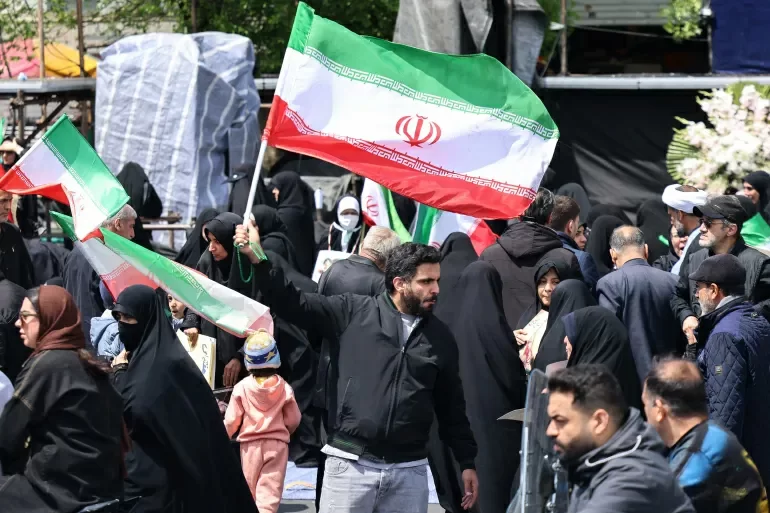
Both sides have moved quickly to claim victory in the conflict that reshaped Middle Eastern security. US President Donald Trump has labeled the ceasefire framework a “total and complete victory” for American interests, while Iranian officials described the outcome as an “unmistakable, historic and crushing defeat of the enemy” and a defining national win for the Islamic Republic. On the streets of Tehran’s Revolution Square, crowds gathered to celebrate the breakthrough, with many waving Iranian national flags.
Breaking down the core of Iran’s 10-point peace framework, the proposal outlines key demands that include the full lifting of all primary and secondary international sanctions imposed on Iran, permanent Iranian full control over the Strait of Hormuz, a complete withdrawal of all United States military forces from the broader Middle East region, an end to all targeted attacks on Iran and its regional allied militias, the immediate unfreezing of all Iranian sovereign assets held overseas, and a binding United Nations Security Council resolution to formally codify any final peace agreement into international law.
Notably, the original Farsi version of the proposal includes an explicit clause calling for international recognition of Iran’s right to enrich uranium as part of its civilian nuclear program. This key line was omitted from English-language versions of the plan distributed by Iranian diplomats to international journalists, with no official explanation provided for the change.
While President Trump has publicly called the Iranian proposal “feasible”, the plan has already sparked sharp criticism within US political and national security circles. Multiple core provisions, including permanent Iranian control of the Strait of Hormuz and recognition of uranium enrichment, have been repeatedly labeled unacceptable by senior US administration officials in past months. The demand for a full US military withdrawal from the Middle East has also faced stiff pushback from factions within both the US Congress and defense establishment.
Regional security analysts note that while the 10-point plan offers a tangible starting point for formal negotiations, the deeply contentious nature of Iran’s core demands makes meaningful progress far from guaranteed. It remains unclear how much flexibility both Washington and Tehran are willing to show to compromise on their core red lines to reach a lasting, sustainable peace deal.
Pakistan, which played a central mediation role to broker the ceasefire, has confirmed that the temporary truce entered into force immediately. Pakistani Prime Minister Shehbaz Sharif announced that Islamabad will host formal face-to-face peace negotiations between US and Iranian delegations, set to kick off this Friday. The stated goal of the two-week negotiating window is to reach a definitive final peace agreement before the current ceasefire is set to expire. A White House spokesperson confirmed that the US is open to holding talks in Pakistan, but noted that final logistics for the negotiations have not yet been formally finalized.