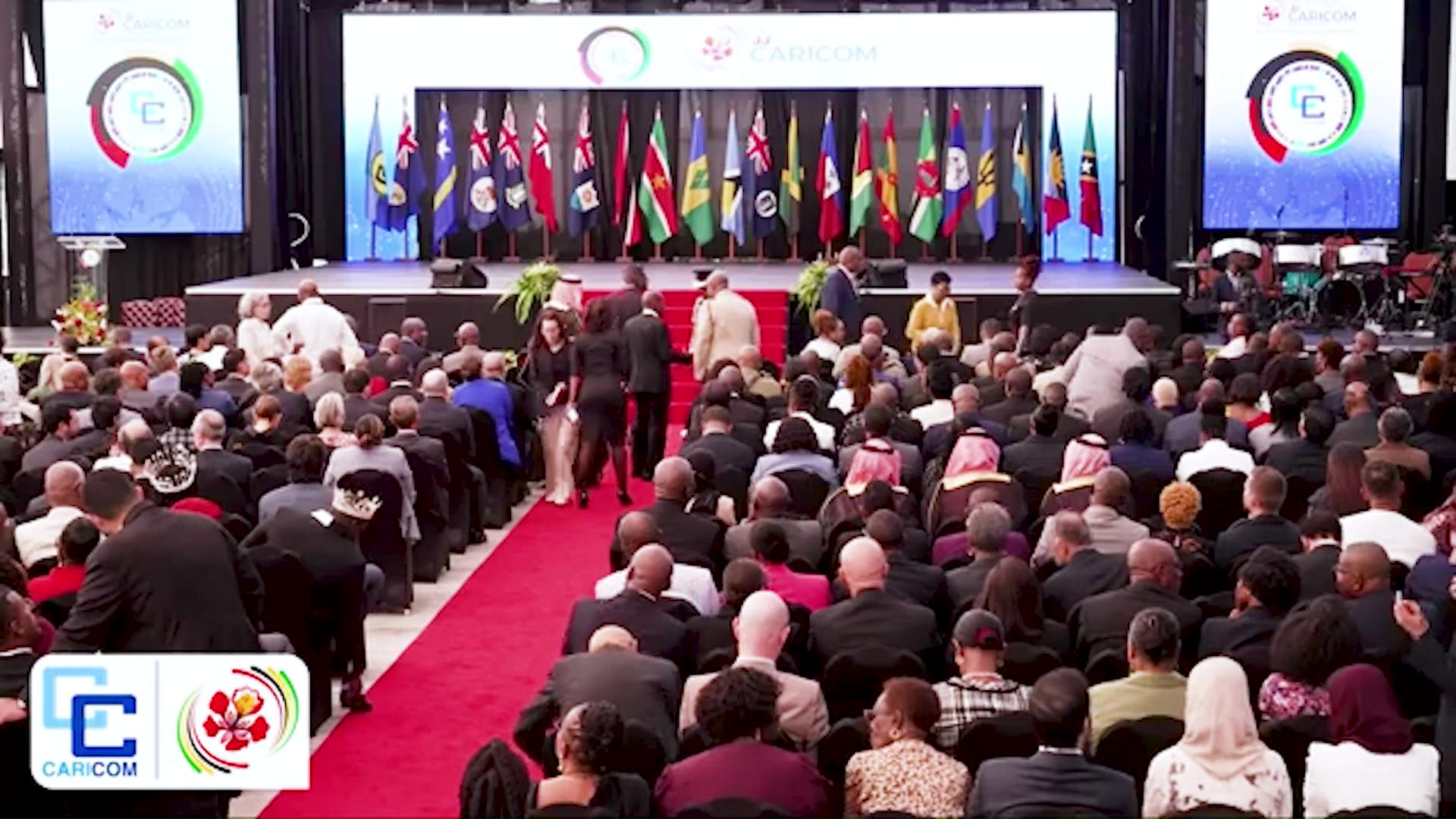
A high-stakes political standoff is currently roiling the Caribbean Community (CARICOM), threatening to fray long-held regional unity amid a growing public rift over the reappointment of current Secretary-General Dr. Carla Barnett. What was on track to be a routine, procedural extension of Dr. Barnett’s tenure has instead erupted into one of the bloc’s most public and divisive disputes in recent memory, led by Trinidad and Tobago Prime Minister Kamla Persad-Bissessar, who is challenging both the selection process and Dr. Barnett’s leadership of the 15-member regional organization.
Persad-Bissessar has publicly rejected a second term for Dr. Barnett, anchoring her opposition in claims of inadequate transparency and violated procedural norms. In a viral social media post published Tuesday, the Trinidadian leader made clear her government would not soften its stance until the issue is addressed. “Until this matter is transparently resolved, the organization and its secretariat should absolutely expect no quarter from my government,” she wrote. “This is not a simple run-of-the-mill administrative appointment; it’s an appointment with long-term ramifications for my citizens.”
Beyond procedural complaints, deeper underlying tensions have come to light, according to senior anonymous diplomatic sources who spoke to News Five. Trinidad and Tobago is the single largest contributor to CARICOM’s operational budget, accounting for more than 20% of total funding, giving its leadership significant leverage in bloc negotiations. Sources indicate the current standoff may stem in part from a years-long unresolved grievance over the 2022 arrest of Trinidadian national Brent Thomas in Barbados. Persad-Bissessar has accused the CARICOM Secretariat of failing to intervene in what she describes as the “kidnapping” of a Trinidadian citizen—a allegation that has drawn fierce pushback from Barbados Prime Minister Mia Mottley.
Mottley pushed back forcefully against the claims, explaining that the arrest followed long-standing regional law enforcement practices. “It was clear that the Trinidad and Tobago police, as has been the practice for decades in this region would have supplied an arrest warrant, which the Barbados police would’ve acted upon,” Mottley said. “We understood at the time, and we said, our Attorney General said at the time that the formal process of extradition which we do extra regionally with other countries has not and was not practiced in the region among ourselves by any country in the region. And therefore, to that extent, we acknowledge that we need to be able to change how we operate. That is why the CARICOM arrest warrant is being pursued. That is why legislation has to be passed in every CARICOM country to be able to facilitate that CARICOM arrest warrant but to describe it as kidnapping or to suggest that any member of cabinet or any member of the permanent secretary class or government of Barbados is involved in kidnapping is a scurrilous lie and defamatory in the extreme.”
Behind closed doors at CARICOM’s headquarters, veteran regional diplomats say the public dispute has far less to do with Dr. Barnett’s job performance and far more to do with strategic political posturing by Trinidad and Tobago’s leadership. Despite the high-profile opposition, multiple regional insiders confirm that Dr. Barnett still commands the support of a majority of CARICOM heads of government, and that backing has increasingly gone public in recent days.
Guyana’s President Irfaan Ali was the first major leader to issue a formal public endorsement, confirming his country’s unwavering support for the Secretary-General’s reappointment and clarifying his government’s stance in the growing regional debate. “Let me be fully transparent on this matter: I was involved in the discussions, as all other Heads, on the reappointment of the Secretary General,” Ali said. “We support the reappointment of the Secretary General, that’s the first thing, and I hope it brings clarity.”
Ali’s endorsement followed an official statement from the office of Antigua and Barbuda Prime Minister Gaston Browne released on Holy Thursday, which affirmed that the Antigua and Barbuda Cabinet retains “very high confidence in her ability to carry out her duties and responsibilities as she has been doing effectively during her tenure thus far.”
All eyes are now fixed on the upcoming CARICOM Heads of Government summit, where the simmering dispute is expected to reach a decisive climax. The outcome of the vote will not only determine Dr. Barnett’s future but also put CARICOM’s decades-old commitment to regional cohesion to its most serious test in recent history. This report was compiled by Shane Williams for News Five.