As of early April 2026, public health officials in Belize have issued a pressing warning to residents over a surging measles outbreak sweeping across the Americas, with transmission risks amplified by nearby cases in neighboring nations. Just three months into the year, the Pan-American region has already logged 75% of the total measles cases reported across all of 2025, and public health data confirms case counts continue to climb at an accelerating rate. Eleven confirmed deaths have already been linked to the current outbreak, nearly all concentrated in Belize’s bordering countries Guatemala and Mexico, a geographic proximity that has put cross-border spread at the top of local health authorities’ list of concerns.
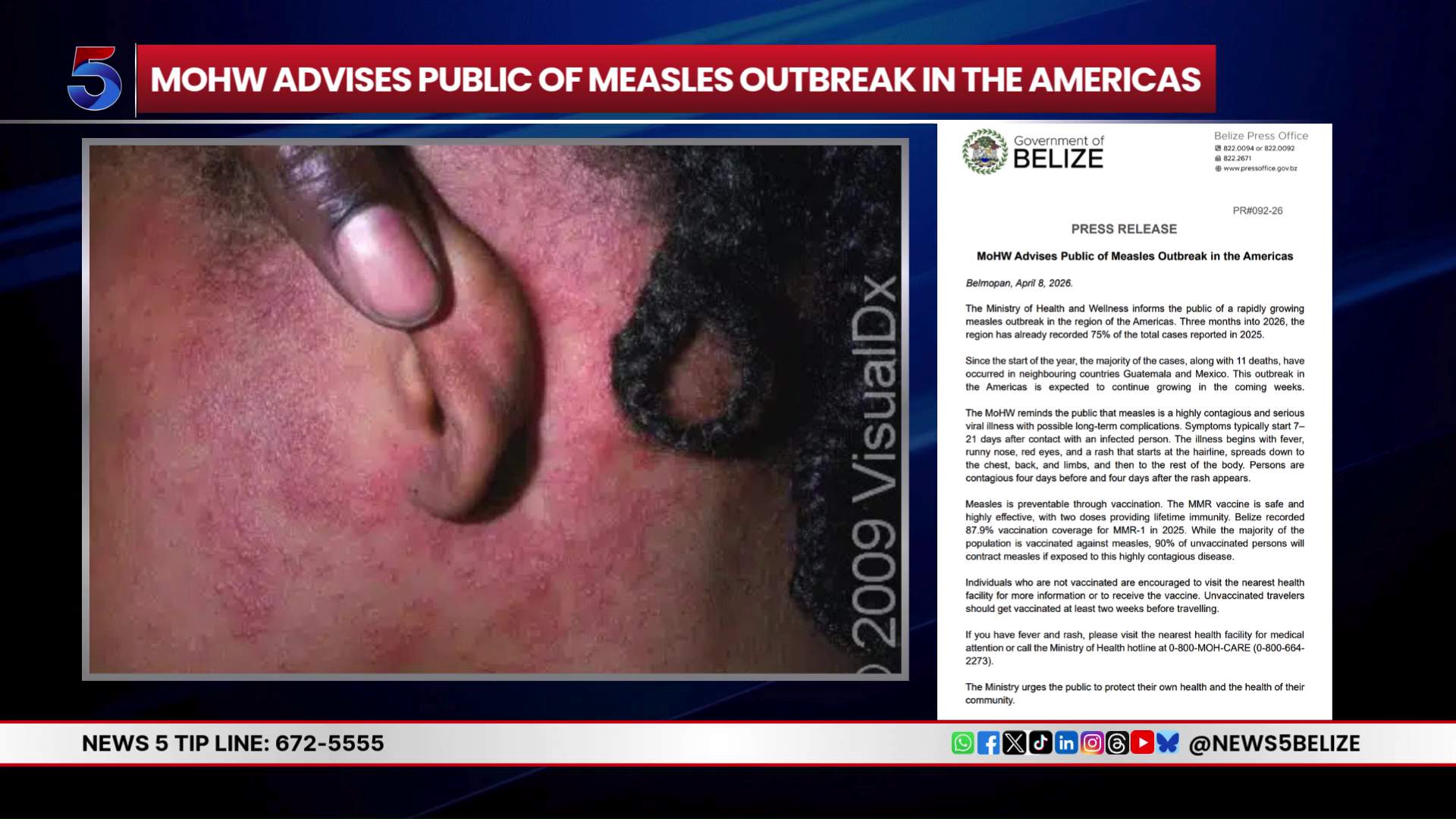
Contrary to a common misperception that measles is a trivial childhood illness, health leaders stress it is an extremely contagious viral infection that can trigger permanent, life-altering health complications. After exposure, symptoms typically develop within a window of 7 to 21 days. Initial signs include high fever, nasal congestion, and inflamed, watery eyes, which are followed several days later by a distinct rash that originates at the hairline before spreading across the entire body. A particularly insidious feature of the virus is its ability to spread before an infected person shows obvious symptoms: carriers can transmit the pathogen starting four days before the rash emerges, and for four days after it appears, meaning many people spread the illness without knowing they are infected.
Despite the alarming spread of the outbreak, Belize’s Ministry of Health and Wellness emphasizes that measles is entirely preventable through vaccination. The widely used MMR (measles, mumps, and rubella) vaccine is documented as safe and extremely effective, with a two-dose series offering lifelong protection against the virus. Preliminary data from 2025 shows Belize achieved an 88% coverage rate for the first dose of the MMR vaccine, but gaps in immunization leave large swathes of the population vulnerable. Unvaccinated people face a 90% chance of contracting measles if exposed to the virus, making widespread vaccination not just a matter of individual health, but a critical defense for community-wide herd immunity.
In response to the current threat, Belizean health authorities are calling on all unvaccinated residents of all ages to schedule an appointment at their nearest public health facility to get vaccinated as soon as possible. For residents planning cross-border travel to neighboring countries or other destinations in the Americas, the Ministry strongly advises that unvaccinated travelers complete their vaccine series at least two weeks before departing, to allow the body to build full immunity ahead of potential exposure.