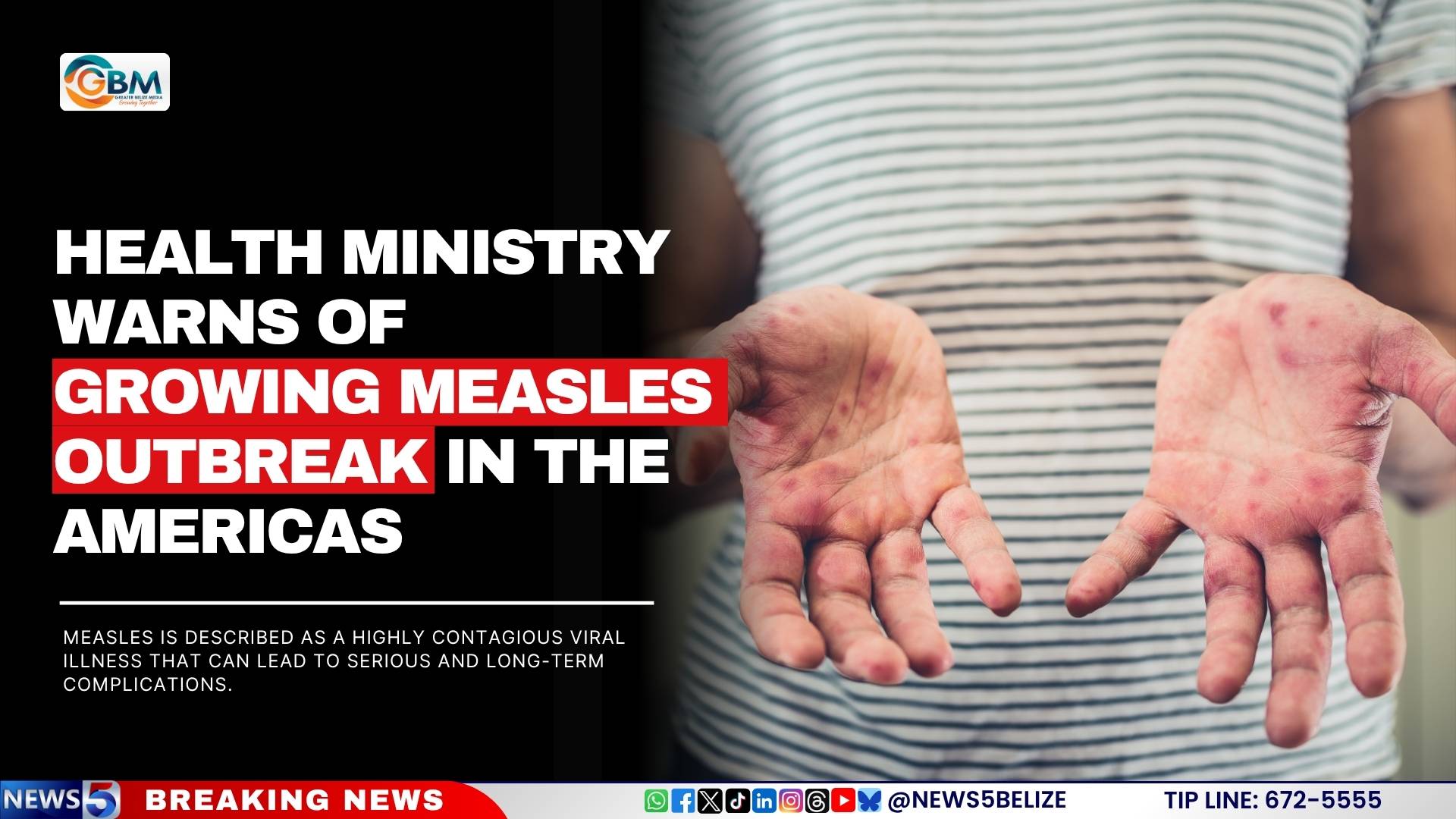
A public health emergency is unfolding across the Americas, with Belize’s Ministry of Health and Wellness (MoHW) sounding the alarm over a rapidly accelerating measles outbreak that has already surpassed three-quarters of 2025’s total case count in just the first three months of 2026. As of early April 2026, the vast majority of confirmed infections and 11 recorded fatalities linked to the outbreak are concentrated in neighboring Guatemala and Mexico, regional public health authorities confirmed. Officials warn that case numbers are projected to rise steadily in the coming weeks, putting unvaccinated populations across the broader region at heightened risk.
Measles, a highly contagious viral infection, poses severe risks of long-term health complications for those who contract it. The virus spreads through respiratory droplets, and infected individuals can transmit the pathogen as early as four days before a defining rash develops, and for four days after the rash appears. Initial symptoms, which emerge between one and three weeks after exposure, include high fever, runny nose, and inflamed red eyes, before a characteristic rash spreads from the hairline across the chest, back, limbs and entire body.
Despite the alarming spread of the outbreak, public health officials emphasize that measles is entirely preventable through proven, safe vaccination. The combined measles-mumps-rubella (MMR) vaccine offers robust protection against all three diseases, with two doses conferring lifelong immunity for most recipients. In Belize, 2025 data shows 87.9% coverage for the first dose of the MMR vaccine, but even this coverage level leaves a meaningful share of the population vulnerable. Health authorities warn that 90% of unvaccinated people who come into contact with the measles virus will develop an infection, underscoring the urgent need to close vaccination gaps to stop the outbreak’s spread.