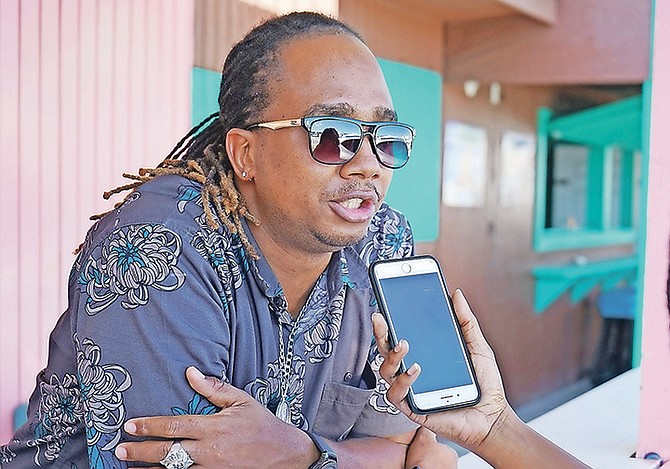
As the Bahamas gears up for a shift in its political landscape ahead of potential elections, the Coalition of Independents (COI) has put forward an ambitious 100-day immigration overhaul that has quickly drawn sharp criticism from a prominent immigration rights advocate, who argues the proposals threaten core constitutional protections and lack critical operational and budgetary planning.
Louby Georges, a leading voice on immigration advocacy in the country, has called for rigorous public and legislative scrutiny of the COI’s wide-ranging policy framework, which targets three core priorities: shoring up the country’s border security, expanding immigration enforcement operations, and fundamentally restructuring the nation’s citizenship rules. The most controversial proposal at the heart of the plan is the full elimination of the naturalisation pathway for foreign-born residents seeking Bahamian citizenship.
Under the COI’s proposed timeline, the party would move to amend the Bahamas Nationality Act in its very first week in office to strike naturalisation provisions, followed by a national referendum on the change within the first 12 months of an incoming administration. However, Georges and constitutional analysts point out a critical procedural flaw: citizenship rules are enshrined in the Bahamas Constitution, meaning any change to naturalisation would require a constitutional amendment before any legislative adjustments can be made, a step the COI’s plan does not explicitly address.
Beyond the citizenship proposal, the COI’s plan lays out a string of additional policy changes: merging the country’s existing immigration and national security agencies under a single unified cabinet ministry; rolling out a 30-day immigration amnesty program that mandates biometric screening and official immigration status verification for all undocumented residents; and launching a new digital platform that requires employers and private landlords to confirm the legal immigration status of workers and tenants respectively.
Additional restrictive measures include an immediate moratorium on new work permit approvals for Haitian nationals, a full top-down review of all existing work permits held by Haitian residents, increased resources and patrols for maritime border enforcement, the closure of unregulated informal shanty town settlements, the development of government-authorized regulated housing for migrant communities, and a new mandate requiring all immigrants to hold active private health insurance coverage to reside in the country.
COI officials have defended the proposal, framing it as a necessary measure to reclaim national control over the Bahamas’ borders and improve overall compliance with existing immigration laws. But the plan leaves major questions unanswered: it does not include clear details on how the sweeping series of reforms would be funded, nor does it lay out a concrete operational roadmap to deliver all the changes within the aggressive 100-day timeline the party has laid out.
Georges acknowledged that the Bahamas is grappling with genuine, long-standing immigration challenges that demand policy attention. But he argued that the COI’s proposal is rooted less in evidence-based practical governance and more in politically opportunistic fear-mongering to win voter support. He emphasized that immigration cannot be fixed through hasty, overly broad reactionary policies that fail to account for their long-term social and legal ripple effects.
“Eliminating naturalisation, in particular, is a deeply troubling proposal,” Georges said in comments to local media. “For generations of Bahamian history, countless people who arrived first as migrants, or who are descended from migrants, have gone on to build their lives here as proud, contributing Bahamian citizens. Their work has shaped every sector of our country, from business to education to public service, and that legacy cannot be ignored.”
Georges described the elimination of a legal pathway to citizenship as profoundly short-sighted, warning that the proposal represents a draconian shift in the country’s immigration framework. “When you start restricting core rights and access to legal pathways at this scale, the negative consequences don’t stay limited to just one migrant community,” he explained. “They undermine the entire structure of our immigration system and the legal protections it is built on.”
While Georges agreed that improvements to immigration enforcement and accountability for non-compliance are necessary, he stressed that any meaningful reform must be rooted in respect for the country’s existing constitution and backed by detailed, realistic implementation planning. “Good governance depends on balance, not extreme, overreaching policies,” he said. “We have to address our immigration challenges in a way that protects our national borders, while also upholding the rule of law, our constitutional framework, and the inclusive values that have made the Bahamas what it is today.”
Matt Aubry, executive director of the Nassau-based non-profit Organisation for Responsible Governance, declined to offer a direct endorsement or criticism of the COI’s proposal. Instead, he urged Bahamian voters to carefully evaluate all political campaign pledges ahead of any election, asking whether the promises parties make are actually realistic and achievable within the timelines they propose. Aubry noted that campaign platforms often overlook critical practical constraints, from limited public budget allocations to the lengthy procedural timelines required to roll out large-scale governmental reforms.