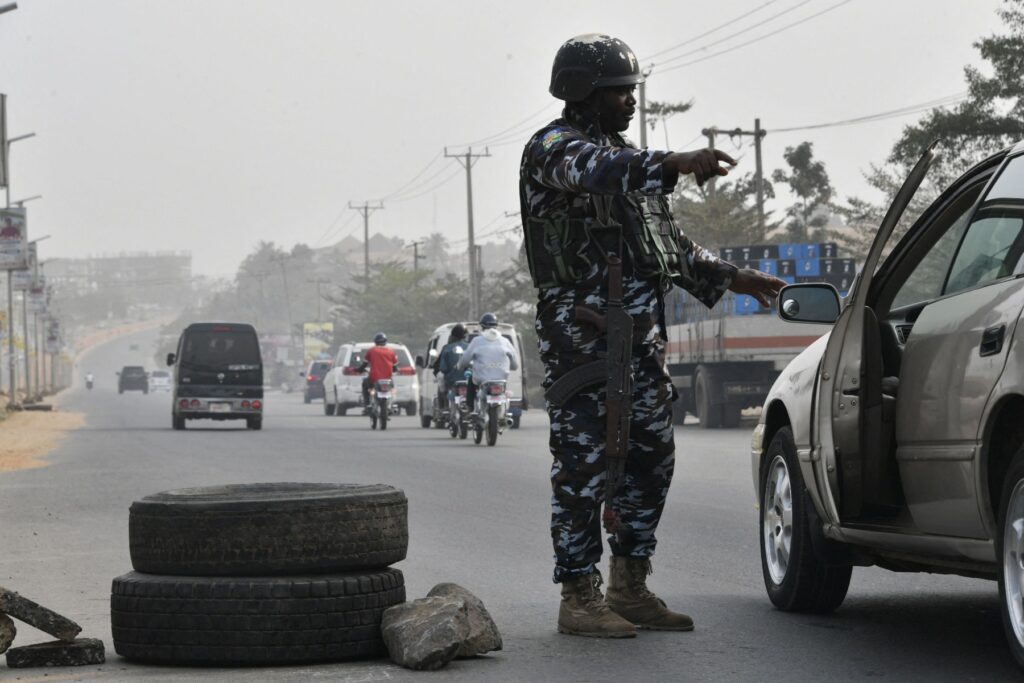
In a devastating wave of violence that has underscored Nigeria’s deepening insecurity crisis in its predominantly Muslim northern region, armed gunmen have killed no fewer than 60 civilians across a series of remote rural villages in two neighboring northwestern states this week, local religious leaders and humanitarian organizations confirmed Wednesday in statements to Agence France-Presse.
The coordinated assaults targeted at least 10 settlements spread across Kebbi and Niger states, according to regional clergymen and a detailed humanitarian situation report reviewed by AFP. The document, which draws on testimony from three on-the-ground humanitarian sources including a local medical facility and a community advocacy group, records 20 fatalities from a Tuesday strike on Erena, a community located in Niger state’s Shiroro local government area.
A separate classified military security assessment identifies the perpetrators of the Erena attack as well-armed bandits who launched a direct incursion on a local military outpost. Regional police have verified the assault, adding that three additional members of the local security ecosystem — two volunteer vigilante fighters and a driver assigned to the joint security task force — were also killed in the clash.
Shiroro district has long been a hotspot for persistent violence, terrorized repeatedly by both local criminal gangs known locally as bandits and transnational jihadist insurgent networks. In recent years, security analysts have documented a growing trend of collaboration between these two groups, whose joint raiding campaigns have displaced tens of thousands of residents across northwest Nigeria.
In neighboring Kebbi state, one anonymous clergy member — who requested anonymity out of concern for his personal safety — confirmed an initial death toll of 24, but added that updated witness reports put the actual number of fatalities above 40. A second senior Christian leader in the region corroborated this estimate, placing the Kebbi death toll at approximately 40.
Speaking to AFP, the first clergy member described a campaign of indiscriminate violence that spared no group: “They killed everybody in sight, they killed Christians, Muslims and traditional worshippers. They killed indiscriminately.” The attackers burned down religious sites of both Christian and Muslim communities, slaughtered livestock including sheep and cattle, and destroyed stored food reserves, he added. The incursion unfolded over three straight days of rampage, with gunmen systematically combing the surrounding brush where residents typically flee to hide during attacks.
“They comb the surrounding bushes where villagers would ordinarily hide during attacks and hunt around for those who were hiding in the bush and shoot them down,” he said. “They were not leaving anything, they were not taking anything. They were there to kill and destroy.”
More than 500 displaced residents have fled the affected villages to take shelter in churches and public schools in Kebbi’s Yauri town, and the security situation remains so precarious that families cannot return to their homes to recover and bury their dead, the clergy member added.
No insurgent group has yet claimed responsibility for the coordinated attacks, but Kebbi state police have pinned the blame on a local jihadist cell known as the Mahmuda group, which operates across the northwest region. The cell is affiliated with Mahmud al-Nigeri, a senior commander in the Ansaru jihadist network. Ansaru split from the notorious Boko Haram insurgent group more than a decade ago and has since aligned itself with Al-Qaeda in the Islamic Maghreb (AQMI), a regional branch of al-Qaeda.
Kebbi state, which shares international borders with Benin and Niger, has seen a sharp uptick in jihadist attacks since 2025, according to regional security data. Armed Conflict Location & Event Data Project (ACLED), a leading independent conflict monitoring organization, has recorded a major recent surge in violence across northwest Nigeria carried out by insurgent groups aligned with both al-Qaeda and the Islamic State. Like other northern Nigerian states, Kebbi faces a dual security threat: both transnational jihadist insurgency and banditry, criminal gangs that raid villages, seize residents and hold them for ransom.