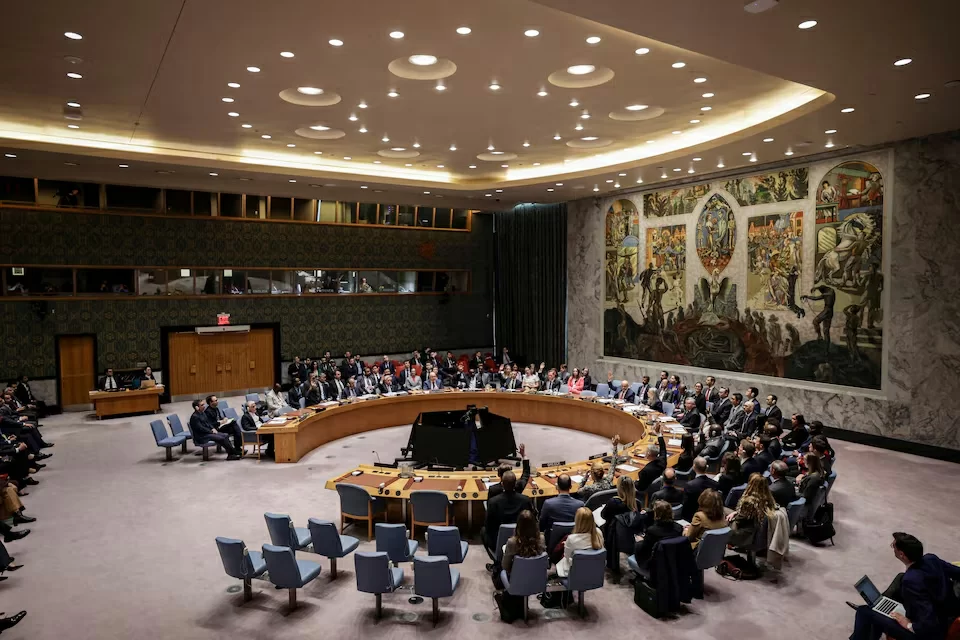
On Tuesday, a United Nations Security Council resolution aimed at promoting international cooperation to safeguard commercial shipping in the strategically vital Strait of Hormuz, proposed by Bahrain, was blocked by vetoes from China and Russia. Both permanent Council members argued that the draft resolution carried an unfair bias against Iran.
The 15-nation council’s vote split clearly: 11 members backed the resolution, while two cast opposing votes (China and Russia), and two abstained from the decision. Following the veto, U.S. Ambassador to the UN Mike Waltz issued a sharp condemnation, framing the outcome as a “new low” for the Security Council. Waltz claimed that Iranian actions to threaten closure of the Strait have already disrupted deliveries of medical supplies and humanitarian goods to crisis zones including the Democratic Republic of Congo, Sudan and Gaza, saying “No nation should accept this reality.” He added that “Russia and China today chose to back a regime that terrorizes the Gulf region,” and called on “responsible nations” to join the U.S. in keeping the Strait open and secure to ensure unimpeded movement of free trade and humanitarian aid.
France also expressed regret over the veto. French UN Ambassador Jerome Bonnafont emphasized that the resolution only sought defensive, de-escalatory measures to prevent regional tensions from spiraling further.
In defending their veto, China and Russia said the draft unfairly criticized Iran. China’s UN envoy Fu Cong noted that adopting the resolution while the U.S. issues inflammatory threats targeting Iran would send the wrong signal to the region. Russia has announced it will put forward its own alternative draft resolution covering broader Middle East issues, including maritime security in the Strait of Hormuz.
Iran’s UN Ambassador Amir Saeid Iravani welcomed the vetoes, stating they prevented the Security Council from being “misused to legitimize aggression.” He also revealed that the personal envoy of the UN Secretary-General is currently en route to Tehran for diplomatic consultations on the situation.
The final draft of the Bahrain-proposed resolution was revised after China raised objections to a provision that could have authorized use of force. The amended text explicitly ruled out coercive measures, instead calling on UN member states to coordinate defensive, proportionate actions to protect navigation security in the Strait, including escorting commercial vessels and countering attempts to blockade the waterway, which handles roughly a fifth of global oil trade and is one of the world’s most critical maritime chokepoints.