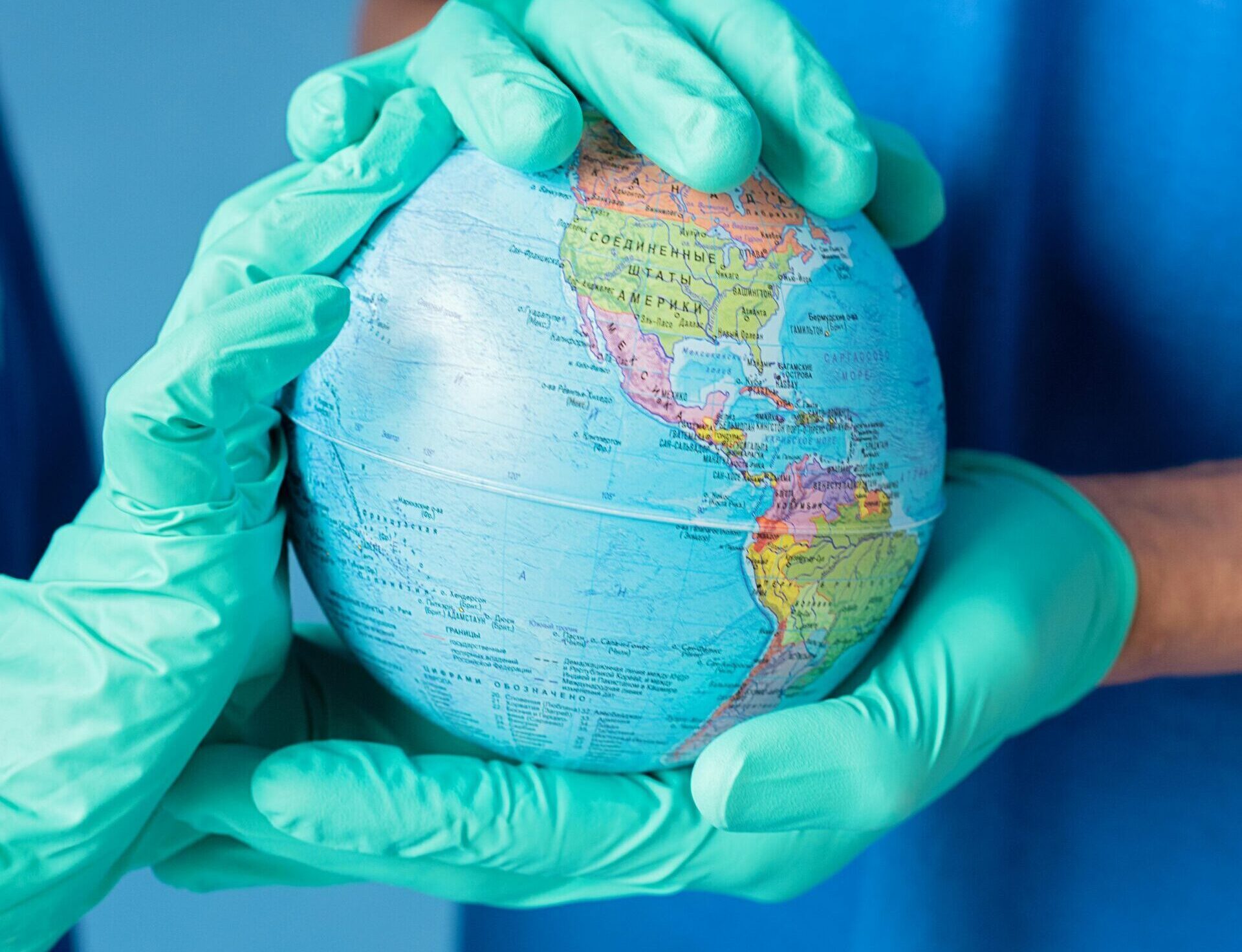
PORT OF SPAIN, TRINIDAD AND TOBAGO – April 7, 2026 – As the world marks World Health Day, public health leaders in the Caribbean are sounding the alarm over the disproportionate burden of foodborne diseases (FBDs) across the region and calling for urgent, coordinated cross-sector action under the One Health framework to address growing global health risks.
Global public health data paints a stark picture of the scale of foodborne illness: the World Health Organization (WHO) estimates that 600 million people around the world fall ill from contaminated food every year, leading to roughly 420,000 preventable deaths annually. Broader systemic trends, from accelerating climate change to rising antimicrobial resistance (AMR) and widespread environmental degradation, have amplified global health risks, with 75% of all new emerging infectious diseases recorded in 2024 traced to zoonotic origins – pathogens that jump from animals to humans.
For the Caribbean region, these risks are particularly acute. Data from the Caribbean Public Health Agency (CARPHA) collected in 2019 shows that FBDs rank among the most commonly reported illnesses for both local residents and international tourists. Regional burden-of-illness research finds that roughly one in every 49 Caribbean people contracts a foodborne disease annually, a rate that jumps to one in 11 during large-scale mass gatherings. Children between the ages of 1 and 4 are the most affected, accounting for nearly 43% of all recorded FBD cases across the region.
Beyond the direct public health toll, FBD outbreaks pose a existential threat to the Caribbean’s tourism-dependent economies. An outbreak can trigger lasting reputational damage for destination countries, lead to sharp drops in tourism revenue, and even result in harmful trade restrictions that further strain local economies. Because of this, sustained FBD surveillance is a core pillar of CARPHA’s integrated regional disease monitoring system. Strong surveillance not only helps CARPHA’s 20+ member states meet their binding obligations under the World Health Organization’s International Health Regulations (IHR 2005) but also improves national performance on the Joint External Evaluation (JEE) and the State Party Annual Reporting (SPAR) processes that track global health security capacity.
This year’s World Health Day, held annually on April 7, carries the theme “Together for health. Stand with science”, which spotlights the critical role of scientific collaboration and collective action in protecting global public health. In recent years, a string of global and regional health emergencies has underscored how critical resilient surveillance infrastructure, timely cross-border data sharing, and coordinated multi-stakeholder action are to detecting, preventing, and responding to new and emerging health threats before they spiral into larger outbreaks. Public health experts increasingly agree that cross-sector, cross-discipline collaboration through the One Health approach is one of the most effective tools to address the interconnected, complex health challenges facing the world today.
The One Health framework is built on the core recognition that human health, animal health, plant health and the health of the natural environment are deeply interconnected. Addressing modern disease risks requires coordinated, cross-sector action rather than the siloed, single-discipline approaches that have long dominated public health. To combat rising FBD and zoonotic disease risks in the Caribbean, CARPHA is doubling down on its call for a more integrated, coordinated regional public health surveillance system, centered on cross-sector collaboration under the One Health model.
CARPHA’s work on FBD and zoonotic disease surveillance stretches back more than two decades: the program originated at the Caribbean Epidemiology Centre (CAREC) in 2003, and was expanded regionally after the formation of CARPHA in 2013. Today, the agency’s FBD and Zoonoses (One Health) programme is fully aligned with WHO’s recommended farm-to-table, multisectoral surveillance model that tracks risks from agricultural production through to food service and consumption.
Speaking on World Health Day, CARPHA’s Executive Director Dr. Joy St. John (referred to as Dr. Indar in internal agency comments) emphasized that a unified, multisectoral approach is non-negotiable to protecting the health of populations across all CARPHA member states. “CARPHA has advanced a regional One Health approach to strengthen integrated surveillance for foodborne diseases and zoonoses, which includes the development of a Regional One Health FBD Action Plan, support to Member States in updating National Action Plans, and establishment of the One Health Multisectoral Steering Committee (OHMSC) to improve inter-agency coordination,” Dr. Indar explained.
Beyond planning and coordination, CARPHA is building out new regional infrastructure to strengthen early threat detection. The agency is currently developing the Regional Integrated Early Warning and Surveillance System (RIEWSS), a cutting-edge platform that integrates health data from human, animal, and environmental sectors alongside laboratory data to speed up early detection and response to outbreaks. The agency has also expanded regional laboratory capacity through strategic cross-agency partnerships, deployed new rapid diagnostic tools across member states, and deepened collaboration with key global and regional partners including the Food and Agriculture Organization (FAO), the Pan American Health Organization (PAHO), the World Organisation for Animal Health (WOAH), the Caribbean Agriculture Health Food and Safety Agency (CAHFSA), and the Caribbean Animal Health Network (CaribVET), among others.
To build a more resilient regional public health system, CARPHA is calling on member states and regional partners to advance six key strategic priorities:
First, strengthen integrated surveillance systems across human, animal, and environmental health sectors to improve early detection and rapid response to emerging health threats. Second, enhance real-time data sharing and interoperability, including expanded use of digital public health platforms such as DHIS2, to support timely, evidence-based decision-making at all levels. Third, expand laboratory capacity and diagnostic capabilities across all member states to ensure accurate and rapid identification of public health risks. Fourth, formalize multisectoral coordination mechanisms and governance structures to enable cohesive, effective responses at both national and regional levels. Fifth, invest in sustained workforce development and One Health training to build a skilled, agile public health workforce equipped to tackle 21st century complex health challenges. Sixth, advance evidence-based decision-making and sustained regional collaboration to strengthen health system resilience and improve health outcomes across the entire Caribbean.
Dr. Indar noted that the interconnected nature of modern health threats – which do not respect national borders or sectoral divides – means the region can no longer rely on siloed, fragmented approaches to public health. “By strengthening integrated surveillance systems and embracing the One Health model, we can better protect our Region, improve preparedness, and ensure a more coordinated and effective response to public health emergencies,” he said. “CARPHA remains committed to working closely with Member States, regional partners, and international organisations to advance these priorities and build a more resilient, responsive, and collaborative public health system for the Caribbean.”