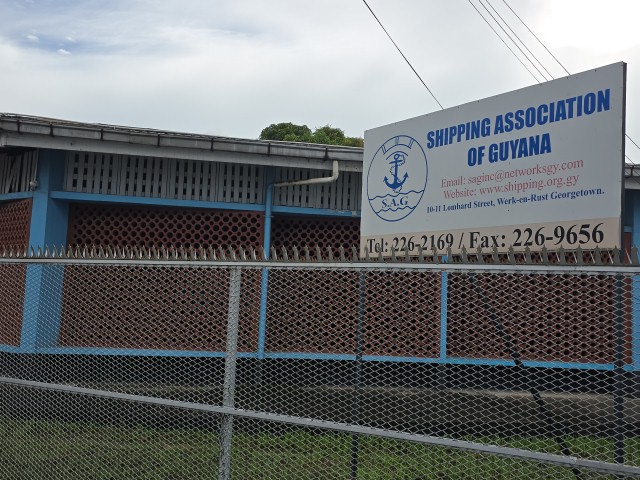
A cross-border trade dispute over new steep shipping levies on the shared Corentyne River has intensified in early 2026, with the top shipping industry leader in Guyana rejecting Suriname’s proposal for selective cargo vessel exemptions and pushing for full diplomatic negotiations to scrap the fees entirely.
Komal Singh, Chairman of the Shipping Association of Guyana (SAG), has publicly pushed back against Suriname’s suggestion that the Guyanese government submit a formal diplomatic request to exempt additional Guyanese cargo vessels from the recently implemented charges. Speaking to Demerara Waves Online News, Singh explained that a piecemeal exemption framework would create an unfair, uneven playing field by allowing selective benefit allocations.
“The Corentyne River sees constant, mixed movement of goods and people: Guyanese carriers ship construction materials, timber and tourism traffic to domestic destinations along the waterway, while Suriname moves its own supplies west into Guyana. We cannot draw arbitrary lines to prioritize some shippers over others. That is no way to maintain a fair cross-border trade ecosystem,” Singh said.
Suriname’s current Jennifer Geerlings-Simons administration has already noted that vessels operating on behalf of the Guyana Sugar Corporation have held a long-standing exemption from the river tariffs, and has encouraged Guyana to pursue additional exemptions through official diplomatic channels. To date, Guyana’s Ministry of Foreign Affairs has declined to comment publicly on the ongoing negotiations.
Singh, however, argues that no Guyanese vessels moving cargo originating from Guyanese operations along the upper Corentyne should be charged at all. He joined a growing chorus of Guyanese private sector groups calling for high-level diplomatic talks to resolve the dispute entirely, and has called on Suriname to implement an immediate moratorium on the new levies to restore free cross-border trade.
“This waterway has always operated as an open shared resource, with no tariffs impeding movement. This is not a one-sided arrangement: both nations’ economies and communities benefit from the commercial activity that takes place here every day,” Singh added. In a separate formal statement, SAG reaffirmed its commitment to supporting multi-stakeholder dialogue and collaboration to ensure the Corentyne River remains an equitable shared asset that delivers mutual economic benefits for both countries.
The new levies carry steep costs for Guyanese shippers, according to details released by the Upper Corentyne Chamber of Commerce and Industry (UCCI). Shippers are currently charged a $2,500 pilot license fee per trip, plus broker fees ranging from $1,000 to $1,500 per voyage. Multiple industry sources have confirmed additional tonnage-based fees for quarried products, running between $1.00 and $1.50 per tonne for vessels carrying 1,000 tonnes or more of aggregate.
UCCI President Krishnand Jaichand noted that Guyanese vessels have historically paid a small licensing fee to traverse the Corentyne, a timeline that is corroborated by Surinamese legal expert and former ambassador Aashna Kanhai. Kanhai told Suriname’s LIM FM that the underlying authority to charge fees dates back to the Desi Bouterse presidency in Suriname, and that past exemption requests confirm Guyana has long acknowledged the baseline requirement for fees.
Singh has indicated he is open to exploring a small, flat nominal fee for river access, but stressed that any such proposal would require rigorous review to confirm it would not drive up costs for end consumers in Guyana. For his part, Jaichand argues the sharp increase in fees is intended to protect two Surinamese stone aggregate exporters that do not face the same tax burden when selling into Guyana, putting local Guyanese producers at an unfair disadvantage. “Our local stone producers simply cannot compete with the imported product under these new cost structures,” Jaichand said.