Trinidad and Tobago’s ongoing state of emergency (SoE) to curb violent gang crime is facing growing backlash after more than 30 homicides were recorded across the country since the measure took effect last month, with a former top security official demanding the administration completely rewrite its approach to public safety.
As of the most recent count, the national 2026 murder toll has reached 94. The latest fatality was identified as 38-year-old Ryan Morris, who was fatally stabbed in a public confrontation outside a Barataria bar on Saturday morning. While this year’s toll remains slightly lower than the 99 recorded by this point in 2025 and far below the 143 recorded in the same period of 2024, the sharp uptick in killings since the SoE was implemented has undermined the government’s justification for the extraordinary measure.
Prime Minister Kamla Persad-Bissessar first announced the new SoE on March 2, 2026, with the measure entering into force the following day. At the time of its declaration, she argued the step was necessary in response to a documented surge in gang-related violence and credible intelligence confirming planned attacks against law enforcement and security personnel. Following the expiration of the previous SoE on January 31, Persad-Bissessar noted violent criminal activity had spread across the nation, with most incidents linked to organized criminal networks. She added that recent attacks included multiple mass shooting events with multiple fatalities, warning that unregulated retaliatory gang killings would spiral into widespread chaos if no action was taken.
framing the SoE as a natural extension of her administration’s “zero-tolerance” policy on violent crime, the Prime Minister pointed to 10 months of successful joint operations conducted by the Trinidad and Tobago Police Service and the national armed forces, alongside new legislative measures and ongoing reforms to the criminal justice system. She emphasized that the core goal of reimposing the state of emergency was to protect hard-won progress in reducing murder rates and violent offenses, and to shield law-abiding residents from escalating gang violence.
When the SoE took effect, the national murder tally stood at 63. In the month following its implementation, however, at least 31 additional people have been killed, a figure confirmed by Deputy Police Commissioner Suzette Martin late last week. Martin told reporters the current average rate of homicide is at least one killing per day.
The victims of these post-SoE killings include people from all walks of life: prominent local businessman Danny Guerra, a teenage boy, two young men killed in a mass shooting at a family apartment, a female professional cricketer, and an 11-month-old infant who was shot and killed while sleeping next to his father. Joseph Sutton, shot in mid-March, ultimately died alongside his son Jayden Sutton in a March 31 incident that shocked the nation.
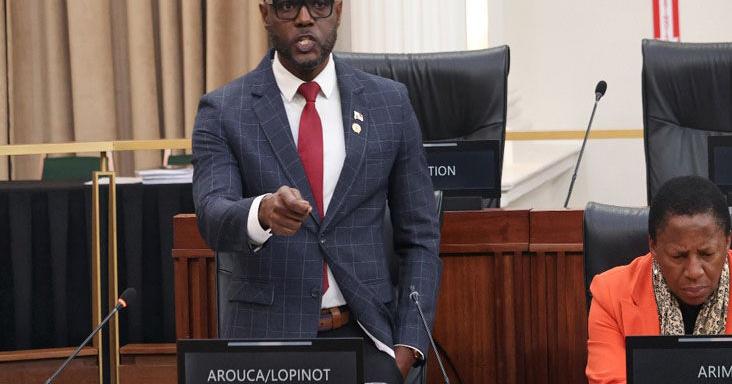
Marvin Gonzales, who previously served as the country’s Minister of National Security, has emerged as a leading critic of the government’s handling of the crisis and its public justification for the SoE. Gonzales argues that administration officials have deliberately misrepresented the stated purpose of the measure to the public.
“Our core concern is that the Prime Minister and the Attorney General keep lying to the Trinidad and Tobago people,” Gonzales said. “The presidential statement submitted to Parliament, which drew directly on intelligence from the National Security Council, stated the SoE was called to address specific, concrete gang threats. It was never framed as a measure to control the overall murder rate. But government spokespeople keep talking about the murder toll instead of the specific threats they claimed justified extraordinary measures.”
Gonzales pointed to the killing of the 11-month-old infant as a stark illustration of how deeply violent crime has penetrated the country. “The murder of an 11-month-old child is a deeply disturbing development that shows how severe and entrenched violent crime and murder have become in Trinidad and Tobago. Criminals are not deterred by a perpetual state of emergency, and it is long past time for this government to do the hard work required to address crime at all levels – including its root causes, investment in social programs, education reform, overhauls to the judicial and prison systems, and rooting out corruption within the Trinidad and Tobago Police Service.”
The former security minister added that the continuation of rampant homicide during the SoE raises serious questions both about the effectiveness of the measure and the government’s overall preparedness to tackle the national crime crisis.
“Let us not fool ourselves: this government is completely out of its depth. This is an abysmal failure, and the government must return to the drawing board to develop a real strategy,” Gonzales said. “The Prime Minister must release the full details of the crime plan she campaigned on during the 2025 general election. If she cannot do that, she must admit she lied to the public, and that the United National Congress never had a serious plan to fight crime at all. More than 30 murders committed while a state of emergency is in effect is astonishing. This measure must be discontinued immediately.”