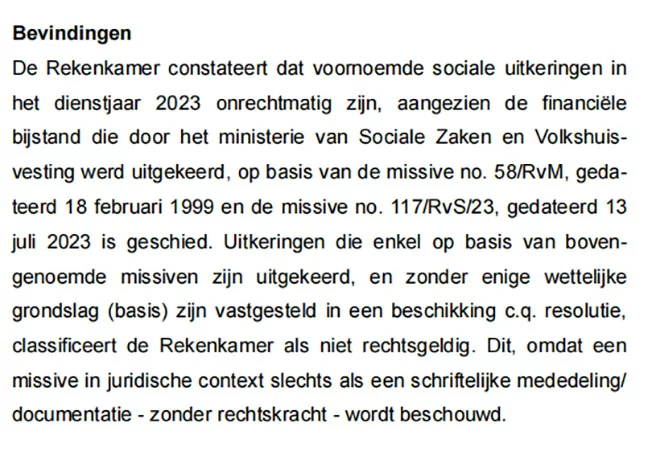
On April 6, the Netherlands Court of Audit (NCA) released its 2025 annual report, flagging significant deficiencies in the legal compliance of national social assistance payments, with a specific focus on programs managed by the country’s Ministry of Social Affairs and Housing (SoZaVo). The NCA’s audit found that the approval and delivery of targeted financial support to vulnerable populations did not always meet established regulatory requirements and procedural standards in a substantial share of cases. These shortcomings raise pressing questions about the oversight, transparency, and cost-effectiveness of public funds allocated to support the most disadvantaged groups in Dutch society. In the report, the NCA emphasized that careful, rule-abiding management of social welfare systems is foundational to maintaining public trust in government institutions. Irregularities in benefit allocation do not only lead to wasteful, inefficient use of taxpayer money, the agency notes, but can also create unfair disparities in access to life-sustaining support, leaving some eligible vulnerable groups without assistance while potentially granting benefits to ineligible recipients. This audit of social assistance forms part of a broader series of compliance reviews completed by the NCA in 2025, which also covered land allocation, public pension administration, and government subsidy programs. Across all these policy areas, the audit body found persistent gaps in adherence to national laws and formal procedures, indicating that system-wide improvements are needed across multiple sectors of government. To address the identified issues in social welfare delivery, the NCA is calling for urgent strengthening of internal oversight mechanisms and more consistent enforcement of existing regulatory frameworks. The agency stresses that these reforms are critical to ensuring public social programs actually reach the intended communities that depend on this support, repairing transparency, and upholding public confidence in government welfare provision.
Rekenkamer onderzoekt sociale bijstand: tekortkomingen in rechtmatigheid vastgesteld