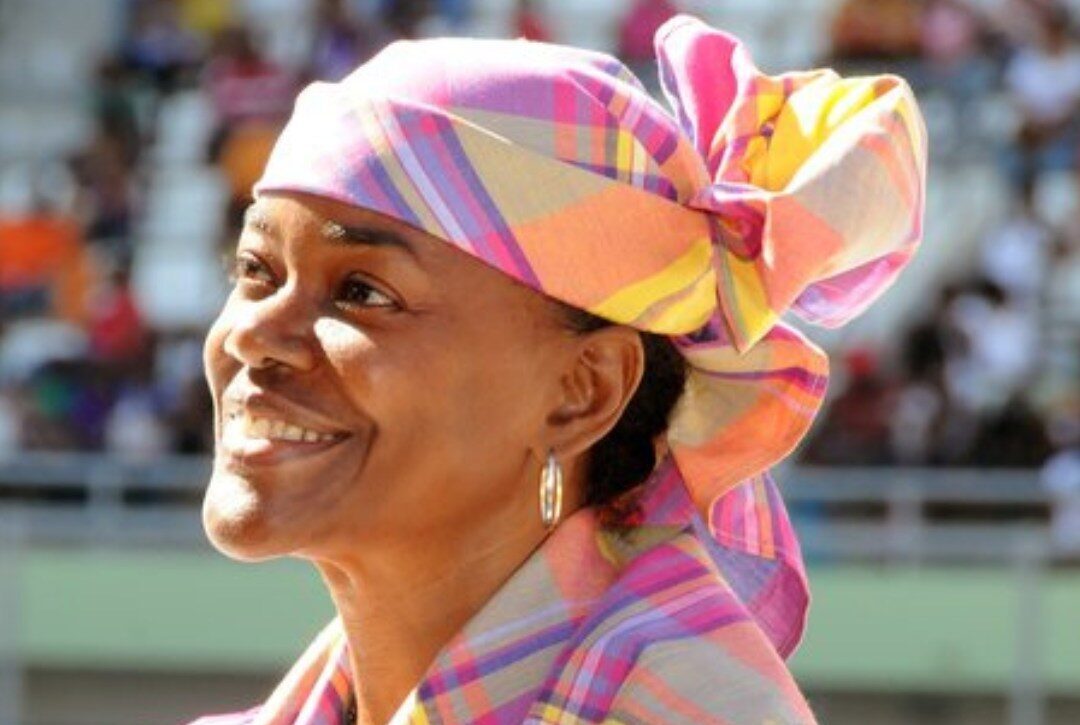
Nestled in the heart of the Caribbean, the Commonwealth of Dominica has produced countless extraordinary cultural figures, but few have left as indelible a mark on national identity as Pearle Christian. Born March 20, 1955, in the coastal village of La Plaine, Christian—affectionately known to all Dominicans as “Aunty Pearle”—is far more than a celebrated music educator and choral director. Over a career spanning six decades, she has emerged as one of the island nation’s most dedicated nation-builders, proving that cultural education is a powerful tool for shaping personal character, collective identity, and enduring national pride.
Christian was born into a family deeply woven into Dominica’s educational, political, and cultural fabric. Her mother Muriel Christian was a respected educator and cultural practitioner, while her father Henckell Lochinvar Christian served as Dominica’s Minister of Education and Health. Her artistic lineage grew even stronger through her uncle, Lemuel McPherson Christian MBE, the legendary composer who penned Dominica’s beloved national anthem *Isle of Beauty, Isle of Splendour*. With this rich heritage surrounding her from childhood, a life dedicated to music was not just a choice—it was a calling. She began formal piano lessons at age seven, first training through the Christian Musical Class founded by her uncle, then studying under renowned music educator Rosemary Cools-Lartigue. She completed her academic foundation at three leading institutions in Dominica’s capital Roseau: Convent Preparatory School, Convent High School, and Sixth Form College, laying the groundwork for her decades-long career.
As a young educator at her former alma maters Convent Preparatory and Convent High Schools, Christian quickly demonstrated her dual commitment to academic excellence and artistic growth. While teaching full-time, she pursued professional certification through the Associated Board of the Royal Schools of Music, and recognized her own exceptional potential, she went on to pursue advanced musical training at the Jamaica School of Music (now the Edna Manley College of the Visual and Performing Arts) from 1976 to 1980. During her time there, she rose to the top of her cohort, earning a Diploma in Music Education, winning awards for her original compositions, and being named Student of the Year. Her talent was so widely respected that she was invited to join the school’s faculty, serving as a teacher and Junior Choir Director before returning to her home country of Dominica in 1981 to begin her iconic public service career.
After returning home, Christian embarked on a 34-year historic tenure as a Cultural Officer within Dominica’s Division of Culture, where she became one of the chief architects of the island’s modern choral development movement. She collaborated with the National Chorale, performed as a member of the Dominica Folk Singers, and contributed to sacred music through the St. Alphonsus Folk Choir. Her most transformative contribution during this period came in 1994, when she co-founded and directed the Sixth Form Sisserou Singers, a joint initiative between the Cultural Division and Sixth Form College. Through this acclaimed ensemble, Christian proved that traditional Dominican folk music could be reimagined as sophisticated, world-class choral work that holds its own on any international stage.
Christian’s dedication to expanding access to music education extended far beyond her work with performance groups. For 17 years, she served as a lead principal tutor at the Kairi School of Music, training generation after generation of Dominican musicians in flute, recorder, and choral technique. In 2000, she founded the Dominica Association of Music Educators, an organization with a core mission of ensuring that every child in Dominica—regardless of socioeconomic background—has access to high-quality, meaningful music education. This initiative embodied her core belief that music is a democratic art form, equally capable of nurturing discipline, collaborative spirit, and creative expression in all young people.
In 2001, Christian further bolstered her academic expertise by earning a Master’s degree in Music Education from Texas State University in San Marcos, Texas. This advanced training reinforced her long-held philosophy that Caribbean folk culture must remain at the center of Dominican artistic and educational development. Throughout her career, she composed and produced dozens of children’s musicals and educational works that wove traditional Dominican storytelling, rhythms, and Creole language into formal music instruction, ensuring that the nation’s cultural heritage remained a living, evolving part of its education system rather than a static historical artifact.
When Christian retired from government service in 2015, she showed no signs of slowing down her work with young people. One of her most enduring legacies, the Henckell & Muriel Christian Musical Workshop, was founded after her retirement, named in honor of her parents to carry forward the family’s legacy of service. From this community institution, which she runs with characteristic discipline and heartfelt care, she continues to teach students far more than music: core values of punctuality, presentation, mutual respect, and strong character development. As many who have studied with her note, Christian has always insisted that personal discipline and moral character are inseparable from musical excellence.
Christian’s work with the Sisserou Singers choral movement also remains one of her most defining achievements, helping set a standard for Dominican choral excellence that shaped an entire generation of performers. Through this initiative, she showcased her unique gift for blending rigorous technical musical training with unshakable cultural pride, producing performances that celebrate the unique folklore, language, and rhythms of the Caribbean while building lasting confidence in every young performer who joins the ensemble. Her career is rooted in a clear philosophy: culture is not a static relic of the past, but a living tradition that must be actively nurtured through education and public performance to remain relevant.
Christian’s lifetime of dedicated service has not gone unrecognized by her nation. In 2016, just one year after her retirement from public service, she received the Golden Drum Award, Dominica’s highest honor for exceptional contributions to the cultural sector. Yet for Christian herself, the greatest reward has never been awards or official recognition. As she has shared in reflections on her career, her proudest achievement is the countless young people from all walks of life whose lives and trajectories she has helped shape. For her, the greatest satisfaction comes from providing a platform for the holistic growth of young Dominicans, helping them grow into confident, capable stewards of their nation’s culture.
To understand Dominica’s modern cultural landscape is to understand the quiet, transformative impact of Pearle Christian. Like the distinguished relatives who came before her, she understands that the true value of cultural work is measured not in standing ovations or public acclaim, but in the legacy left for future generations. Through her choirs, her compositions, her hundreds of students, and the enduring institutions she founded, she has ensured that Dominica’s rich musical traditions remain vibrant, accessible, and relevant for decades to come. In the end, Pearle Christian embodies the very best of Dominica’s cultural heritage: disciplined yet endlessly creative, deeply rooted in national heritage yet unafraid to look forward, and unwaveringly committed to lifting up the next generation. Her life’s work proves that the role of a cultural leader is far more than administrative—it is a work of building civilization itself. As a cultural guardian of the “Nature Isle” of Dominica, “Aunty Pearle” has secured her place as a true daughter of the nation, whose influence will resonate through generations of Dominican musicians and leaders.