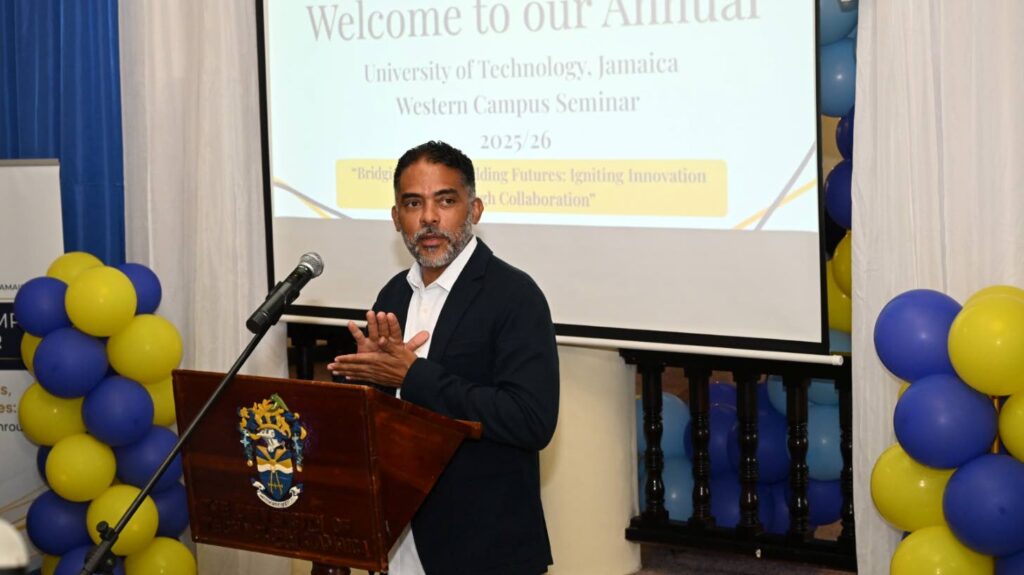
In a recent address to final-year business students at the University of Technology Jamaica’s (UTech) 2025/2026 Western Campus Seminar, hosted at Sea Gardens Beach Resort in Montego Bay, Jason Russell, president of the Montego Bay Chamber of Commerce and Industry (MBCCI) and a third-generation Jamaican business leader, has issued a stark warning to entrepreneurs engaging in tax dodging and unethical accounting practices: short-term gains from cutting corners will inevitably lead to long-term damage that cripples business growth.
Russell, who oversees popular local hospitality ventures including Pier One Restaurant and Deja Hotel, drew on decades of hands-on business experience to challenge the common perception that off-the-books operations and under-the-table earnings deliver greater profits than legitimate, transparent practice.
“I’ve seen countless entrepreneurs buy into the idea that operating in the black market or cutting corners on tax compliance brings bigger rewards,” Russell told the gathered students. “But the reality is far from that. When you intentionally fudge your books to hide income, you end up creating a mess you can’t untangle. I’ve mentored businesses that keep three separate sets of accounting records, all designed to mislead regulators. When you dig into those books, you can’t reconcile missing funds, basic entries are wrong, and no one can track where the money actually went — that’s by design, but it’s a design that sinks growth.”
He went on to note that Jamaica’s modern tax regulatory system has closed gaps that once allowed under-declaration to go undetected. “The government has built a robust, interconnected system that requires full disclosure to produce consistent, reconcilable financial records. Any attempt to hide income will leave obvious gaps that can’t be explained away when auditors or third parties review your books,” he explained.
Russell emphasized that his own family-owned hospitality businesses have maintained 100% tax compliance from their founding, a choice that has created long-term value that unethical operators can never access. “At Pier One and our hotel, we take pride in being fully transparent with all our tax obligations. Too many tax dodgers miss the big picture: they hide income for years, then when they need financing from a bank to expand, they have no verifiable financial history to back up their claims of success. You can tell a bank you make a million dollars a month, but if your bank statements only show $10,000, and you have no record of a decade of operations, lenders aren’t going to take you seriously. Even if you drive a luxury car and own a big home, that doesn’t make up for missing, inconsistent financial records,” he said.
He stressed that these short-term cuts to compliance create permanent barriers to long-term expansion. “I don’t judge other operators for their choices, but the facts are clear: a business built on under-the-table dealings can never reach its full potential. You can’t get approved for public contracts through the National Contracts Commission, you can’t secure a tax compliance certificate that’s required for most major business deals, you can’t expand into global markets, and you can’t access affordable financing from mainstream banks. You end up stuck in a dead-end, limited operation, with no room to scale. The only sustainable path to long-term business growth is to build your company on straight, transparent practices,” Russell advised.
Beyond tax compliance, Russell shared practical advice for aspiring new business owners, urging students to build emergency cash reserves to weather unexpected disasters. He explained that insurance claim processes are often slow and inadequate, so having cash on hand is critical to keeping operations running after a crisis. “As business owners, we need to set aside a cash buffer for rainy days. You can’t afford to wait weeks or months for an insurance payout to reopen after a storm or other disaster. Insurance won’t get your business back up and running the next day. When my hotel suffered damage recently, I received no payout from insurance at all. But because we had built up a reserve, we were able to start repairs immediately and keep the business open,” he shared.
The seminar, which brought together academic insight and industry experience to support emerging business leaders, ran under the theme “Bridging minds, building futures: Igniting innovation through collaboration.”