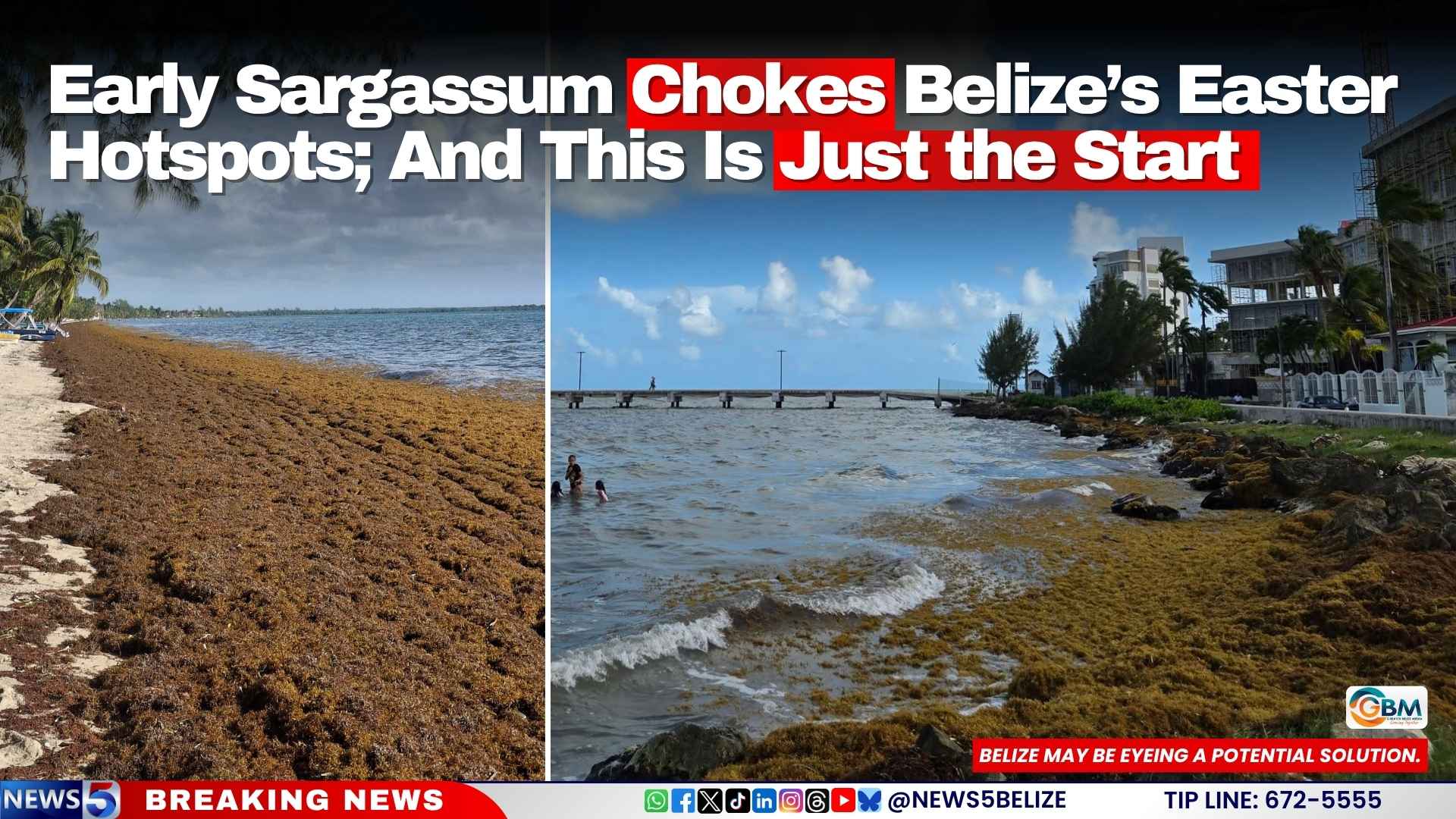
The 2026 sargassum blooming season has arrived far earlier and more aggressively than expected along Belize’s coastlines, choking the country’s most popular Easter tourism destinations with dense, unmanageable mats of brown seaweed weeks before the annual peak is projected to hit.
Popular visitor hotspots including Ambergris Caye, Caye Caulker, Placencia, and Hopkins have already seen widespread seaweed accumulation along their shorelines, catching many local communities and tourism operators off guard even as they prepped for the annual influx of Easter holiday travelers.
Data from leading ocean monitoring institutions — the University of South Florida and the U.S. National Oceanic and Atmospheric Administration (NOAA) — confirms that sargassum biomass across the broader Atlantic Ocean and Caribbean basin is already at record-breaking levels for this time of year. The institutions’ March 2026 Sargassum Forecast warns that 2026 is on track to become one of the most severe sargassum seasons on record, with total volumes projected to hit all-time highs by mid-year.
The crisis is not limited to Belize. Neighboring Mexico is already grappling with the early bloom: local reports confirm that the popular resort destination of Tulum had collected 244 metric tonnes of sargassum by the end of February 2026, a stark jump from just 59 tonnes collected during the same period in 2025.
The unseasonable early surge has forced Belizean authorities and tourism operators to accelerate their response plans. The San Pedro Town Council expanded its cleanup crews and began daily removal operations weeks ahead of schedule, while private hotels and restaurants along affected coastlines have deployed floating containment barriers to stop sargassum from drifting into swimming areas and waterfront access points. Even with these proactive steps, persistent systemic challenges remain: illegal dumping of collected sargassum on Ambergris Caye has compounded the island’s existing waste management strains, turning a coastal environmental problem into a public nuisance for local residents.
Despite the immediate pressures, Belize is actively exploring long-term, sustainable solutions to the annual sargassum crisis. Agriculture Minister Rodwell Ferguson confirmed during March 2026’s budget debate that Chilean companies specializing in sargassum collection and recycling are scheduled to arrive in Belize on April 7 to assess potential commercial harvesting and repurposing projects. These firms have developed techniques to turn waste sargassum into usable products ranging from organic fertilizer to biofuel and construction materials, offering an economic alternative to costly open-air disposal.
This year’s early Easter bloom serves as a stark early warning for the entire Caribbean region: as ocean conditions continue to fuel larger, earlier sargassum blooms, communities reliant on coastal tourism and fisheries are bracing for a year of unprecedented environmental and economic disruption.