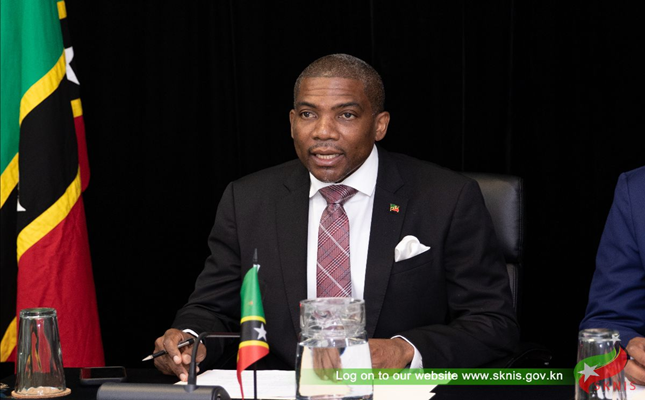
BASSETERRE, Saint Kitts – March 31, 2026 – As global fuel markets face escalating prices driven by external international forces, Prime Minister Hon. Dr. Terrance Drew has publicly committed that the government of Saint Kitts and Nevis will deploy targeted, proactive measures to offset price volatility and safeguard household living costs for the nation’s citizens.
Speaking at an emergency cabinet press briefing held on March 30, Drew emphasized that small island developing states like Saint Kitts and Nevis are uniquely vulnerable to shifts in global commodity markets. Even minor spikes in international fuel prices ripple through every segment of the domestic economy, raising costs for transportation, food, utilities, and other essential daily goods that residents rely on. The prime minister made clear that the administration is fully attuned to the financial strain these price increases place on working families and vulnerable groups across the federation, and is prioritizing immediate action to reduce that burden.
“We recognize that rising fuel costs directly translate to a higher cost of living for our people,” Drew stated during the conference. “This administration will leave no stone unturned to prevent that economic shock from hitting our citizens full force.”
Drew drew on the government’s successful track record managing economic instability following the COVID-19 pandemic to frame its current response, noting that the administration has already begun rolling out interventions to shield the public from the full impact of the global price surge. Just as it absorbed significant public costs to stabilize household finances during post-pandemic market disruptions, the government will once again prioritize absorbing as much of the current price increase as possible to protect residents.
“We will carry as much of this burden as we are able, just as we did in the years after COVID,” Drew said. “That commitment to standing with our people through crises has not changed.”
This approach, he added, aligns with the government’s core people-centered governing philosophy, which has guided its policy choices since the height of the pandemic. When global supply chain disruptions upended local economies across the Caribbean, Saint Kitts and Nevis took on substantial public debt and reallocated national budgets to ease cost-of-living pressures for citizens, a strategy the administration is continuing today amid the fuel price crisis.
Beyond immediate relief measures, the prime minister used the briefing to reinforce the urgency of long-term systemic change, noting that repeated global energy shocks highlight the critical danger of the nation’s ongoing reliance on imported fossil fuels. To build lasting resilience against future price volatility, Drew reaffirmed the government’s commitment to advancing full national energy independence as a central pillar of its widely supported Sustainable Island State Agenda.
“These shocks will keep hitting us again and again until we achieve energy independence, until we build the sustainable island state that allows us to produce all the energy we need right here at home,” Drew explained. “That is the only way to insulate our people from global market volatility permanently.”
Moving forward, the government will maintain continuous close monitoring of global energy market developments, and will adjust its short-term relief measures as needed to protect citizens, with a particular focus on supporting low-income and otherwise vulnerable households. At the same time, it will continue advancing long-term policy and infrastructure investments to build out domestic renewable energy capacity and strengthen the nation’s overall economic and energy security.