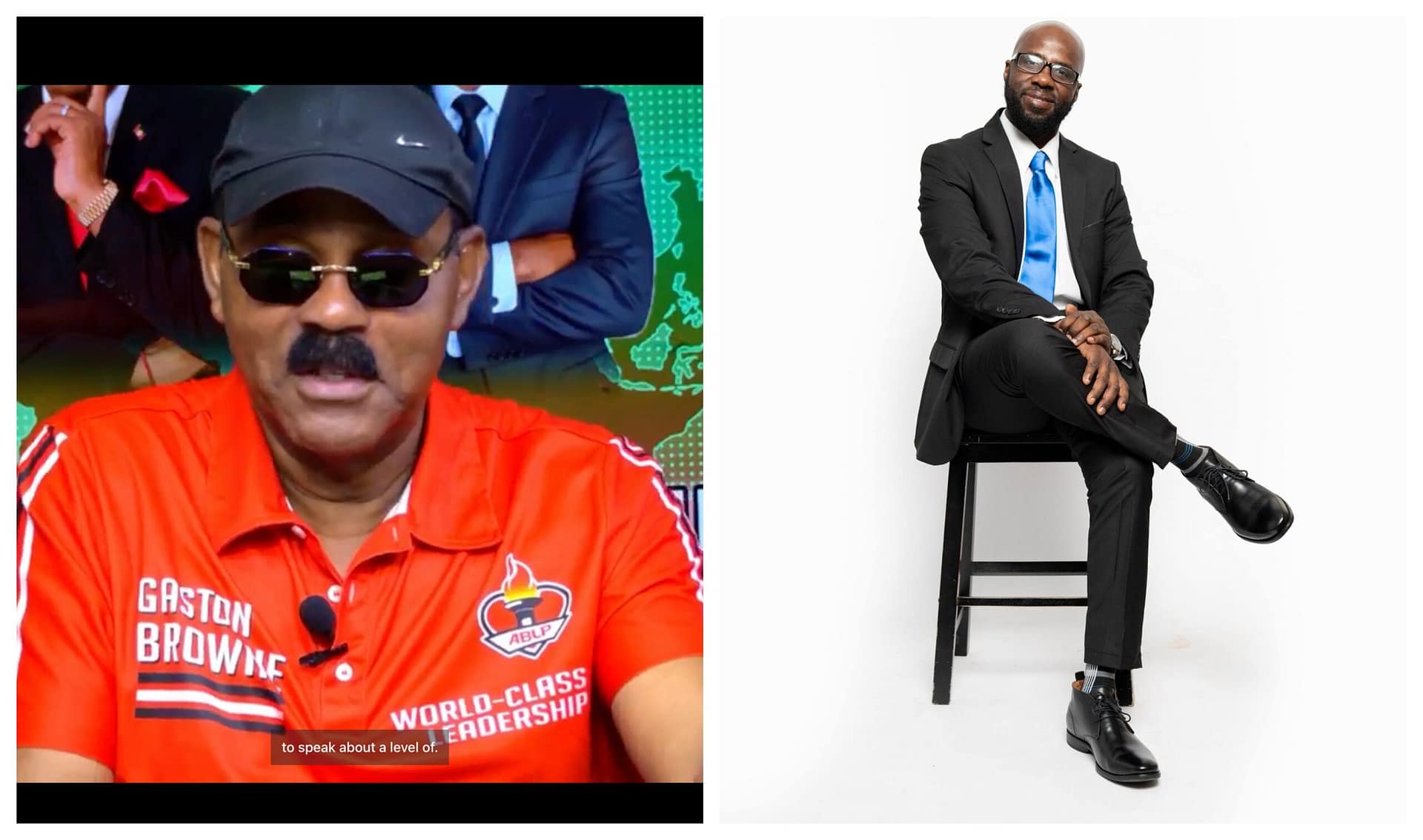
As Antigua and Barbuda prepares for its upcoming election, a letter to the editor from a self-identified concerned voter has highlighted growing public frustration over ambiguous political communication between top political figures. The voter, who has reviewed both Prime Minister Gaston Browne’s recent comments about a private meeting with opposition figure Adrian Williams, as well as Williams’ subsequent public reply, says the opposition leader’s response has left critical questions unanswered.
The core of the dispute centers on specific, serious allegations made by Prime Minister Browne regarding his interaction with Williams. Instead of addressing these claims head-on, Williams has relied on broad, generic rhetoric centered on concepts like “leadership” and “vision” — a framing that the voter argues fails to address the concrete questions at the heart of the controversy.
Voters, the letter emphasizes, are not seeking empty campaign slogans ahead of what is shaping up to be a high-stakes election. Two simple, direct questions remain unaddressed by Williams: First, did the meeting with Prime Minister Browne actually take place? Second, did Williams bring forward the specific questions that Browne has referenced in his public comments?
The voter pushes back against Williams’ attempts to frame the exchange as defamation or excessive political rhetoric, arguing that dodging the core issues is unacceptable for anyone seeking public office. “If what the Prime Minister said is false, Williams should state that clearly and categorically. If the claims are actually true, he owes the public a full explanation,” the letter reads.
This lack of transparency, the voter argues, points to a larger problem in modern political campaigning. Any individual asking citizens to place their trust in them to represent their interests must commit to openness and directness at all times, not just when it is politically convenient. Transparency cannot be an on-again, off-again promise that candidates abandon when faced with uncomfortable questions, the letter stresses.
The voting public, the author notes, is closely watching how political figures respond to scrutiny, and they are far more aware of evasive tactics than many candidates assume. Voters have already seen the original allegations and tracked the weak, noncommittal response, and that inconsistency will not go unnoticed at the polls.
With the outcome of the election set to shape the future direction of the nation, this contest is too important for political gamesmanship and rehearsed talking points, the letter concludes. What the public demands above all right now is honesty, and the writer reiterates the call for Williams to set aside generic rhetoric and answer the outstanding questions directly.