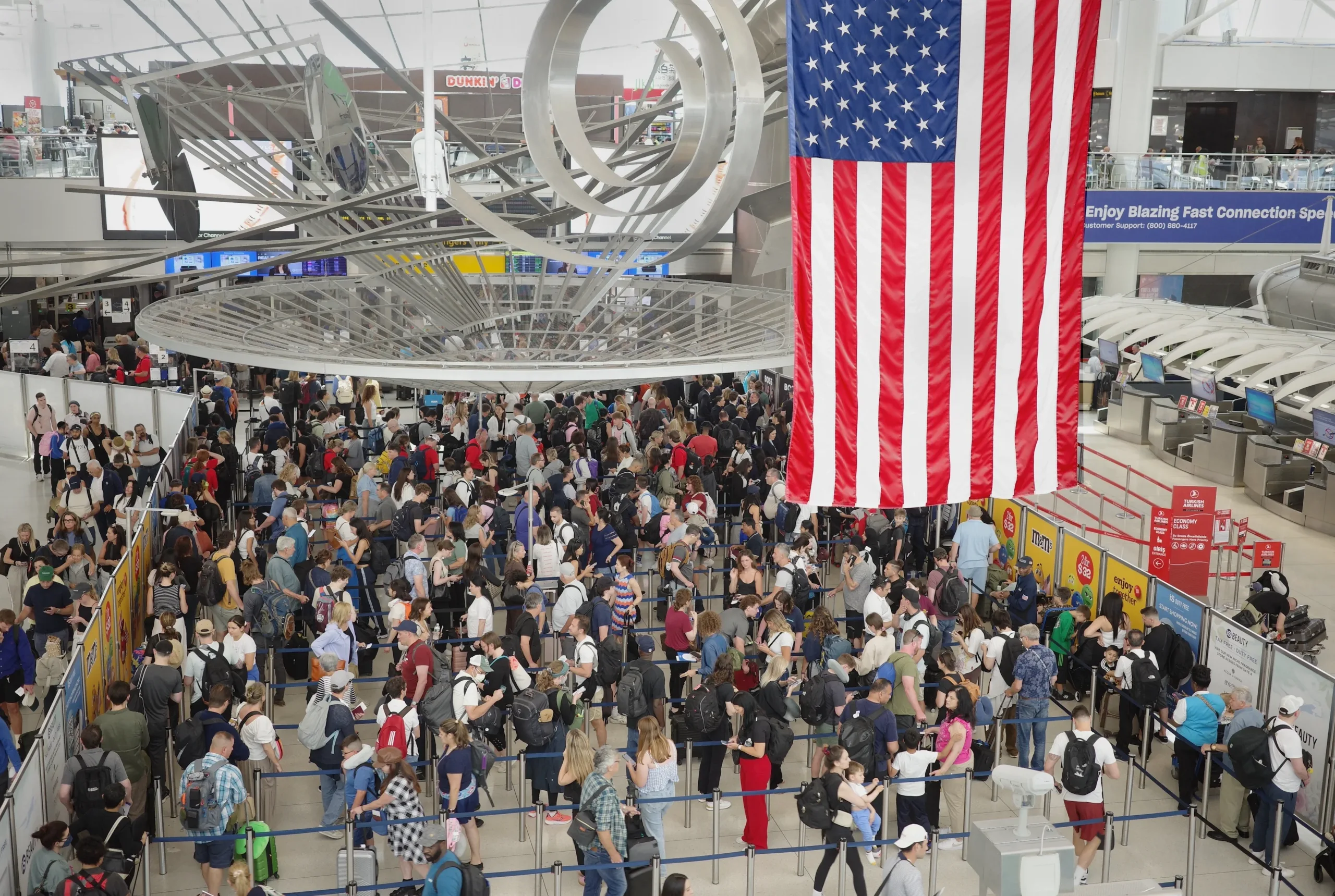
After weeks of disruptive budget gridlock that threw U.S. commercial air travel into chaos, U.S. Senate lawmakers announced a bipartisan agreement this Friday to bring an end to the partial federal government shutdown. The weeks-long funding gap had forced thousands of Transportation Security Administration (TSA) officers to work without pay starting in mid-February, creating a cascading staffing crisis marked by widespread absenteeism, sudden resignations, and critical understaffing at security checkpoints across the nation’s busiest airports. To cope with extended wait times that stretched for multiple hours in many hubs, airport operators repeatedly urged all passengers to arrive at least two to three hours ahead of their scheduled departure times to avoid missing flights.
The political standoff that triggered the shutdown revolves around long-running disagreements over U.S. immigration enforcement. Democratic legislators have pushed for sweeping reforms to Immigration and Customs Enforcement (ICE), an agency that has faced sustained national criticism over controversial detention and deportation practices. Under the terms of the Senate-approved deal, core components of the Department of Homeland Security (DHS) — including TSA, the U.S. Coast Guard, and the Federal Emergency Management Agency (FEMA) — will receive guaranteed federal funding through 2026. Notably, both ICE and U.S. Border Patrol were excluded from this funding package as part of the compromise to break the gridlock. The bipartisan legislation will now advance to the U.S. House of Representatives for a final vote before it can be sent to the president’s desk for signature.
In an emergency response to the airport staffing shortage, federal officials temporarily reassigned trained ICE agents to assist TSA personnel with airport security screening. However, this urgent contingency measure quickly drew sharp pushback from lawmakers and immigration advocacy groups, who argue that ICE officers lack the specialized training required to conduct civilian aviation security operations, creating unnecessary public safety risks. Amid growing public pressure, former President Donald Trump also announced plans to sign an executive order that would immediately restore back pay for all TSA workers affected by the funding lapse once the shutdown ends.