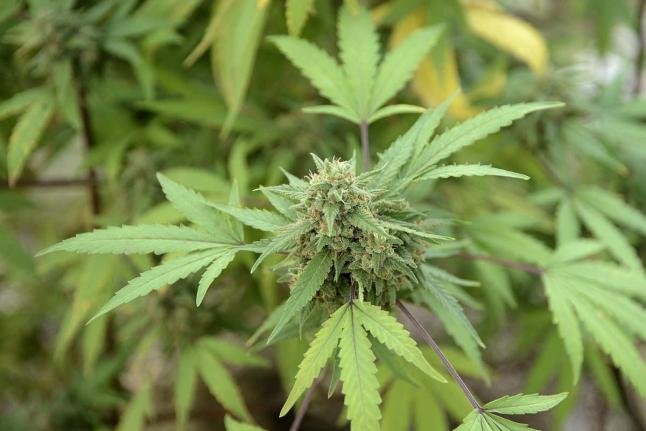
BASSETERRE, St Kitts – In a formal address to the nation’s parliament, Prime Minister Dr. Terrance Drew has outlined the federal government’s deliberate, risk-mitigating approach to cannabis integration, emphasizing that all reforms must prioritize the Caribbean nation’s economic stability, public health, and long-term social and financial wellbeing.
Drew, a practicing medical professional, noted that his administration has already advanced historic progressive changes to outdated cannabis laws, including upholding the fundamental rights of the Rastafari community to practice their faith without criminal penalty. But he stressed that these changes are being rolled out with full awareness of the dangers that unregulated mismanagement could pose to the twin-island federation.
“We are being responsible with how we introduce cannabis as part of our way of life here in St Kitts and Nevis, it has to be done responsibly,” Drew told parliament. He explained that the government’s new legislative framework is intentionally structured to strike a balance: it protects constitutionally guaranteed rights, while putting systems in place to prevent substance abuse, economic disruption, and harm to local citizens.
The prime minister reaffirmed that the government has removed criminal penalties for Rastafarians’ religious use of cannabis, enabling the community to exercise their faith freely. At the same time, he issued a clear caution against any actions that could erode St Kitts and Nevis’ standing in global finance, particularly its critical correspondent banking relationships with major international institutions.
Upholding the country’s regulatory obligations is not optional, Drew said, but a non-negotiable requirement for maintaining global confidence in the federation’s financial system. He urged all new entrants to the emerging cannabis sector to abide by existing regulations, to ensure St Kitts and Nevis retains its reputation as a rule-abiding actor on the global stage.
Speaking to the specific case of medicinal cannabis, Drew highlighted that while the plant shows clear potential for therapeutic applications, strict regulatory oversight is mandatory to guarantee product safety and quality for patients. “When people get a product in St Kitts and Nevis for medicinal purposes, they must know that this product is regulated, that what’s in it, or what is claimed to be in it is in it, and so that the overall health is protected,” he explained. He added that protections for vulnerable populations are a core component of the government’s framework, as regulated substances require careful management to avoid harm to bystanders and at-risk groups.
Drew closed his address by calling on all citizens and industry stakeholders to act responsibly and comply with the law, noting that the government’s approach is explicitly designed to protect both current and future generations of the federation.
Attorney General Garth Wilkin, who also serves as Minister of Justice and Legal Affairs, followed the prime minister’s address with a detailed breakdown of why full nationwide legalization of recreational cannabis remains unfeasible for St Kitts and Nevis at this time, pointing to binding international legal and financial constraints that cannot be ignored.
While the government has moved forward with targeted progressive reforms to uphold religious freedom and decriminalize limited categories of cannabis use, Wilkin explained that all changes must remain aligned with the country’s binding international treaty obligations. These international agreements explicitly restrict full legalization of cannabis for non-medicinal and non-religious use, and deviating from these rules would trigger severe consequences for the federation’s financial system.
“What that means is that if we were to legalize [recreational cannabis broadly], our corresponding banking relationships would almost come to an end,” Wilkin warned. He explained that St Kitts and Nevis’ access to the global financial system depends almost entirely on correspondent banking partnerships with institutions in major economic jurisdictions – including the United States and Europe – where cannabis remains illegal under federal or national law.
“So if you were to make money from cannabis in St Kitts and Nevis, and those countries [and] those banks were to realise that anybody in St Kitts and Nevis could legally make money from cannabis, they would cut off our banking system from the international finance system,” Wilkin added. He noted that this outcome would create cascading harm across every sector of the economy, disrupting international trade and eliminating citizens’ ability to complete even basic financial transactions when traveling or doing business abroad. “It would cause irreparable harm to our banking system,” he said.
Under the government’s current structured regime, cannabis is legal for religious use consistent with freedom of conscience, as well as for regulated medicinal purposes. The framework formally permits cultivation, possession, and use of cannabis within these legal bounds, Wilkin explained, aligning the new rules with the constitution’s protections for freedom of conscience and religious practice.
Alongside the new legal framework, the government has launched extensive public education initiatives, including an official cannabis information platform designed to help all citizens understand their rights and responsibilities under the updated law. Wilkin encouraged all residents to familiarize themselves with the new regulations and comply fully with their requirements, emphasizing that the government’s incremental approach reflects a deliberate, balanced compromise between progressive reform and national responsibility.