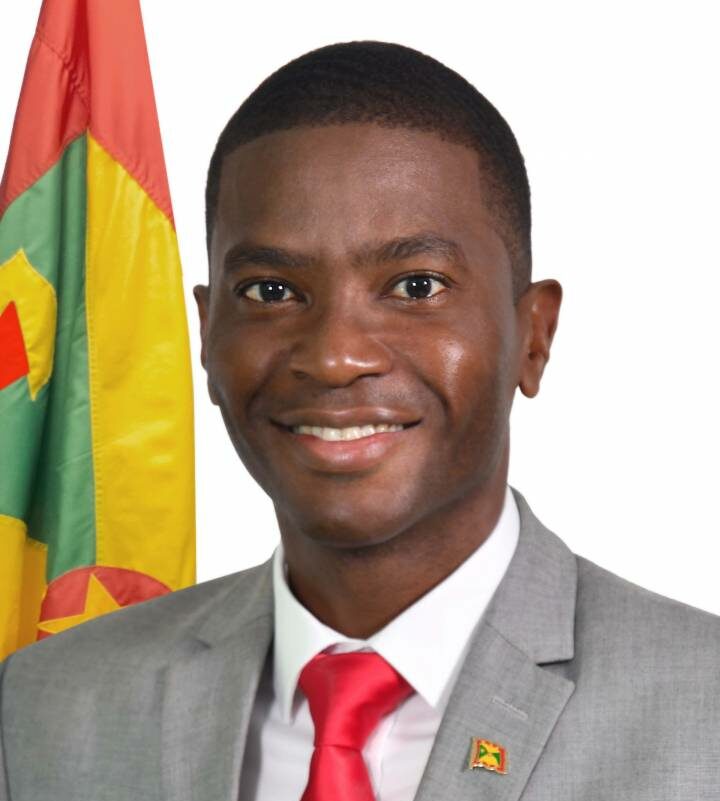
In a press briefing held Wednesday, Grenadian Prime Minister Dickon Mitchell emphasized his urgent call for global diplomatic engagement to de-escalate rising international tensions, including the ongoing violent conflict in the Middle East involving the United States, Israel and Iran. Reaffirming his administration’s unwavering commitment to dialogue over confrontation, Mitchell noted that a broad consensus among nations already favors diplomatic pathways to conflict resolution. He expressed hope that intensified diplomatic efforts will reverse the current trend of escalating hostilities and harsh rhetoric, reframing global conflict resolution around sustained dialogue rather than armed conflict.
Beyond his remarks on global affairs, Mitchell drew a clear connection between widespread international instability and Grenada’s domestic development priorities, highlighting that ongoing conflicts around the world have created tangible headwinds for the small island nation. For Grenada, advancing critical infrastructure upgrades remains a top national priority, Mitchell explained, noting that functional transportation networks—including safe roads and bridges—are foundational to protecting residents’ basic right to mobility and keeping the national economy from grinding to a standstill. In response to growing global uncertainty, his administration maintains constant surveillance of international risks that could threaten Grenada’s development, social cohesion, and long-term economic and social stability.
Mitchell, who was sworn in as Grenada’s ninth Prime Minister in June 2022 after leading his National Democratic Congress to a 9-6 electoral victory over the incumbent New National Party, outlined the string of unprecedented challenges his government has navigated since taking office. “As an administration, you could probably say everything that could happen to an administration in the last three and a half years has happened,” Mitchell told reporters. In addition to mounting global conflicts, the government has overseen the nation’s post-Covid-19 pandemic recovery, responded to devastating hurricane seasons, and navigated shifting geopolitical tensions, trade tariffs, and international trade embargoes. Mitchell acknowledged that small island developing states like Grenada have no direct control over global systemic stability, and current trends suggest the world will face greater instability rather than calm in coming years. For that reason, continuous monitoring of global risks remains a core administrative priority.
To build domestic resilience against external shocks, Mitchell outlined three core policy pillars his administration has already implemented. First, the government has enshrined strict fiscal prudence and responsibility in binding national legislation, requiring adherence to a structured fiscal framework that mandates emergency savings for unforeseen crises, ranging from natural disasters to sudden economic shocks. The government has also mitigated risk through comprehensive catastrophic risk insurance, a critical safeguard for a hurricane-prone small island nation.
Second, the administration has prioritized improving tax collection efficiency through digital modernization. Simple upgrades, such as launching user-friendly online tax payment platforms, have already delivered significant gains in collection rates, Mitchell reported. The government will continue expanding these modernization efforts to broaden the national tax base and refine the country’s tax model to support long-term revenue stability.
Third, Mitchell noted that Grenada’s long-running Citizenship by Investment (CBI) programme, which grants citizenship to foreign investors in exchange for large-scale investments in the country’s socio-economic development, remains a key pillar of the national revenue base.
Addressing ongoing domestic cost challenges, Mitchell identified rising global fuel prices as a major immediate concern. The government currently provides targeted subsidies for consumer fuel and residential electricity costs, but Mitchell cautioned that imprudent broad-based subsidy expansion would divert limited resources from the country’s critical ongoing infrastructure projects. “We have to be very prudent in not jumping to subsidise things simply because there’s an increase in price, because in doing so it means there’s less revenue for the infrastructure work that we require and that is ongoing,” he explained. The administration will continue monitoring global energy market trends to adjust policy accordingly.
Despite the array of global and domestic challenges, Mitchell closed his remarks on a measured optimistic note, reaffirming his confidence in Grenada’s ability to navigate ongoing volatility notwithstanding ongoing conflicts in the Middle East and Ukraine.