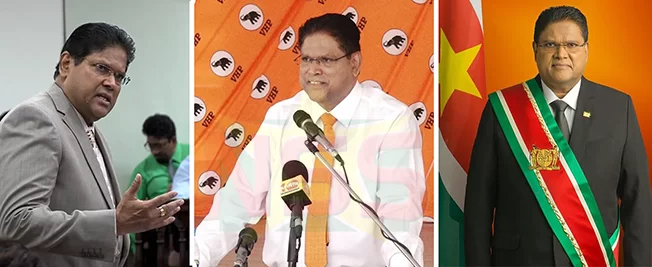
Suriname and the Caribbean region mourn the sudden passing of President Chandrikapersad ‘Chan’ Santokhi on March 30, 2026. The 67-year-old leader from Lelydorp leaves behind a remarkable political legacy characterized by unwavering commitment to justice, economic reform, and regional cooperation.
Santokhi’s journey from police academy graduate in Apeldoorn, Netherlands to national leadership was marked by exceptional dedication to law enforcement. His early career saw rapid advancement within Suriname’s police force, eventually becoming head of national criminal investigation and police commissioner. His tough-on-crime approach earned him the nickname ‘The Sheriff’ – a moniker he embraced, stating: ‘People want law and order. Hence the call for security, the call for sheriff.’
As Minister of Justice from 2005-2010, Santokhi achieved significant milestones including removing Suriname from the U.S. blacklist of drug transit countries. His most notable contribution was initiating the criminal proceedings against former dictator Desi Bouterse for the December 1982 murders, demonstrating his steadfast commitment to accountability.
Elected president in 2020, Santokhi ended the Bouterse era and inherited a financially exhausted nation. He implemented an unpopular but necessary IMF reform program, acknowledging communication shortcomings while maintaining his conviction: ‘We could have chosen a populist course aimed at winning elections. But that would have been irresponsible given our situation.’
His regional leadership as CARICOM Chairman in 2022 strengthened Caribbean unity, particularly enhancing relations with Guyana. President Irfaan Ali of Guyana described him as ‘a brother forged by conviction’ who worked wholeheartedly for regional progress.
Survived by his wife Mellisa Seenacherry and two children, Santokhi’s legacy extends beyond family to national transformation. His son Rishano remembered him as a man with strong legal vision whose principles continue to shape Suriname and the Caribbean.
Santokhi’s philosophy centered on inclusive nation-building: ‘We cannot build a nation while tolerating major disparities. Structurally disadvantaged groups require targeted support strategies – not as favor but as duty.’ His passing creates a leadership void, but his exemplary dedication to justice and development endures.