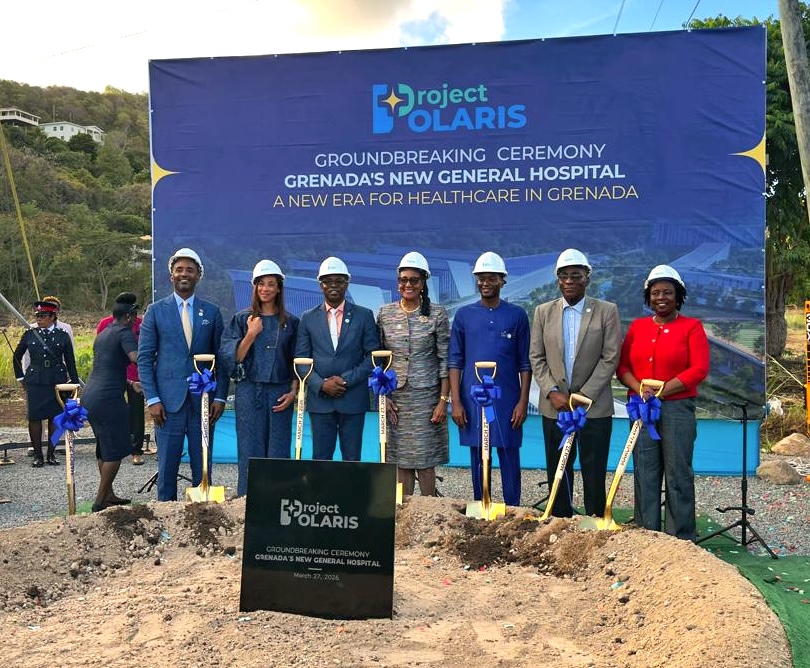
GRENADA – In a historic ceremony marking a new era for Caribbean healthcare, Grenadian officials have officially commenced construction on Project Polaris, the nation’s most ambitious medical infrastructure project to date. The groundbreaking event on March 27, 2026, at the Calivigny site signals the beginning of a three-year construction timeline for a state-of-the-art 250-bed general hospital.
Prime Minister Dickon Mitchell delivered a powerful address framing the moment as both symbolic and transformative for the nation. “We stand on hallowed ground,” Mitchell declared, tracing the land’s evolution from Amerindian settlement to plantation use, and now to a beacon of modern healthcare. “We are not just moving earth—we are moving the nation of Grenada, Carriacou and Petite Martinique forward.”
The Prime Minister acknowledged the limitations of the existing General Hospital, which dates back to the 18th century, stating that “patchwork is no longer enough” despite the heroic efforts of healthcare professionals working with outdated facilities.
Project Polaris represents the cornerstone of Grenada’s ‘Vision 75’ development agenda, aiming to transform the nation into a resilient, innovation-driven economy by 2050. The climate-resilient smart facility will occupy approximately 10 acres within the broader 83.9-acre Hope Vale Medical City development, featuring expanded specialist services, advanced diagnostics, emergency care, surgical suites, and maternal-neonatal units.
Ambassador Andrea St Bernard, Project Sponsor, described the initiative as “our North Star” guiding the nation toward a stronger healthcare system. The project aims to stem the millions of dollars Grenadians annually spend on overseas medical treatment while creating substantial economic benefits through job creation and workforce development.
In an unprecedented demonstration of commitment, Cabinet ministers have pledged one month’s salary annually through the project’s completion in 2029. The initiative includes collaborations with Mount Sinai Health System for training and quality improvement, and St. George’s University for medical education and research partnerships.
Beyond the hospital itself, plans envision a comprehensive medical city featuring staff housing, retirement residences, and wellness facilities integrated with Grenada’s natural environment. Officials position Project Polaris as a catalyst for establishing Grenada as a regional healthcare leader within the Organisation of Eastern Caribbean States, with potential in health tourism, biotechnology, and elder care services.
International healthcare leader Jonathan Wetzel characterized the project as “the beginning of a new era” and “a beacon for healthcare in the Eastern Caribbean,” emphasizing commitment to equitable, patient-centric care for all Grenadians.