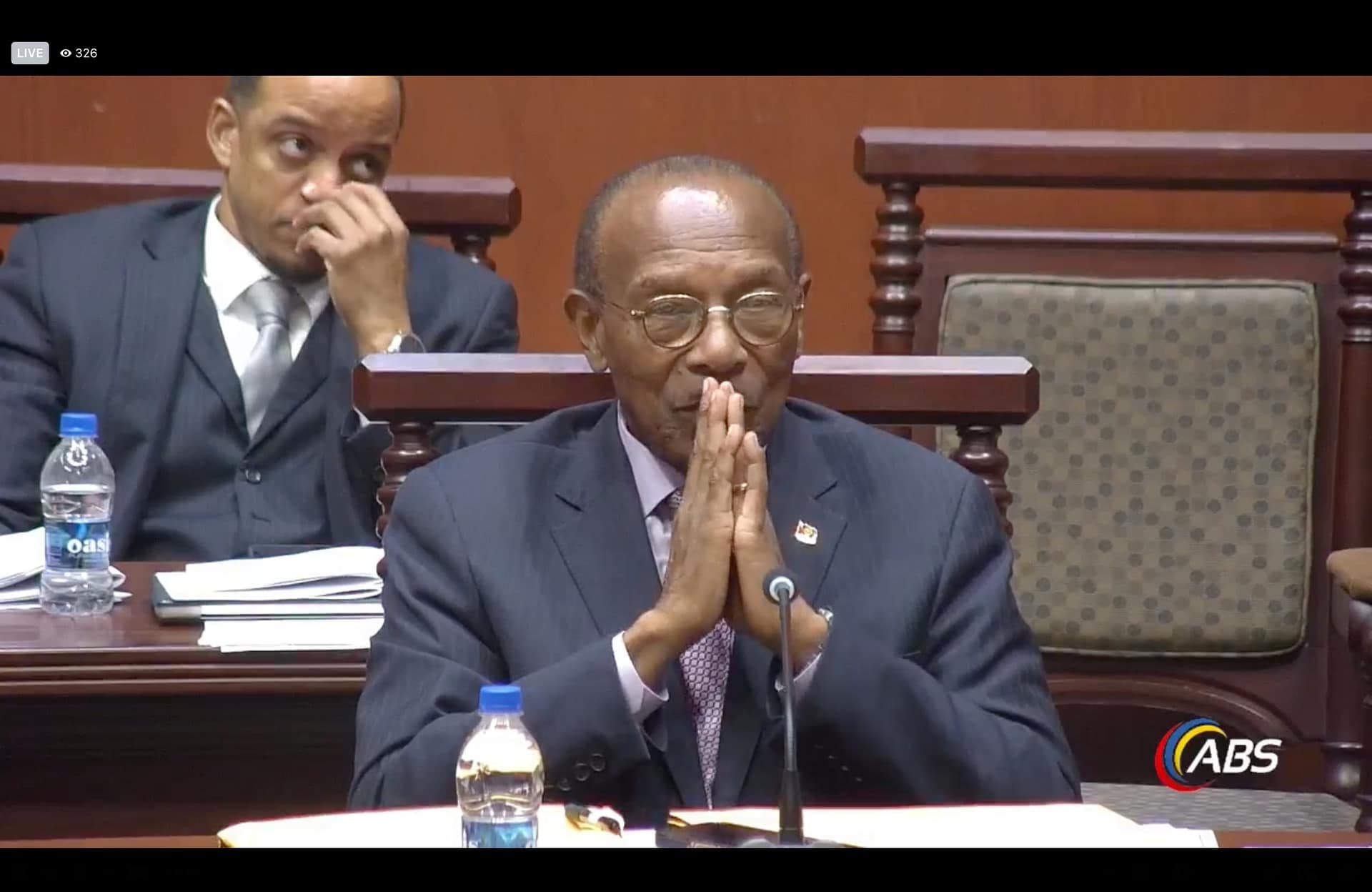
After an illustrious 42-year tenure in national politics, distinguished parliamentarian Sir Molwyn Joseph delivered a profoundly personal farewell speech to the Antiguan Parliament, marking his transition from active political service. The veteran St. Mary’s North representative crafted his final parliamentary address as a multidimensional testament combining spiritual reflection, political wisdom, and urgent national advocacy.
Joseph opened his valedictory remarks by affirming his unwavering commitment to public service despite retiring from elected office. “I remain a proud and content man,” he declared, assuring constituents that his retirement from Parliament would not diminish his dedication to community service. The seasoned politician framed his extensive career through the prism of faith and upbringing, identifying himself as “a deeply spiritual man” whose core values were established during his formative years.
Reciting verses from the hymn ‘What a Friend We Have in Jesus,’ Joseph emphasized maintaining inner peace and resilience amid political transitions. He credited his parents with instilling the discipline, decency, and sense of purpose that guided his four-decade public service journey, recalling childhood lessons about “the meaning of courtesy” and the imperative to “do the right thing.”
Addressing his electoral legacy, Joseph highlighted his eight consecutive electoral victories as evidence of sustained public trust, noting his constituency support had expanded to over 5,000 voters throughout his tenure. He positioned his career within the broader tradition of the Antigua Labour Party, emphasizing that national progress builds upon foundations established by previous generations. “Political stability never occurs by accident,” he cautioned, urging continued focus on developmental priorities.
A central theme emerged around Joseph’s call for cultural transformation toward enhanced civic responsibility. He advocated for a national renaissance in mindset, arguing that development requires individual initiative alongside government action. “When communities require cleaning, citizens must act independently rather than await official intervention,” he asserted.
Joseph offered robust endorsement of the current administration, warning against political experimentation during global uncertainty. Citing economic volatility and international tensions, he stressed the necessity of experienced leadership navigating complex challenges. His assessment emphasized that effective governance demands acute awareness of global realities.
Reflecting on his tenure as Health Minister, Joseph identified the COVID-19 pandemic as his most challenging period, expressing disappointment that national unity hadn’t been stronger during the crisis. He questioned how any citizen could withhold support from life-saving measures during peak mortality periods, advocating for cross-party cooperation during national emergencies.
The former health minister issued urgent warnings about escalating non-communicable diseases, including cancer, diabetes, and hypertension. He observed unprecedented prevalence of these conditions linked to unhealthy dietary patterns, noting concerning trends of childhood onset for traditionally adult-onset diseases. Joseph implored citizens to collectively reassess nutritional habits and embrace wellness responsibility.
In a revealing personal anecdote, Joseph recounted declining U.S. citizenship opportunities to serve his homeland, characterizing this decision as fundamental to his identity. He reaffirmed loyalty to the Antigua Labour Party, dismissing speculation about external pressures influencing his retirement. Family considerations ultimately guided his decision, with his wife and children forming a “super majority” in requesting his transition from public office.
Joseph formally endorsed his constituency successor, pledging ongoing engagement with St. Mary’s North affairs. His closing remarks characterized his political career as “a privileged opportunity to serve,” expressing confidence in the nation’s continued progress under capable leadership. The veteran statesman exits Parliament having established a legacy defined by endurance, loyalty, and his persistent message that nation-building requires both dedicated leadership and active citizen participation.