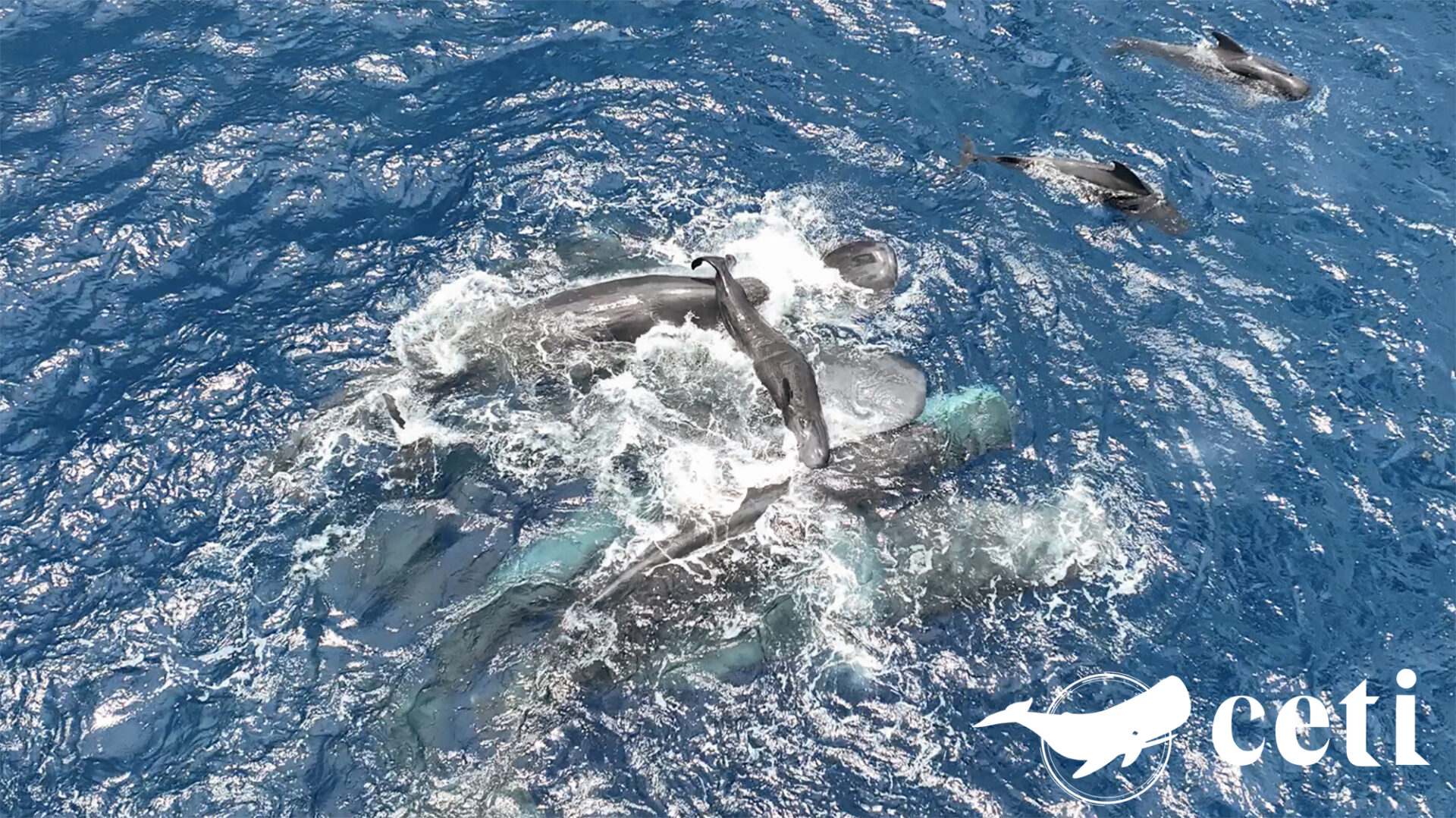
In a landmark achievement for marine biology, researchers from the Dominica and New York-based Cetacean Translation Initiative (Project CETI) have published the most comprehensive scientific record of a sperm whale birth ever documented. The historic event, captured in the waters off Dominica in July 2023, represents one of the few documented cetacean births among the world’s 93 known species.
The two groundbreaking studies center on a well-studied family unit where researchers witnessed the birth of a calf to a whale identified as ‘Rounder,’ who was accompanied by both her mother and daughter—marking three generations of females participating in the event. The research team utilized aerial drones, underwater hydrophones, shipboard photography, and behavioral observations to create an unprecedented moment-by-moment account of the birth process.
Eleven sperm whales—ten adult females and one sub-adult male—demonstrated remarkable coordination by working collectively to lift and stabilize the newborn during its critical first hours. This cooperative behavior, rarely observed in marine mammals, highlights the essential nature of collective care for species that give birth in deep water environments.
The audio recordings revealed significant shifts in vocal patterns during key moments of the birth, including the emergence of vowel-like features in their coda communications. These findings contribute substantially to Project CETI’s broader mission of deciphering sperm whale communication structures.
Evolutionary analysis within the study suggests that such cooperative behaviors may date back more than 36 million years, predating the common ancestor of toothed and baleen whales. This discovery underscores the deep evolutionary roots of cooperation in marine mammals.
Dominican officials highlighted the global significance of the discovery, with Chief Fisheries Officer Wynnona Joseph noting that it ‘reflects both the global significance of our marine environment and our national commitment to protecting it.’ Project CETI Fisheries Liaison Zethra Baron, a co-author of the study, emphasized how the research ‘strengthens Dominica’s commitment to ocean conservation and sustainable livelihoods.’
The documentation represents a major milestone in understanding whale behavior, communication, and social structures while positioning Dominica as a critical hub for advancing global marine science.