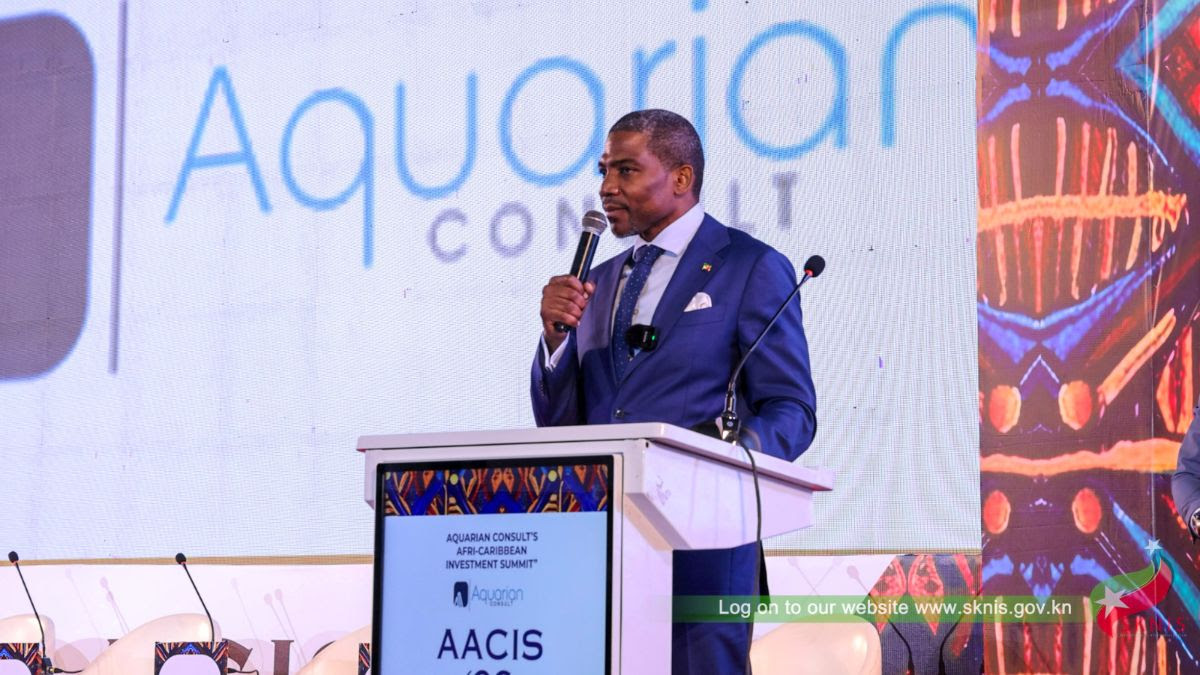
ABUJA – In a powerful address at the Afri-Caribbean Investment Summit, St. Kitts and Nevis Prime Minister Dr. Terrance Drew issued a compelling mandate for strengthened collaboration between African and Caribbean nations, framing the partnership as both a historical imperative and strategic economic opportunity.
Speaking under the theme “Caribbean Perspectives on Unity and Prosperity,” Dr. Drew characterized the current moment as a pivotal juncture to transform ancestral connections into concrete frameworks for political cooperation and economic expansion. His address blended historical reflection with forward-looking resolve, emphasizing that meaningful progress requires courageous leadership even when such moves face initial misunderstanding.
“For those who may not have understood, and even if they don’t understand now, I still forgive them,” Drew stated. “For I understand that the move is bold and it’s unapologetic.”
The Prime Minister positioned his delegation as part of a broader Caribbean coalition deliberately assembled to advance substantive ties with African counterparts. He stressed that this engagement transcends symbolic gesture, representing instead a strategically calculated initiative rooted in shared history and aimed at mutual prosperity.
Historical context formed a critical foundation for Drew’s argument. He noted how both regions maintain deep connections forged through the transatlantic slave trade and sustained through generations of cultural exchange and collective resilience. Recent institutional developments have provided structure to these relationships, notably the African Union’s 2021 designation of CARICOM as the “Sixth Region” of Africa.
Concrete developments are already unfolding: Caribbean nations have established new diplomatic missions across Africa including embassies in Ghana, Kenya, and Ethiopia, while African states have intensified investment outreach in renewable energy, agriculture, fintech, and education sectors throughout the Caribbean.
Prime Minister Drew presented St. Kitts and Nevis as an emerging conduit within this expanding partnership, highlighting the nation’s commitment to South-South cooperation and its readiness to facilitate trade, investment, and cultural exchange.
The summit itself has emerged as a premier forum for advancing these ambitions, with this year’s agenda prioritizing enhanced trade mechanisms, investment flows, tourism development, and air connectivity between the regions. Delegates are exploring direct flight routes that could revolutionize travel and commercial exchange while also addressing collaborative approaches to climate resilience, renewable energy, technology innovation, youth empowerment, and cultural industry development.
For smaller island states like St. Kitts and Nevis, strengthened African ties offer access to new markets, diversified investment sources, and enhanced collaboration on global challenges including climate change, food security, and digital transformation.
Dr. Drew concluded with a call to action, asserting that Africa and the Caribbean—collectively representing over 1.5 billion people—possess the demographic and strategic capacity to reshape global power dynamics through unified action. This would require strengthened diplomatic coordination, expanded trade agreements, and institutions reflecting shared values and aspirations.
“The moment calls for courage,” he declared, “as both regions work to shape a future defined by togetherness, prosperity, and shared progress.”