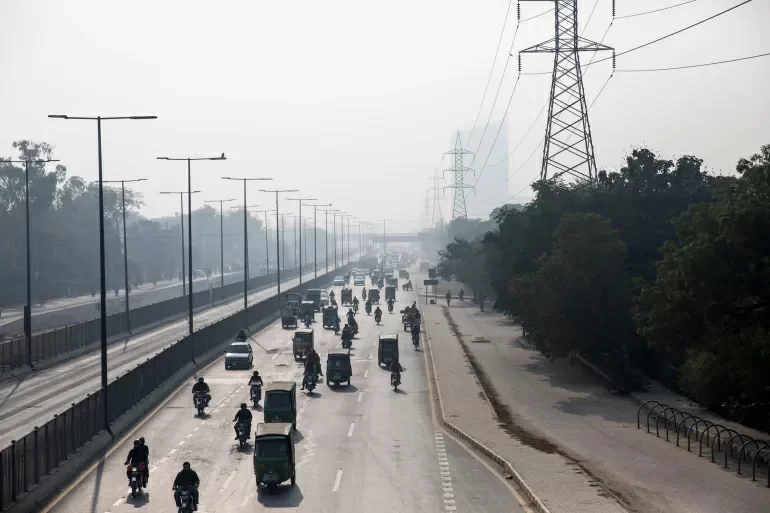
In a sobering environmental assessment, Pakistan has been identified as the world’s most polluted country according to the 2025 annual report by IQAir, a Swiss air quality monitoring organization. The nation’s atmospheric concentrations of hazardous fine particulate matter (PM2.5) reached alarming levels—approximately 13 times higher than the World Health Organization’s recommended safety threshold.
The comprehensive study, which analyzed data from 9,446 cities across 143 countries, revealed that Pakistan’s average PM2.5 level stood at 67.3 micrograms per cubic meter. While this represents a slight improvement from the 2024 record of 73.7 micrograms, it remains critically elevated. The report underscores a global crisis with only 13 countries and territories managing to maintain PM2.5 concentrations below the WHO guideline of 5 micrograms per cubic meter. A staggering 130 of the 143 monitored nations failed to meet this international standard.
Bangladesh and Tajikistan followed Pakistan as the second and third most polluted countries respectively. Chad, which had recorded the highest particulate levels in 2024, dropped to fourth position—a decline potentially attributable to data collection irregularities rather than genuine environmental improvement.
At the municipal level, Loni, India claimed the dubious distinction of being the world’s most polluted city with an average PM2.5 concentration of 112.5 micrograms per cubic meter. The entire list of the top 25 most polluted cities was exclusively composed of urban centers within China, India, and Pakistan.
In response to this environmental challenge, multiple nations are implementing countermeasures. Pakistan has introduced stricter environmental regulations targeting industrial and vehicular emissions, alongside campaigns to reduce agricultural waste burning—a significant contributor to smog in cities like Lahore. Bangladesh is investing in cleaner energy sources and enhancing public transportation systems to diminish private vehicle usage. Tajikistan is focusing on reducing household wood burning and initiating reforestation projects. India has launched air quality improvement programs in several cities, including restrictions on polluting fuels, closure of contaminating factories, and promotion of electric transportation.
Suriname emerged as an environmental bright spot, highlighted in the report for maintaining air quality without significant health-threatening pollution. The country’s relatively clean atmospheric conditions are attributed to low industrialization levels and extensive forest areas that function as natural air filtration systems.
The report emphasized that PM2.5 particulate matter is globally recognized as a major contributor to preterm births and long-term exposure has been linked to neurological disorders including dementia, Parkinson’s disease, and Alzheimer’s. Compounding the problem, climate change continues to exacerbate air quality deterioration through increased wildfire activity that releases substantial carbon emissions into the atmosphere.