KINGSTON, Jamaica — Alarming new research reveals that Jamaica’s major urban centers are experiencing dangerously high levels of air pollution that consistently exceed World Health Organization safety standards. The findings have prompted urgent calls for comprehensive intervention strategies to address this growing public health crisis.
Dr. Adrienne Williams, a leading researcher from the University of the West Indies Mona Campus, presented these concerning results following an extensive analysis of Jamaica’s air quality from 2010 to 2023. Her groundbreaking study, which earned the Best Overall Poster award at the 16th National Health Research Conference in February, demonstrates that particulate pollution in several Jamaican cities has reached levels known to exacerbate respiratory and cardiovascular conditions.
The comprehensive research, conducted in collaboration with Dr. Warren Mullings, an endoscopic sinus surgeon at Kingston Public Hospital, analyzed data collected by the National Environment and Planning Agency (NEPA) from monitoring stations across the island. The investigation focused primarily on urban centers including Spanish Town, Kingston, St. Andrew, Portmore, Montego Bay, Mandeville, and May Pen.
Researchers employed two key indicators of particulate pollution that measure concentrations of fine particles capable of penetrating deep into human lungs. The results showed disturbing trends, with Spanish Town recording the highest eight-year average concentration at 22.3 micrograms per cubic meter—more than double the WHO’s recommended threshold. Montego Bay followed at 13.5 micrograms, while Kingston and St. Andrew measured 10.34 micrograms at the Constant Spring monitoring site.
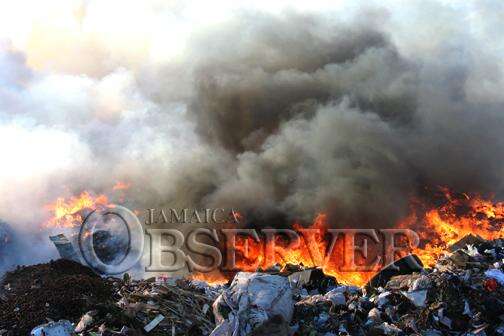
Dr. Williams identified multiple contributing factors to Jamaica’s air quality challenges, including seasonal Saharan dust events during summer months, vehicle emissions, traffic congestion, open burning of rubbish, and fires. She particularly emphasized that urban centers struggle with pollution because they “were not originally designed to accommodate today’s volume of vehicles and traffic, leading to visible smoke and smog in densely populated zones.”
The researcher stressed that establishing reliable baseline data is essential for guiding public policy and shaping future environmental interventions. “This research provides critical baseline data for Jamaica,” Williams explained during a recent Jamaica Information Service ‘Think Tank’ session. “It helps us understand the current state of air quality and offers evidence that can inform public policy, future research, and environmental management strategies.”
The study serves as a precursor to further investigation into how prolonged exposure to polluted air may influence long-term respiratory conditions such as asthma and chronic sinus disease. Without immediate targeted interventions backed by continuous monitoring and expanded studies in collaboration with NEPA and the Ministry of Health and Wellness, experts warn that air pollution levels risk remaining persistently above recommended standards, potentially creating a public health emergency.